
Some stories don’t get told in textbooks. They are written instead in the smoke of battlefield gunfire, in the stitched insignias of tattered uniforms, in the silence of soldiers who never came home.
And somewhere between the lost homeland and a foreign war front stood the Irish Brigade in France—a unit born not just of political exile, but of burning pride, unwavering allegiance, and a desperate need to turn sorrow into steel.
They were not merely mercenaries. They were sons of Ireland, cast out by conquest, drawn to France not for coin, but for a chance to keep fighting under a new sun, wearing a different flag, but carrying the same unyielding spirit.
This is not just a military chapter. It’s a eulogy of identity, a battlefield hymn for a vanished Ireland that kept marching in foreign uniforms. This is the story of the Irish Brigade in France.
The Birth of the Brigade: From Defeat to Defiance
The ink hadn’t dried on the Treaty of Limerick in 1691 when the Irish Wild Geese—over 14,000 soldiers and families—set sail for France, leaving their homeland behind but never their warrior code.
France, locked in its own geopolitical battles with England, welcomed them with open arms—and saw opportunity in the Irish soldiers’ unparalleled resilience and tactical genius. And thus, the Irish Brigade was born.
These weren’t just troops. They were embodiments of Irish exile, their very presence in the French army a living protest against colonial conquest.
For a deeper prelude to this chapter, explore The Flight of the Wild Geese: Blood, Exile, and the Echo of a Vanished Ireland.
Uniforms, Flags, and Brotherhood in Arms
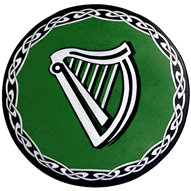
The Irish Brigade France uniform wasn’t just fabric. It was a defiant banner of identity—deep green coats, gold trim, silver buttons etched with Irish insignia, and the gold harp and shamrock on blue flags, fluttering like ghosts of home.
Their battle cry was not for glory, but for revenge, redemption, and remembrance.
🎖️ Irish Brigade Flag
A green silk banner with a gold harp and crown—the beating heart of a homeland they’d never again see, but never stopped fighting for.
🎖️ Irish Brigade Band
Wherever the Irish Brigade marched, their band played with a haunting fire, echoing the music of a people fighting to stay remembered. The sound was not just military cadence—it was memory turned into melody.
The Battle of Fontenoy: Where Exiles Became Legends
The moment that immortalized the Irish Brigade came in 1745, at the Battle of Fontenoy. The French were reeling. The British were advancing. Hope was fraying.
And then, into the carnage, the Irish Brigade charged.
“En avant, les Wild Geese!”
Their assault turned the tide, breaking the British line in a hailstorm of bayonets and war cries. Foreign generals watched in awe, while the Irish carved a new chapter into France’s military legacy.
Their charge at Fontenoy wasn’t just a victory—it was a battle cry echoing across centuries, a reminder that the exiled never forget how to fight.
For more battles of exile and resistance, revisit The Battle of Clontarf: A Defining Moment in Irish and Viking History.
From Brigade to Legion: The Irish in the Napoleonic Wars
As time marched on, so did Irish warriors. The Irish Legion Napoleonic Wars became the new vessel for Irish martial might in France. Formed under Napoleon, the Irish Legion uniform reflected a new age—green coats, golden buttons, and tricolor flags of ambition and defiance.
They fought across Europe, led by commanders like Bernard McSheehy and William Lawless, who understood that exile was not absence—it was a crucible where identity is reforged.
🥇 3e Régiment Étranger Irish
The lineage of Irish service in France carried on in units like the 3e Régiment Étranger, a successor in spirit to the Brigade, continuing the tradition of foreign Irish fighters bearing French arms.
The Irish Brigade in Other Revolutions: Spain and Beyond
Even beyond France, Irish fighters took up arms in other revolutions, including the Irish Brigade Spanish Civil War—a controversial, complex chapter of ideology, sacrifice, and fractured nationalism.
No matter the cause, the Irish soldier abroad was always fighting two battles: the one in front of him, and the one buried in his heart for the home he left behind.
FAQs: The Irish Brigade in France – Answered
What is the Irish regiment in France?
The term refers primarily to the Irish Brigade, composed of Irish Jacobite soldiers serving in the French army from the late 17th to early 19th centuries. Later iterations included the Irish Legion under Napoleon.
Does the Irish Brigade still exist?
The original Brigade was disbanded during the French Revolution. However, its legacy lives on in French military lore, Irish diaspora identity, and regimental descendants like the 3e Régiment Étranger.
When did Ireland fight in France?
While Ireland didn’t formally fight in France, thousands of Irish soldiers served in the French military from 1690s through the Napoleonic era, often in key European conflicts.
Who were the members of the Irish Brigade?
Primarily Irish Jacobites, exiled nobles, soldiers, and later generations of Irish emigrants. Notable names include Lord Clare, Dillon, Lally, O’Brien, and Fitzgerald.
The Quiet Echo of Heroes
The Irish Brigade didn’t die with the wars. It survived in bloodlines, battlefield songs, family stories, and in the battle scars tattooed on French soil by Irish hands.
They were more than soldiers. They were symbols of exile turned action, of heartbreak turned into history. Their boots have long stopped marching, but their legacy still walks beside us.
For Further Reading & Internal SEO Linking
Strengthen your journey through Irish history by exploring:
- The Flight of the Wild Geese: Blood, Exile and the Echo of a Vanished Ireland
- Henri Jacques Clarke: A Man of Shadows, Steel and Unforgiving Decisions
- Haunted Castles in Ireland: The Darkest Ghost Stories
- A Viking Journey Through Dublin
- The Rock of Dunamase
- Where in Ireland Was Vikings Filmed?
- Vikings in Ireland: Their Legacy, History and Impact
About the Author
