
You’ve seen it on flags, on face paint, on every shamrock-shaped hat drunk lads can stumble into. Green. Emerald green. Kelly green. Neon green. Plastic green. Green as far as the eye can see.
But what if I told you it was all wrong?
What if the color most sacred to St. Patrick wasn’t green at all—but blue?
Yes. You heard that right. St. Patrick’s blue.
A color older than fashion, deeper than dye, and richer than any Pantone chart can capture. A color tied not just to a man or a feast day—but to an entire nation’s soul.
What Was St. Patrick’s Day’s Original Color?
Before the sea of green flooded every street and city skyline on March 17th, the original color associated with St. Patrick was a shade of light, sky-toned blue—a hue that has come to be called “St. Patrick’s Blue.”
In fact, Ireland’s earliest depictions of Patrick didn’t have him wrapped in green robes but rather in robes of celestial blue—the color of transcendence, spiritual clarity, and sovereignty.
St. Patrick’s Blue Color – What Exactly Is It?
It’s not royal blue. It’s not navy. It’s a subtle, hauntingly beautiful tone that lives somewhere between the hue of a wild Atlantic sky before a storm and the depth of ancient glacial lakes. It’s a blue that breathes of old songs and old souls.
👉 St. Patrick’s blue color code (for those who care to hex it): #23297A – a deep, ethereal shade that once graced coats of arms and sovereign banners.
👉 Irish blue color code: Also seen historically as #0077B5 – a lighter, more teal variant that lived in ancient crests and noble standards.
But codes mean nothing without context. St. Patrick’s Blue isn’t just a pigment—it’s a pulse beneath the green.
What Were the Original Colors of the Irish Flag?
Before the tricolour we know today—green for Catholics, orange for Protestants, white for peace—Ireland’s colors were deeply tribal and spiritual. Early banners featured blues and golds, reds and blacks, echoing the ancient clans and kingdoms.
The idea of green as “Ireland’s color” came much later, when rebellion needed symbolism, and symbolism needed spectacle.
What Was Saint Patrick’s Favorite Color?
History never caught him answering that question on the record. But in tradition and religious regalia, blue was his color.
Green, meanwhile, was tied to the land, to the rebellions, to the revolutionaries who needed a visual middle finger to the British Empire.
Why Did They Change the Color From Blue to Green on St. Patrick’s Day?
Because politics loves a good palette shift.
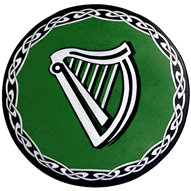
In the 18th century, the green harp flag became the banner of Irish nationalism, and green slowly overtook blue as the dominant color of the Irish identity. Secret societies like the Society of United Irishmen championed green as the color of the rebellion.
And once green took over, it stayed. It colonized the culture more fully than any foreign army. Even leprechauns, once dressed in red coats and brown breeches, were repainted in green by pop culture’s brush.
👉 Curious about the size of those little mischief-makers? We’ve got a story for you.
Is St. Patrick Green or Blue?
He is both.
He is blue in origin, green in memory, and golden in legacy.
But if you’re looking to get it right, he was blue first—before the parades, before the shamrocks, before the pubs turned their lights emerald for Instagram.
What Are the 3 Colors That Represent St. Patrick’s Day?
- Green – for land, revolution, Catholic identity.
- Blue – for the saint himself, spiritual sovereignty.
- Gold or White – for peace, transcendence, divine light.
These colors together tell a story older than any pint glass can hold.
What Color Did Leprechauns Wear Before Green?
Ah, you thought they were always emerald-clad tricksters? Think again. Old Irish folklore dressed leprechauns in red coats, pointed shoes, and top hats—more faerie court than clover couture.
But culture evolves—and capitalism repaints it.
👉 We untangle their myth here.
What Color Do Protestant Irish Wear on St. Patrick’s Day?
Some wear orange—a nod to the House of Orange and the Protestant heritage of Northern Ireland. It’s controversial. It’s symbolic. It’s the other side of Ireland’s complicated, beautiful, broken harmony.
But on Paddy’s Day, most people wear green regardless—because for one day at least, the fight is forgotten and the flag is unified.
When Did Green Become the Color of Ireland?
The shift from blue to green was gradual, but it crystallized during the late 18th and early 19th centuries, when Irish nationalism needed a symbol that was visual, visceral, and immediate.
Green wasn’t just a color—it was a battle cry.
👉 And today, it floods cities in festivals and parades across the world.
What Color Is Bad for St. Patrick’s Day?
There’s no “bad color”—but if you wear black or grey, you might as well say you forgot the date.
And if you wear orange in the wrong part of Dublin, well… let’s just say, tread softly, friend.
But if you want to honor the saint fully? Wear blue beneath your green. Remember the root beneath the blossom.
Need More Irish Wisdom? Dive Deeper:
☘️ The bowl of shamrock and the mythic White House ceremony
🥔 Why Irish-Americans eat corned beef, not bacon
🎭 The festival heartbeat of every Irish town
🕯️ Prayers and blessings that carry the soul of a nation
📜 The saint never canonized, but canonized by the people
📣 And don’t ever forget: It’s Paddy, not Patty
Final Thought: Beneath the Green, Remember the Blue
So go ahead. Wear green. Paint your face. Wave your flag.
But remember the blue underneath it all. The quiet, holy color that walked before rebellion. The sacred hue that whispered before the shouting began.
Because to be Irish is to remember what came before the parade.
And Patrick? He was always more than a color.
About the Author
