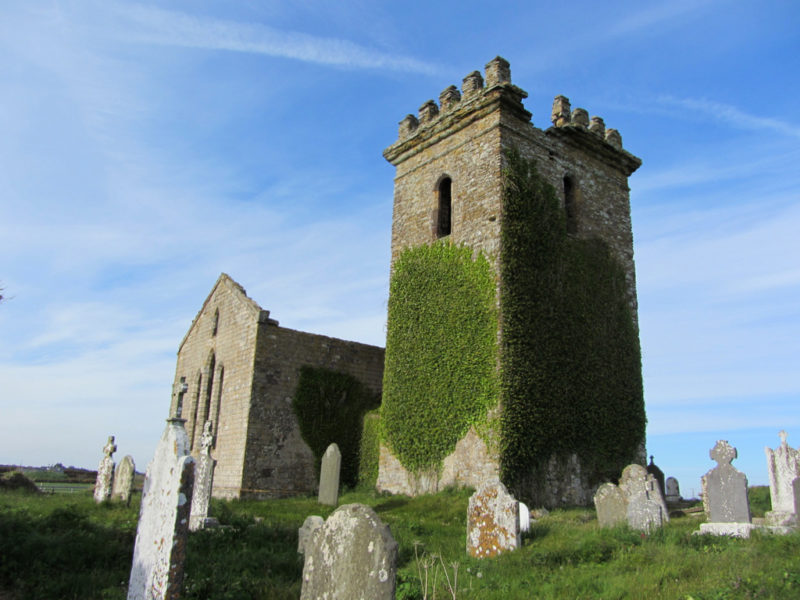
On the wild Hook Peninsula, where the Atlantic claws at Ireland’s bones, the Templars Church in Templetown, Co. Wexford, stands like a fist raised against time.
Not just a ruin, not just stone—this is the echo of the *Knights Templar Wexford*, warrior monks who carved their mark on Ireland’s soul. Their red-crossed mantles are long gone, but the church, a jagged scar of history, whispers of crusades, betrayal, and secrets buried deeper than the graves that surround it.
Here, on this windswept edge, we’ll unravel the history of Templetown, the church they built, the Irish knights who may have joined their ranks, and where their shadows still linger in Ireland. This is no history lesson—it’s a reckoning with the ghosts of the Templars. For more on Ireland’s hidden past, dive into Secret Ireland’s untamed tales.
What is the History of Templetown Wexford?
Templetown, a name that hums with the weight of the *Knights Templar Wexford*, was born in the fire of the Norman invasion. In 1169, when Strongbow’s boots hit Ireland’s soil, the *Knights Templar Ireland* weren’t far behind, arriving between 1172 and 1177, not as conquerors but as holy warriors.
King Henry II, wrestling with the sin of Thomas Becket’s murder, granted them vast lands on the Hook Peninsula in 1172, making Templetown their headquarters in Wexford. This wasn’t just a gift; it was penance, a king’s plea for absolution through the Templars’ prayers.
The *Knights Templar Ireland* built a preceptory at nearby Kilcloggan, with Templetown as its manorial village—a castle, a church, sacred and secular entwined. By 1183, the O’More family of Leix endowed Kilcloggan, tying Irish nobility to the Templars’ cause.
The church, dedicated to St. Alloch, a Welsh monk, stood on a site older than the Normans, its stones a palimpsest of Celtic and Christian faith.
The Templars’ wealth grew, their lands worth £400 by 1308, third only to their English and Scottish holdings. They weren’t colonizers, but stewards, collecting rents from Irish tenants to fund the Crusades.
Then came Friday the 13th, 1307—a date that still chills. King Philip IV of France, drowning in debt to the Templars, ordered their arrest across Europe.
In Ireland, the *Knights Templar Wexford* faced a gentler fate. On January 10, 1308, they were rounded up, imprisoned in Dublin Castle, and tried in 1310 at St. Patrick’s Cathedral. No torture, no burnings—just solemn charges of heresy and idolatry, mostly unproven.
The Templars denied the accusations, did penance, and were sent to monasteries. Their lands, including Templetown, were handed to the Knights Hospitallers by 1312, a rival order that reshaped the church with a fortified tower. The Templars’ treasure? Legend says it’s still hidden, a ghost in Ireland’s myths.
What Church Was Built by the Templars?
The Templars Church in Templetown, Co. Wexford, is a ruin that screams of the *Knights Templar Wexford*.
Built in the late 12th century, it was part of their preceptory at Kilcloggan, a complex of farms, halls, and sacred spaces. Dedicated to St. Alloch, a 5th-century Welsh monk, the church was a spiritual anchor for the Templars’ mission. Its original form was likely simple—dry-stone walls, a modest nave, a sanctuary for warrior monks who prayed as fiercely as they fought.
The tower we see today, four stories high with stepped battlements, wasn’t Templar work. After their suppression in 1307, the Knights Hospitallers took over, building the tower in the 14th century to guard against Gaelic clans or rival orders.
The church’s walls, now roofless, were rebuilt in the 19th century as a Church of Ireland site, blending medieval grit with Victorian piety. Across the road, a graveyard holds a rare Templar grave slab, carved with a cross and lamb, a silent cry of the *Knights Templar Ireland*.
The church’s layers—Celtic, Templar, Hospitaller, modern—make it a stone chronicle of faith and power. For more on its haunting beauty, explore Secret Ireland’s sacred sites.
Were There Any Irish Knights Templar?
Did Irishmen don the white mantle with the red cross? The *Knights Templar Ireland* were mostly Anglo-Norman or English, their masters appointed from the English General Chapter. Names like Walter the Templar, Hugh the Templar, and Roger de Glastonbury dominate the records, not O’Neills or O’Connors.
Yet, the Templars’ ties to Irish nobility suggest some local involvement. The O’More family’s endowment of Kilcloggan in 1183 hints at Irish support, and grants from families like the O’Morras in Wexford show cooperation. Could Irish nobles or their sons have joined the order? It’s possible, but records are scarce.
The Templars in Ireland were past their fighting prime, tasked with managing estates, not swinging swords. Their role was to fund the Crusades, not battle Gaelic clans. Still, the idea of Irish knights isn’t far-fetched.
The Templars’ wealth and papal privileges—exemption from taxes, free passage across Europe—would’ve tempted ambitious Irishmen. But the order’s collapse in 1307 buried any clear evidence.
The *Knights Templar Wexford* graves, like the slab in Templetown, don’t name Irish knights, only symbols of their universal faith. The question lingers, a shadow in the fog of history. For more on Ireland’s medieval mysteries, see Secret Ireland’s hidden stories.
Where Are the Knights Templar in Ireland?
The *Knights Templar Ireland* left footprints across the land, though time has worn them thin. Templetown, Co. Wexford, was their stronghold, with the preceptory at Kilcloggan and the church as their heart.
But their reach stretched further: Clontarf in Dublin, their most important preceptory; Crook and Kilbarry in Waterford; Templehouse in Sligo, their westernmost outpost; Kilsaran and Cooley in Louth, rich with wealth; and Clonaul in Tipperary. Eleven major preceptories are known, each a hub of faith and finance.
In Wexford, the *Knights Templar Wexford* controlled the Hook Peninsula, guarding Waterford Harbour alongside their property at Ballyhack. Their church in Templetown, with its Hospitaller tower, stands as a testament, but other sites—like Templehouse in Sligo—echo their presence.
The Templars’ graves, like those in Templetown and Cooley, marked with crosses and lambs, are rare relics. Their lands were seized by the Hospitallers after 1307, and many sites merged into new hands, their Templar origins blurred.
Today, you can walk Templetown’s ruins, feel the stones, and hear the ghosts. For more on their scattered legacy, check Secret Ireland’s ancient trails.
The Myth and the Fire
The Templars Church in Templetown isn’t just stone—it’s a scream from the past. The *Knights Templar Wexford* built it to pray for a king’s sins, to guard a harbor, to hold a faith that shook empires. But the narrative we’re fed—holy warriors betrayed by a greedy king—deserves a harder look.
Philip IV’s purge wasn’t just about debt; it was fear of a power that answered only to the Pope. The *Knights Templar Ireland* escaped the flames that consumed Jacques de Molay in 1314, but their trial in Dublin was no less a theft—of land, legacy, and truth.
The church’s tower, built by Hospitallers, not Templars, muddies the story. Inventories from 1307 list brass vessels, beds, a locked kitchen—signs of a farm, not a fortress. Was Templetown a warrior’s bastion or a monk’s estate? The grave slab across the road, with its cross and lamb, speaks of faith, not war.
And the Irish connection—O’Mores and others—suggests a deeper weave with local culture, not just Norman imposition. The Templars’ treasure, their Holy Grail, their secrets? Maybe they’re buried in *fairy forts Ireland*, as myths whisper, or maybe they’re just stories we tell to keep the fire alive.
Stand in Templetown, where the wind howls and the sea roars, and you’ll feel the *Knights Templar Wexford* in your bones. The church, half-ruined, half-eternal, demands you question the tales of crusaders and kings. Were they guardians of faith or pawns in a game of power? The *Knights Templar Ireland* left no answers, only stones and shadows. For more on their enigma, explore Secret Ireland’s mythic journeys.
About the Author
