

Picture this: a windswept hilltop in Donegal, where the ghosts of ancient kings whisper through stones older than memory itself.
Grianán of Aileach isn’t just a pile of rocks—it’s a pulse, a heartbeat of Ireland’s soul, a place where history and myth collide like waves on a jagged shore.
This ancient ringfort, perched like a crown on Greenan Mountain, has stood for centuries, maybe millennia, watching over the Inishowen Peninsula with a quiet, defiant majesty.
If you’re wondering what makes this place so special, why it’s worth your time, or how to even pronounce Grianán of Aileach (it’s Gree-uh-nawn of Al-yach, by the way), then strap in. This is your guide to one of Ireland’s most breathtaking historical treasures.
What Was Grianán of Aileach Used For?

Grianán of Aileach wasn’t built for Instagram snaps, though it’s photogenic enough to break the internet. This stone fortress, dating back to at least the 6th or 7th century (though some whisper it’s far older), was the royal seat of the Northern Uí Néill, a powerful dynasty that ruled the northwest of Ireland.
Think of it as a medieval nerve center—a place where kings held court, warriors planned battles, and druids, perhaps, whispered to the gods. The Grianan of Aileach history is layered like the stones themselves. It was a defensive stronghold, a ceremonial hub, and a symbol of power that screamed, “We’re here, and we’re not going anywhere.”
Archaeologists reckon it was used for everything from royal coronations to religious rituals. Some even tie it to the Tuatha Dé Danann, the mythical race of Irish lore, suggesting it was a sacred site long before the Uí Néill claimed it.
During the Grianán of Aileach summer solstice, the fort’s alignment with the sun hints at its spiritual significance—those ancient builders knew a thing or two about the cosmos.
It was a place to govern, to worship, and to remind enemies that you were untouchable. Even today, standing inside its walls, you can feel the weight of those ancient ambitions.
Is Grianán of Aileach Worth Visiting?
Is it worth visiting? Are you kidding me? Grianán of Aileach is the kind of place that makes you question why you ever spent a weekend binge-watching Netflix.
Perched at 800 feet above sea level, this fort offers a 360-degree view that’ll knock the breath out of you—Lough Swilly to one side, Lough Foyle to the other, and a patchwork of Donegal’s green hills rolling out like a Celtic quilt. It’s not just the views, though. The Grianan of Aileach history seeps into your bones as you walk the ramparts, touching stones that kings and warriors touched centuries ago.
Unlike some tourist traps, there’s no Grianán of Aileach entrance fee—it’s free to explore, which is a bloody miracle in today’s world.
The site is open year-round, with Grianan of Aileach opening times essentially being dawn to dusk, though you’ll want to check local signage for any seasonal quirks.
Whether you’re a history nerd, a nature lover, or just someone who wants to feel something bigger than themselves, this place delivers. Bring a jacket, though—the wind up there doesn’t mess around.
What Did Grianán of Aileach Look Like?
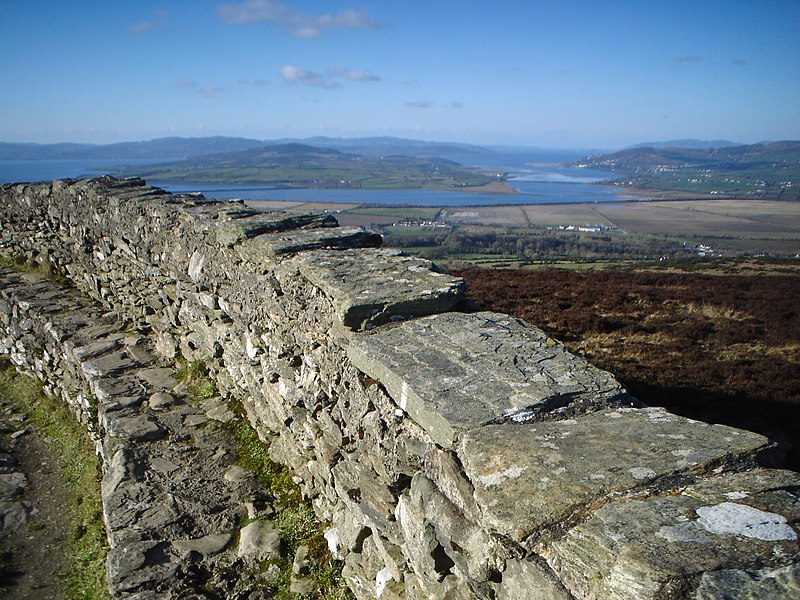
Close your eyes and imagine a fortress that looks like it was carved by giants. Grianán of Aileach is a circular stone fort, about 77 feet in diameter, with walls up to 17 feet high and 15 feet thick in places.
These aren’t just any walls—they’re dry-stone, meaning no mortar, just pure engineering genius from an era when most of Europe was still figuring out how to stack rocks. The fort’s terraced interior, with its concentric steps and passageways, feels like a labyrinth designed to humble you.
The Grianán of Aileach Age is debated—some say it’s from the Iron Age, others pin it to the early medieval period, but its current form owes much to a 19th-century restoration by Dr. Bernard of Derry.
Back in its heyday, it would’ve been a hive of activity—think thatched roofs on nearby huts, fires burning, and the chatter of warriors and poets. The fort’s elevated position made it a beacon, visible for miles, a statement of dominance etched into the landscape.
Today, it’s a beautifully preserved ruin, with enough of its original structure intact to make you feel like you’ve stepped into a time machine. Check a Grianan of Aileach map to get a sense of its layout—it’s compact but intricate, every stone telling a story.
What Does Grianán of Aileach Translate To?
The name itself is poetry. Grianán of Aileach translates roughly to “The Sunny Place of Aileach” or “The Stone Palace of Aileach” in Irish Gaelic.
“Grianán” comes from “grian,” meaning sun, hinting at its possible solar alignments, especially during the Grianán of Aileach summer solstice. “Aileach” is trickier—some say it’s the name of the hill or a reference to a mythical figure or kingdom.
Either way, it’s a name that carries the weight of legend, evoking images of sunlit stones and ancient ceremonies. Try saying it out loud—pronounce Grianán of Aileach as Gree-uh-nawn of Al-yach—and you’ll feel a bit of that old magic on your tongue.
Planning Your Visit: Practical Tips
Right, let’s get practical. If you’re itching to see this wonder for yourself, you’ll need Grianán of Aileach directions.
The fort sits on Greenan Mountain, about 7 miles northwest of Derry/Londonderry, just off the N13. From Derry, take the Buncrana Road, then follow signs for Burt and Grianán of Aileach—it’s well-marked, but a GPS or a Grianan of Aileach map won’t hurt.
The road up is narrow, so drive carefully, especially if you’re in a rental car not built for Irish backroads. There’s a small parking area at the base, and from there, it’s a short, steep walk to the fort itself.
As for Grianan of Aileach opening times, the site is accessible daily from dawn to dusk, weather permitting. No ticket booth, no queues—just you, the stones, and the wind. Did I mention there’s no Grianán of Aileach entrance fee? That’s right, it’s free, which means you can spend your euros on a pint in a nearby pub instead. If you’re visiting during the Grianán of Aileach summer solstice, arrive early to catch the sunrise—it’s a spiritual experience, even if you’re not the druid type.
Why Grianán of Aileach Stays With You
There’s something about Grianán of Aileach that sticks in your craw, long after you’ve left its windswept walls. Maybe it’s the Grianan of Aileach history, the way it ties you to a past so deep it feels like it’s part of your DNA. Maybe it’s the views, so vast they make your problems seem small.
Or maybe it’s the sheer audacity of those ancient builders, stacking stones to the sky without so much as a wheelbarrow. Whatever it is, this place isn’t just a tourist stop—it’s a pilgrimage.
The Grianán of Aileach Age is part of its allure.
Whether it’s 1,500 years old or closer to 3,000, it’s a testament to human ambition. The fort’s survival through Viking raids, English invasions, and the slow grind of time is a middle finger to oblivion. Standing there, you’re not just a visitor—you’re part of the story, a fleeting character in a saga that’s still being written.
FAQs About Grianán of Aileach
What Was Grianán of Aileach Used For?
It was a royal stronghold for the Northern Uí Néill, used for governance, defense, and possibly religious ceremonies, with ties to ancient myths and solar alignments like the Grianán of Aileach summer solstice.
Is Grianán of Aileach Worth Visiting?
Absolutely. Stunning views, deep history, and no Grianán of Aileach entrance fee make it a must-see for anyone in Donegal or Derry.
What Did Grianán of Aileach Look Like?
A circular stone fort with thick, terraced walls, it was a bustling hub in its prime, restored in the 19th century to preserve its ancient grandeur.
What Does Grianán of Aileach Translate To?
It means “The Sunny Place of Aileach” or “Stone Palace of Aileach,” with “grian” meaning sun. Pronounce Grianán of Aileach as Gree-uh-nawn of Al-yach.
Final Thoughts
Grianán of Aileach isn’t just a destination—it’s a feeling. It’s the wind in your face, the weight of history under your feet, and the sense that you’re part of something eternal.
Whether you’re chasing the Grianan of Aileach history, marveling at its Grianán of Aileach Age, or just soaking in the views during the Grianán of Aileach summer solstice, this place will leave its mark on you. So grab a Grianan of Aileach map, follow the Grianán of Aileach directions, and make the trek. It’s free, it’s open, and it’s waiting. What the hell are you waiting for?
About the Author
