
Unveiling the centuries-long suppression of Irish language in history — from Tudor bans to the resilient Irish language revival of 2025
The suppression of Irish language in history wasn’t a single act but a centuries-long campaign of cultural erasure, woven into law, education, and social stigma. As we stand in 2025, with the Irish language revival gaining momentum through apps, schools, and global diaspora, understanding this dark chapter is crucial.
Where Did the Irish Language Come From? The Celtic Dawn
Before suppression, there was genesis. The Irish language, or Gaeilge, belongs to the Goidelic branch of Celtic languages, arriving with Iron Age migrants around 500 BCE. Where did the Irish language come from?
Linguistic archaeology points to the Hallstatt culture in Central Europe, spreading via trade and conquest to Ireland by 300 BCE. Ogham inscriptions — Ireland’s first writing system, carved on standing stones from the 4th century CE — are the earliest evidence.
These 20-character alphabets, reading bottom-to-top, encoded poetry, land claims, and prayers.
By the 5th century, Christian monks transformed Irish into a literary powerhouse. The Book of Kells, with its illuminated Latin-Irish glosses, showcases a bilingual golden age.
Irish was the language of saints (Patrick’s Confessio in Latin, but sermons in Gaelic), scholars, and bards. Filí (poets) held near-royal status, their satire feared more than swords. As the History of the Irish Language (Oxford University Press, 2004) details, Gaelic dominated until the Norman invasion of 1169 introduced French and English influences. But suppression was still centuries away.
For a deep dive, download the history of the Irish language PDF from Trinity College Dublin’s digital repository — a 2025-updated scholarly goldmine. Or explore The Irish Language in Ireland: From Goídel to Globalisation by Diarmaid Ó Muirithe, a seminal history of the Irish language book.
What Was the Suppression of the Irish Language? A Timeline of Erasure

The suppression of Irish language in history began in earnest with Tudor conquest. Henry VIII’s 1537 Act for the English Order declared Irish “barbarous” and mandated English in courts.
Elizabeth I went further: in 1571, Irish-speaking priests were banned from Gaelic areas. But the real hammer fell with the Penal Laws (1695–1745).
These Catholic-targeting statutes didn’t explicitly ban Irish, but made it a liability: no Gaelic speaker could hold office, own land above £5, or educate children in Irish.
The 1730s saw “statute schools” where English was enforced with the tally stick — a notched baton hung around children’s necks for each Irish word spoken. Beatings followed.
By 1800, the Act of Union dissolved Ireland’s parliament, making English the sole language of governance. The National Schools system (1831) sealed the fate: zero funding for Irish-medium education. As one inspector wrote, “Civilization depends on extinguishing the Irish language.”
Was it a formal ban? Not quite. But did England ban the Irish language? Effectively, yes — through systemic exclusion. Wikipedia’s suppression of Irish language in history entry cites over 200 anti-Gaelic statutes from 1366 (Statutes of Kilkenny) to 1860.
Why Did the Irish Language Disappear? The Perfect Storm

Why did the Irish language disappear? It didn’t vanish overnight. The decline of Irish language was a slow bleed, accelerated by catastrophe. Pre-1800, 80–90% of Ireland spoke Irish. By 1891, only 14%. The culprits:
- The Great Famine (1845–1852): Killed 1 million, drove 1.5 million to emigrate. Irish-speaking rural west suffered most — entire Gaeltacht communities wiped out.
- Emigration: Irish speakers fled to English-speaking America, Canada, Australia. Letters home in English broke chains of transmission.
- Education: National Schools taught “English = progress, Irish = poverty.” Parents enforced it, believing bilingualism doomed children to failure.
- Social Stigma: By 1850, Irish was mocked as “patois of the bog.” Urbanants sought respectability through English.
The Irish language numbers decline was stark: 5.1 million speakers in 1800 → 680,000 in 1891 → 17% of population by 1926. The 1851 census first asked language; results shocked: Irish was already minority in Leinster and Munster.
Which Factor Contributed to the Irish Language Decline? The Famine’s Lasting Echo
Every historian agrees: which factor contributed to the Irish language decline? The Great Famine was decisive. Pre-Famine, Irish thrived in rural strongholds. Post-Famine, survivors were urban, English-educated, or abroad.
The 1851–61 decade saw a 50% drop in Irish speakers — the steepest in history. As linguist Reg Hindley wrote in The Death of the Irish Language (1989), “The Famine killed the language more surely than any law.”
How Did the British Suppress Irish Culture? Beyond Language
How did the British suppress Irish culture? Language was just one front. The Penal Laws banned:
- Catholic education (hedge schools operated in secret)
- Irish dress (kilts, mantles)
- Brehon law (replaced by English common law)
- Bardic poetry (filí schools closed)
The 1600s saw plantation of Ulster with English/Scottish settlers, diluting Gaelic demographics. Dublin’s Pale enforced English norms. Even music — the harp, symbol of Ireland — was banned under Cromwell. The 1745 Disarming Act targeted cultural weapons: bagpipes, shillelaghs, Irish games like hurling.
Why Was Gaelic Suppressed? Control and Civilization
Why was Gaelic suppressed? Three motives:
- Political Control: A unified language = unified empire. Irish fostered rebellion (e.g., 1641 uprising).
- Religious Divide: Irish = Catholic; English = Protestant. Suppression was spiritual warfare.
- Civilizing Mission: Victorian Britain saw Gaelic as primitive. English was “progress.”
Lord Chancellor John Bowes in 1730: “The Irish language is the chief cause of the ignorance of the people.”
How Many Years Did the English Oppress the Irish? 800 Years of Shadow
How many years did the English oppress the Irish? From the Norman invasion (1169) to the Good Friday Agreement (1998), roughly 829 years. But linguistic oppression peaked 1537–1922 — 385 years of active suppression. The 1922 Irish Free State marked independence, but cultural scars lingered.
How Long Was the Irish Language Banned in Ireland? Never Fully, Always Effectively
How long was the Irish language banned in Ireland? No single “ban” existed, but de facto prohibition lasted from 1366 (Statutes of Kilkenny) to 1871 (disestablishment of Church of Ireland). The National Schools ban (1831–1879) was most brutal — 48 years of zero state support for Irish education. Irish wasn’t taught in any public school until 1879.
Why Did the Irish Hate the English So Much? A Legacy of Wounds
Why did the Irish hate the English so much? It wasn’t innate. It was earned:
- Famine neglect (1 million dead while food exported)
- Cultural erasure (language, law, religion)
- Land theft (90% of Ireland owned by British by 1870)
- Rebellion crushed (1798, 1848, 1916)
Anti-Irish sentiment in Britain — “No Irish Need Apply” signs, Punch cartoons of ape-like Paddies — fueled reciprocal rage. Why was there anti-Irish sentiment? Fear of Catholicism, economic competition, and imperial propaganda.
How Did the Celtic Languages Decline? A Continental Collapse
How did the Celtic languages decline? Irish wasn’t alone. Cornish died by 1777, Manx by 1974. Welsh and Breton survive marginally. Causes:
- Romanization (Latin replaced Gaulish)
- Anglo-Saxon conquest (Old English displaced Brittonic)
- Centralized states (France banned Breton in schools)
Ireland’s decline was uniquely brutal due to famine + colonialism.
Is There a Word for “No” in the Irish Language? The Beauty of Structure
Is there a word for no in the Irish language? Not exactly. Irish uses verb negation: Níl (is not), Níor (did not). To say “no” to “Do you speak Irish?” — Ní labhraím (I do not speak). This reflects a verb-centric grammar, elegant and ancient.
Why Is the Irish Language Dying Out? Or Is It?
Why is the Irish language dying out? It’s not — it’s transforming. 2021 census: 1.7 million claim some Irish, 70,000 daily speakers. Gaeltacht areas shrink, but urban revival grows. Duolingo’s Irish course is top 5 globally. Challenges remain: lack of media, economic pressure. But Irish language revival is real — TG4, Raidió na Gaeltachta, and 300+ Irish-medium schools prove it.
The Irish Language Revival: From Ashes to Apps
The Irish language revival began in 1893 with the Gaelic League. Douglas Hyde, first President of Ireland, warned: “We must create a new Ireland or lose the old.” The 1922 Constitution made Irish the national language. Today:
- Irish compulsory in schools (though criticized for rote learning)
- EU official language since 2007
- Apps: Duolingo, Teanglann, Abair.ie
- Media: TG4 (1.5M viewers), Spotify Irish playlists
In 2025, AI tools like Google Translate support Irish. The future? Bilingual Ireland, where Gaelic is pride, not burden.
Authoritative Sources:
Frequently Asked Questions: The Suppression, Decline, and Revival of the Irish Language
What was the suppression of the Irish language?
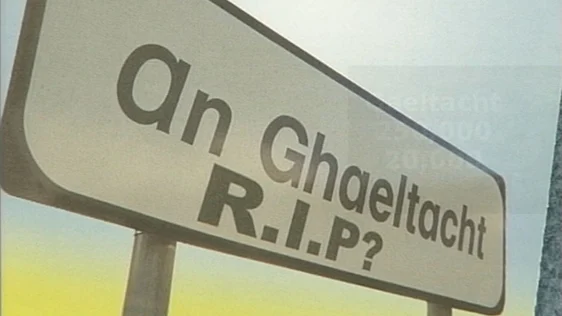
The suppression of Irish language in history was not a singular event but a meticulously orchestrated, multi-century campaign of cultural and linguistic erasure executed by British colonial authorities between the 14th and 19th centuries.
This systematic dismantling of Gaeilge — the native Irish language — was achieved through a layered combination of legal prohibitions, educational exclusion, economic marginalization, and social stigmatization, all designed to sever the Irish people from their linguistic heritage and, by extension, their national identity.
The process began in earnest with the **Statutes of Kilkenny in 1366**, a set of 35 laws enacted under Lionel of Antwerp, Duke of Clarence, which explicitly forbade English settlers in Ireland from speaking Irish, adopting Irish names, wearing Irish clothing, playing Irish sports like hurling, or following Brehon law. While ostensibly aimed at preventing the “degeneration” of the Anglo-Norman colonists into “mere Irish,” this legislation marked the first formal state intervention in language policy and set a precedent for centuries of linguistic control.
The Tudor conquest (1534–1603) escalated the assault. In **1537**, Henry VIII issued the **Act for the English Order, Habit, and Language**, declaring English the sole official language of the Irish administration, courts, and church.
This was followed by Elizabeth I’s **1571 decree** banning Irish-speaking Catholic priests from ministering in Gaelic-speaking regions, effectively criminalizing the use of Irish in religious life.
The **17th century** brought the **Penal Laws (1695–1745)**, a sweeping anti-Catholic legal code that, while not explicitly banning the Irish language, made its survival functionally impossible. Irish speakers were barred from holding public office, owning land worth more than £5, practicing law, teaching in schools, or inheriting property without converting to Protestantism. Catholic education was outlawed, forcing the emergence of clandestine “hedge schools” — outdoor classes held in ditches or behind hedges — where Irish was taught in secret under constant threat of arrest, imprisonment, or transportation.
The **19th century** delivered the final, devastating blow through the **National Education System of 1831**, established by the British government under Chief Secretary Edward Stanley. This state-funded school network, which by 1870 enrolled over 1 million Irish children, **explicitly prohibited the use of Irish in any form**.
Teachers were instructed to punish students for speaking Irish, using the infamous **tally stick** — a notched wooden baton hung around a child’s neck for each Irish word uttered, with corporal punishment administered at the end of the day. Official reports from the era reveal the ideological intent: one inspector wrote in 1835 that “the Irish language must be extinguished to civilize the people,” while another declared that “every school that teaches Irish is a nursery of disaffection.”
The result was catastrophic: within two generations, Irish was driven from the classroom, the marketplace, and increasingly from the home.
As documented in the suppression of Irish language in history Wikipedia entry and Brian Ó Cuív’s seminal work Irish Dialects and Irish-Speaking Districts (1951), this was not passive linguistic shift — it was **linguistic genocide by design**, a deliberate policy to replace one nation’s voice with another’s.
Why did the Irish language disappear?
The decline of Irish language represents one of the most dramatic and tragic linguistic collapses in recorded history — a fall from near-universal usage in 1800 to near-extinction by the early 20th century. In 1800, approximately **5.1 million people** — over **80–90% of Ireland’s population** — spoke Irish as their first language, with the vast majority being monoglot speakers in rural western and southern regions.
By the **1891 census**, only **680,000** remained fluent, representing just **14%** of the population. This was not a natural process of language evolution or modernization; it was the direct result of a lethal convergence of **colonial suppression**, **demographic catastrophe**, **forced emigration**, **educational exclusion**, and **internalized cultural shame**.
The **Great Famine (An Gorta Mór, 1845–1852)** stands as the single most devastating event in this decline. The potato blight devastated the rural Irish-speaking heartlands — the Gaeltacht regions of Connemara, Donegal, Kerry, Cork, and Mayo — where over 90% of the population were native Irish speakers. Between 1845 and 1851, **1 million people died** of starvation and disease, and another **1.5 million emigrated**, primarily to English-speaking destinations in North America, Britain, and Australia.
Entire communities vanished overnight. In County Galway, for example, the Irish-speaking population plummeted by **40% in a single decade**.
The 1851 Census — the first to systematically record language use — revealed that Irish had already become a minority language in Leinster and Munster, regions that had been strongly Gaelic just fifty years earlier.
Which factor contributed to the Irish language decline?
While colonial policies, educational bans, and social stigma all played significant roles, the **single most decisive factor in the Irish language decline** was the **Great Famine of 1845–1852**.
This catastrophic event did not merely reduce the number of Irish speakers — it **destroyed the social, demographic, and cultural infrastructure** necessary for the language to survive as a community vernacular. The famine targeted the very heart of the Gaeltacht — the rural, Irish-speaking west and south — with surgical precision. The potato, the staple crop of small tenant farmers, failed for five consecutive years due to the *Phytophthora infestans* blight. The result was mass mortality on a scale unmatched in modern European history.
Between 1845 and 1851, Ireland’s population fell from **8.5 million to 6.5 million**. Of the **1 million who died**, the vast majority were Irish-speaking Catholics from the western seaboard — the last strongholds of monoglot Gaeilge. In Connemara, entire townlands were depopulated. In Donegal, Irish-speaking parishes lost up to **60% of their population**. The **1.5 million who emigrated** were disproportionately young, mobile, and native speakers — the very generation that would have passed the language to their children. The **1851–1861 intercensal period** recorded the most dramatic decline in Irish language history: a **50% reduction in fluent speakers in just ten years**, from approximately 1.5 million to 750,000.
Why was the famine so lethal to the language? Because it **shattered the intergenerational transmission chain**. Grandparents who carried centuries of oral tradition — lullabies, prayers, proverbs, and placelore — died in workhouses or by the roadside. Parents who survived were often too traumatized or displaced to teach Irish.
How did the British suppress Irish culture?
The British suppression of Irish culture was a **total war on identity** — a comprehensive, multi-front assault that targeted not just language, but law, religion, dress, music, sport, land ownership, education, and even placenames. How did the British suppress Irish culture? Through a sophisticated trifecta of **legal prohibition**, **economic dispossession**, and **cultural delegitimization**, all designed to render Irish identity invisible, irrelevant, and ultimately shameful.
1. Legal Prohibition: The campaign began with the **Statutes of Kilkenny (1366)**, which banned English settlers from speaking Irish, playing hurling, wearing Irish dress, or following Brehon law. The **Penal Laws (1695–1745)** escalated this to draconian levels: Catholics — who made up 90% of the population — were forbidden from owning land worth more than £5, voting, holding public office, practicing law, or inheriting property without converting. Catholic schools were outlawed, forcing the rise of **hedge schools**. The **1745 Disarming Act** banned bagpipes, Irish musical gatherings, and even the carrying of shillelaghs. Under Cromwell, harpists were executed as “vagrant musicians” — the harp being Ireland’s national symbol.
2. Economic Dispossession: The **Plantation of Ulster (1609)** and **Cromwellian Settlement (1650s)** replaced Gaelic lords with English and Scottish tenants. By 1703, Catholics owned just **7% of Irish land**. Irish speakers were reduced to tenant farmers or landless laborers, dependent on English-speaking landlords for survival. The **Devon Commission (1845)** explicitly linked Irish language use to “economic backwardness,” justifying mass evictions of Irish-speaking tenants during the Famine era.
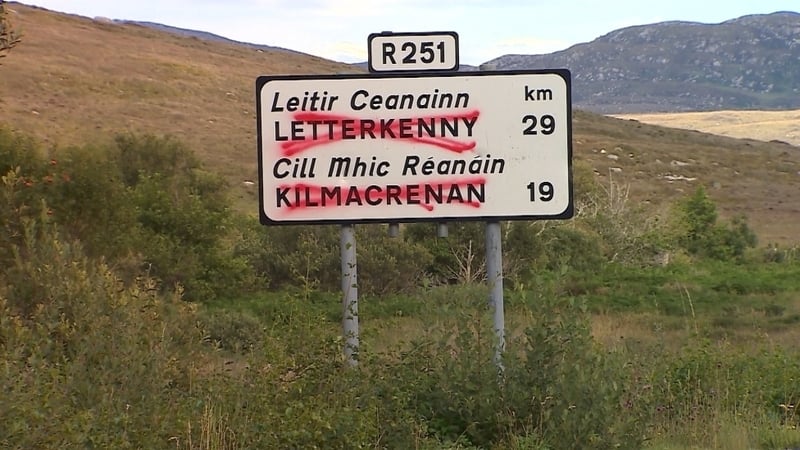
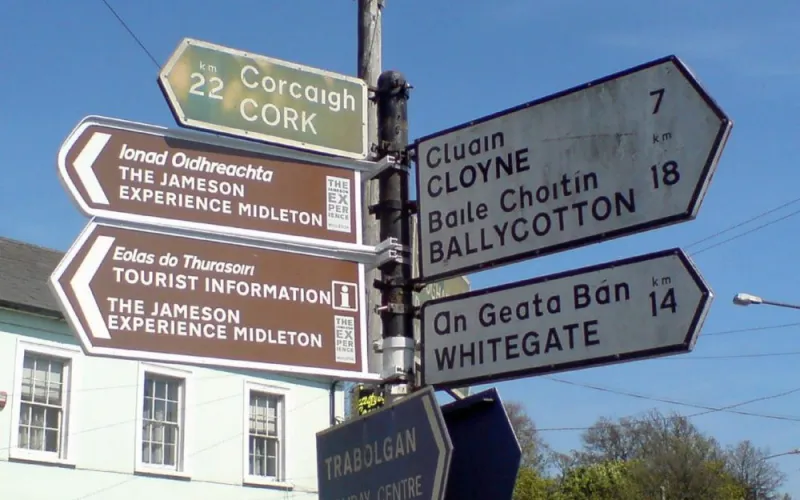
3. Cultural Delegitimization: Victorian Britain deployed propaganda to dehumanize the Irish. **Punch magazine** caricatured Irishmen as simian “Paddies.” The **Royal Irish Academy** was forbidden from publishing in Irish until 1870. The **Ordnance Survey (1824–1846)** anglicized over **63,000 Irish placenames** — Dún na nGall became “Donegal,” Cill Dara became “Kildare,” Baile Átha Cliath became “Dublin.” This was **ethnocide by nomenclature**. As cultural historian Joep Leerssen argues, the goal was to make Irish culture “invisible in its own landscape.” The suppression was so effective that by 1900, many Irish people believed their own culture was inferior — a psychological victory for colonialism.
Why was Gaelic suppressed?
Why was Gaelic suppressed? The answer lies at the intersection of **political strategy**, **religious conflict**, and **imperial ideology**. Gaelic was not just a language — it was the **carrier of an alternative Irish civilization**: Catholic, communal, oral, poetic, and inherently resistant to centralized English control. Suppressing it was essential to British domination on multiple levels.
1. Political Control: Gaelic enabled resistance. The **1641 Ulster Rebellion**, the **1798 United Irishmen uprising**, and the **1867 Fenian Rising** all used Irish as a medium for secret communication, coded poetry, and revolutionary propaganda. A shared language allowed rebels to organize across regions. As **Lord Chancellor John Bowes** wrote in 1730, “The Irish language is the chief instrument of rebellion and disloyalty.” Eliminating it was a **preemptive strike against insurgency**.
2. Religious Divide: Gaelic was overwhelmingly Catholic. The **Reformation failed in Ireland** because Gaelic clergy resisted Protestantism. Banning Irish priests and schools was a way to impose the Church of Ireland. The **1704 Popery Act** required Catholic priests to register in English — those who couldn’t were deported or executed. Gaelic was seen as a **vector for papal influence**.
3. Civilizing Mission: 19th-century Britain viewed itself as a global enlightener. Gaelic was labeled “barbarous,” “corrupt,” and “unfit for commerce or science.” The **National Schools inspector** in 1835 declared: “The Irish language must be extinguished to civilize the people.” This wasn’t cultural preference — it was **ethnocentric imperialism**. Gaelic had to die for Ireland to be “improved” in the image of England. As historian Nicholas Canny notes, the suppression was framed as a **moral duty**, not a political choice.
How many years did the English oppress the Irish?
How many years did the English oppress the Irish? The timeline of English domination in Ireland spans **over 829 years**, from the **Anglo-Norman invasion of 1169** under Strongbow and Henry II to the **Good Friday Agreement of 1998**, which marked the end of the Troubles and the beginning of power-sharing in Northern Ireland. However, the most intense period of **cultural and linguistic oppression** lasted from the **Tudor conquest of 1534** to the **establishment of the Irish Free State in 1922** — a total of **388 years**.
Key phases include:
- 1169–1534 (365 years): Norman feudalism; Irish culture dominant outside the Pale.
- 1534–1690 (156 years): Tudor and Stuart conquest; Irish language banned in law, church, and administration.
- 1690–1800 (110 years): Penal Laws era; Irish reduced to peasant status, language driven underground.
- 1800–1922 (122 years): Act of Union; National Schools; Great Famine; Irish nearly extinct as a community language.
- 1922–1998 (76 years): Independence achieved, but cultural recovery slow; Irish compulsory in schools but often poorly taught.
The **linguistic oppression** was most acute between **1831 (National Schools ban)** and **1879 (first state recognition of Irish teaching)** — **48 years of total exclusion from public education**. Even after independence, the legacy persisted: the **2021 census** showed only **1.7% of the population** using Irish daily outside education, despite 40% claiming some proficiency.
How long was the Irish language banned in Ireland?
How long was the Irish language banned in Ireland? There was never a single, explicit law declaring “Irish is banned” — but it was **effectively prohibited in all public and institutional contexts for over 500 years**, from the **Statutes of Kilkenny in 1366** to the **disestablishment of the Church of Ireland in 1871**. The most severe and systematic ban occurred between **1831 and 1879** under the **National Schools system**, a **48-year period** during which Irish was **completely excluded from the state-funded curriculum**.
During this time:
- Courts: Irish banned since 1537 (385 years until 1922)
- Parliament: Banned under Act of Union 1800–1922 (122 years)
- Public Schools: Banned 1831–1879 (48 years)
- Church of Ireland: Irish excluded from services 1600s–1870 (250+ years)
The **1879 Intermediate Education Act** finally allowed Irish as an optional subject — but only if self-funded. Irish was not taught in any state-funded school until **1901**, and not made compulsory until **1922**. As the history of the Irish language PDF from Foras na Gaeilge documents, this was not freedom of speech — it was **linguistic suffocation by policy**.
Why did the Irish hate the English so much?
Why did the Irish hate the English so much? This was not ancient tribalism or irrational prejudice — it was a **rational, intergenerational response to eight centuries of systemic violence, dispossession, and cultural annihilation**. The hatred was forged in specific, documented traumas:
- Land Theft: By 1870, **97% of Irish land** was owned by British or Anglo-Irish landlords. Native Irish were tenants at will, evicted en masse.
- Famine Neglect: During 1845–1852, Ireland exported food under British guard while 1 million starved. **Charles Trevelyan** called it “a punishment from God.”
- Cultural Erasure: Language, law, religion, music, sport — all targeted for destruction.
- Violent Suppression: 1798 (30,000 dead), 1848, 1916 (executions, martial law) — each rebellion crushed brutally.
British racism fueled the fire: **“No Irish Need Apply”** signs, **Punch cartoons** of Irish as apes, laws treating Catholics as subhuman. The hatred was **trauma codified in song, story, and memory** — from The Fields of Athenry to the Black and Tans.
Is there a word for no in the Irish language?
Is there a word for no in the Irish language? No — and this is one of the most elegant and distinctive features of Gaeilge. Irish has **no direct equivalents for “yes” or “no”**. Instead, it uses **verb repetition or negation** to respond, reflecting its deeply synthetic, verb-centric grammar.
Examples:
- Q: An bhfuil tú ag labhairt Gaeilge? → A: Tá (I am) or Níl (I am not)
- Q: An ndeachaigh tú go dtí an siopa? → A: Chuaigh (I did) or Níor chuaigh (I did not)
This structure, inherited from Old Irish (6th century), forces precision and rhythm. As linguist Nancy Stenson notes, it’s why Irish poetry flows without blunt monosyllables. It’s a **living link to ancient Celtic thought** — no absolutes, only contextual truth.
Why did the Irish language numbers decline?
The Irish language numbers decline was catastrophic: from **5.1 million speakers in 1800** to **680,000 in 1891**. Causes:
- Famine mortality (1M dead)
- Emigration (1.5M, mostly young speakers)
- National Schools (English-only)
- Economic necessity (English = jobs)
- Parental choice (Irish = poverty)
The **1851–1861 decade** saw a **50% drop** — the steepest in history. By 1926, only **17%** claimed proficiency.
Why was there anti-Irish sentiment?
Why was there anti-Irish sentiment? Religious fear, economic rivalry, and racial pseudoscience:
- Catholic “threat” to Protestant Britain
- Irish migrants undercutting wages
- 19th-century “science” ranking Celts as inferior
Result: **“No Irish Need Apply”**, nativist riots, dehumanizing cartoons.
How did the Celtic languages decline?
All Celtic languages followed conquest → centralization → assimilation:
- Roman Latin → Gaulish extinct
- Anglo-Saxon → Brittonic → Welsh/Cornish
- French state → Breton banned
- Irish: famine + colonialism = worst collapse
Cornish died 1777, Manx 1974. Irish fell from 5M to 70,000 daily users.
Did England ban the Irish language?
Did England ban the Irish language? Not with one law — but through **200+ statutes**:
- 1366: Kilkenny
- 1537: Henry VIII
- 1831: National Schools
Public use penalized. Private speech tolerated
About the Author
