
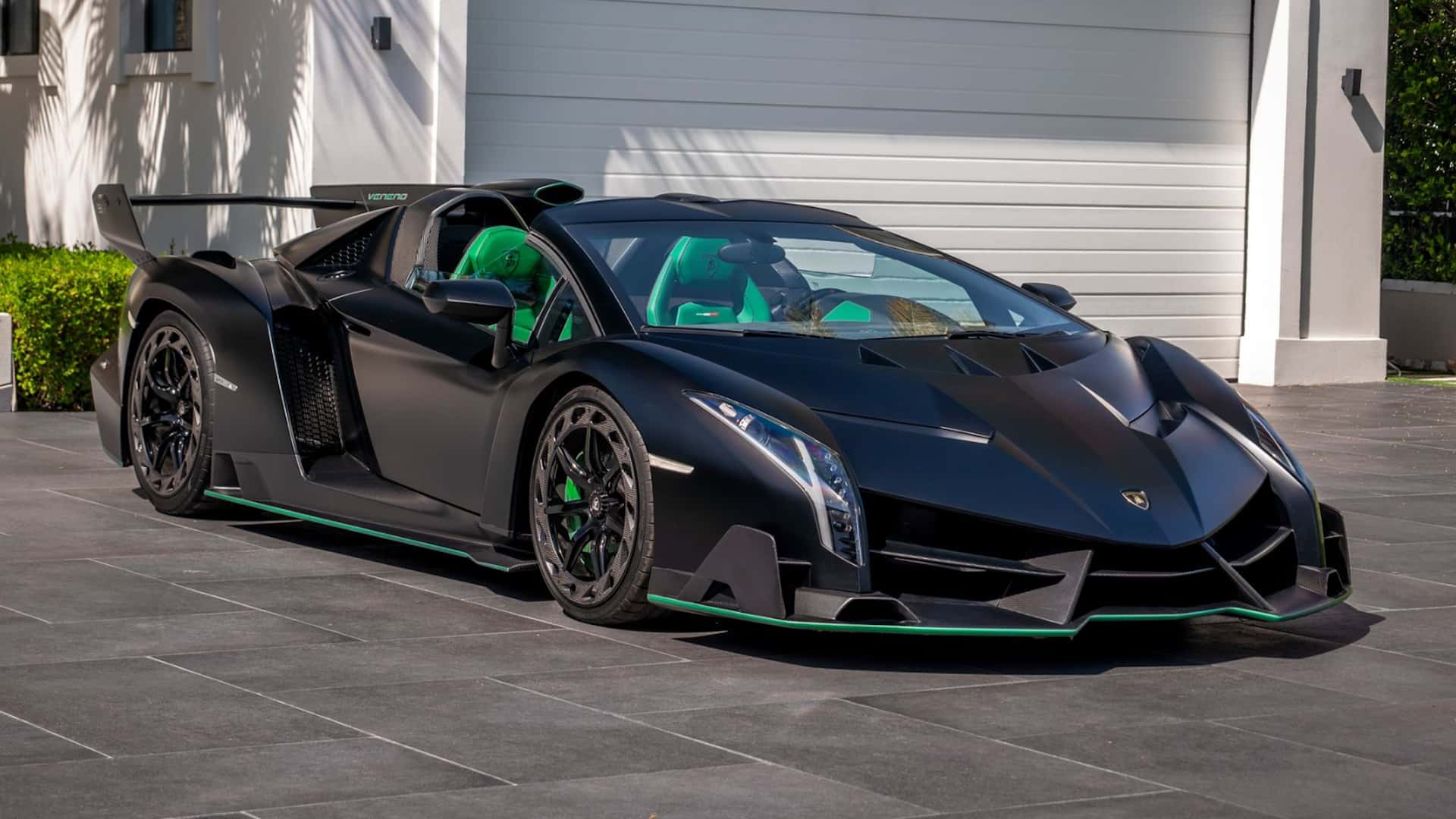
The roar of a V12 engine, the dramatic lines of a supercar, the unmistakable Lamborghini logo of a charging bull – these are the hallmarks of Automobili Lamborghini, a name synonymous with automotive passion, audacious design, and uncompromising performance.
But delve deeper than the glossy brochures and high-octane videos, and you’ll uncover a story born from a farmer’s frustration, a tale of ambition, rivalry, and a relentless pursuit of perfection.
And, perhaps surprisingly, there’s a compelling, albeit less heralded, connection to the land of saints and scholars, Ireland.
Where is Lambo originally from? and Where is the Lamborghini family from?
The story of Lamborghini begins not in a sleek design studio, but on a farm in Renazzo di Cento, a small comune in the province of Ferrara, Emilia-Romagna, Italy.
This is where the Lamborghini family is from, and it was here that Ferruccio Lamborghini, born in 1916, cultivated his mechanical genius.
Initially, his company, Lamborghini Trattori, was famed for its robust and innovative tractors, a testament to Ferruccio’s engineering prowess and entrepreneurial spirit. He built a successful empire from the ground up, a reflection of the drive often found in those who transform humble beginnings into extraordinary achievements.
The legend goes that Ferruccio, a wealthy industrialist and avid car enthusiast, owned several high-performance vehicles, including Ferraris.
Frustrated with persistent clutch problems in his Ferrari, he famously approached Enzo Ferrari with suggestions for improvement. Enzo, a proud and perhaps arrogant man, reputedly dismissed Ferruccio, telling him to stick to making tractors. This perceived insult ignited a fiery determination in Ferruccio Lamborghini. “I want to build a better car than Ferrari,” he declared, and thus, Automobili Lamborghini S.p.A. was founded in 1963 in Sant’Agata Bolognese, Italy. This is where Lambo originally from, a testament to one man’s audacity to challenge the established order.
A Roaring Bull and the Celtic Tiger: Lamborghini in Ireland
@holdmydrinkpod Turns out driving a Lamborghini in Ireland isn’t as glam as it sounds 🇮🇪😅 Listen to the full episode of Hold My Drink with special guest @askpaul.ie 🥂 Thanks to @cocacolagbi for sponsoring this episode! #AD #holdmydrink #charleenmurphy #elliekelly #askpaul
While Lamborghini is undeniably Italian in its genesis and heart, the story of its presence and appreciation extends across the globe, reaching even to the shores of Ireland.
For a nation often associated with rolling green hills, ancient castles, and traditional music, the sight of a gleaming Lamborghini Huracan or a commanding Lamborghini Urus turning heads on a Dublin street might seem incongruous. Yet, the affinity for these magnificent machines in Ireland is growing, reflecting the country’s economic dynamism and a burgeoning appreciation for luxury and performance.
Ireland’s journey from an agricultural economy to the “Celtic Tiger” of the late 20th and early 21st centuries saw a dramatic increase in wealth and a shift in aspirations.
As disposable incomes rose, so too did the desire for symbols of success and innovation. The arrival of high-performance car dealerships and the increasing visibility of supercars like Lamborghinis on Irish roads are clear indicators of this transformation.
Indeed, events like the annual “Cannonball Run” charity supercar rally have become a phenomenon across Ireland, drawing massive crowds eager to catch a glimpse of exotic machinery. In recent years, the Cannonball Run has seen a record number of Lamborghinis participate, showcasing models from the Lamborghini Aventador to the latest Lamborghini Huracan and Lamborghini Urus. This spectacle of power and design, against the backdrop of Ireland’s stunning landscapes, creates a truly unique Lamborghini photo opportunity and a tangible connection between the Italian automotive titan and the vibrant Irish car culture.
Can you drive a Lamborghini in Ireland?
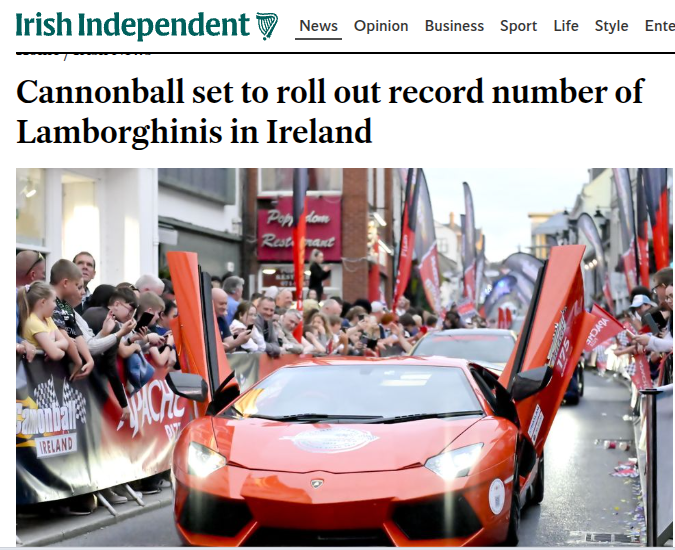
Absolutely! While navigating rural boreens might be a challenge, Ireland’s well-maintained road network, particularly motorways and national routes, provides ample opportunity to experience the thrill of a Lamborghini. The legal framework for driving such high-performance vehicles is no different than for any other car, though owners certainly adhere to speed limits and road safety regulations.
The presence of these supercars is not just about ostentatious display; it also speaks to a growing segment of enthusiasts and collectors in Ireland who appreciate the engineering marvel, the heritage, and the sheer driving pleasure that a Lamborghini offers. It’s a testament to Ireland’s increasing integration into the global luxury market and its evolving automotive landscape.
The Evolution of the Bull: From Miura to Urus
From its inception, Lamborghini set out to challenge the norms. The iconic Miura, launched in 1966, redefined the supercar genre with its revolutionary mid-engine layout and breathtaking design. It was a statement, a testament to Ferruccio’s vision, and it put Lamborghini firmly on the map as a serious contender in the high-performance automobile world.
Through periods of financial struggle and changing ownership, the spirit of innovation persisted. The aggressive Countach, a poster car for a generation, followed, pushing the boundaries of radical design. Later came the Diablo, the Murciélago, and the Gallardo, each building upon the brand’s reputation for uncompromising power and exotic aesthetics.
Today, the lineup is dominated by three main models, each catering to a distinct segment of the high-performance market:
- Lamborghini Huracan: The successor to the Gallardo, the Huracan is a dynamic V10-powered supercar known for its thrilling performance and precise handling. It embodies the classic Lamborghini spirit of raw power and track-focused agility. Many a stunning Lamborghini photo features this beauty tearing down a scenic road.
- Lamborghini Aventador: The flagship V12 model, the Aventador, with its scissor doors and dramatic styling, represents the pinnacle of Lamborghini’s traditional supercar offerings. It’s a statement piece, a symphony of engineering and design that demands attention. The Lamborghini Aventador is often the star of a dramatic Lamborghini Wallpaper.
- Lamborghini Urus: A game-changer for the brand, the Lamborghini Urus is the world’s first Super Sport Utility Vehicle. It combines Lamborghini’s signature performance and design DNA with the versatility and practicality of an SUV. The Urus has proven to be an enormous success, significantly boosting Lamborghini’s sales and introducing the brand to a wider audience, including families and those who seek supercar performance in a more adaptable package. Its success has been particularly notable in markets like Ireland, where its blend of luxury and utility appeals to a broader demographic.
The Global Landscape of Lamborghini Ownership
Which company owns Lamborghini?
Lamborghini is owned by Automobili Lamborghini S.p.A., which in turn is a subsidiary of Audi AG. Audi AG is a wholly-owned subsidiary of the Volkswagen Group. So, ultimately, the powerful German conglomerate, the Volkswagen Group, holds the reins of the raging bull.
Does Volkswagen own 100% of Lamborghini?
Yes, the Volkswagen Group owns 100% of Automobili Lamborghini S.p.A. through its Audi division.
Who owns the rights to Lamborghini?
The Volkswagen Group, through its subsidiary Audi, owns all the rights to the Lamborghini brand, including its designs, trademarks, and intellectual property.
Who is the real owner of Lamborghini?
While the Volkswagen Group is the corporate owner, the spirit and legacy of Lamborghini are rooted in its founder, Ferruccio Lamborghini, and the dedicated teams of designers and engineers in Sant’Agata Bolognese who continue to build these extraordinary machines.
What is the current price of a Lamborghini car? / What is the price of a real Lamborghini? / How much is a Lamborghini Ireland?
The price of a Lamborghini varies significantly depending on the model, specification, and whether it’s new or used.
- A brand new Lamborghini Huracan typically starts from around €200,000 to €250,000, but can easily exceed this with customisation.
- The Lamborghini Urus generally starts from around €250,000 to €300,000, with higher-performance variants and options pushing the price upwards.
- The Lamborghini Aventador, as the flagship V12, would start much higher, often in the region of €400,000 to €500,000 or more for new models (though production has largely shifted to its successor, the Revuelto).
How much does a Lamborghini cost in Ireland? The prices for Lamborghinis in Ireland are generally similar to those in other Western European markets, but can be influenced by import duties, VAT (Value Added Tax), and the Vehicle Registration Tax (VRT) in Ireland, which can add a substantial amount to the sticker price. Based on recent listings in Ireland, used Lamborghini Urus models can be found from around €300,000 to over €400,000 for newer, high-spec versions. Used Huracans can range from €200,000 upwards.
Are there any Lamborghinis in Ireland?
Absolutely! As noted, there’s a vibrant community of Lamborghini owners and enthusiasts in Ireland. The annual Cannonball Run showcases a significant number of these vehicles, and they can be spotted regularly in major cities and affluent areas. Dealerships and specialist luxury car importers cater to the demand.
What country owns the most Lamborghinis?
While precise global statistics are difficult to pinpoint and constantly change, the largest markets for Lamborghini are typically the United States, followed by China, Germany, the United Kingdom, and Japan. The US consistently leads in sales due to its large luxury market and car culture.
What is the most expensive car in the world?
The title of the “most expensive car in the world” is a moving target, often held by bespoke, ultra-limited edition, or historically significant collector cars. As of mid-2025, Bugatti, Rolls-Royce, and one-off specials from various hypercar manufacturers often vie for this title. For example, the Bugatti La Voiture Noire, priced at around €16.7 million (including taxes), was considered the most expensive new car ever sold at its reveal. However, classic cars sold at auction can easily surpass these figures, with some historical Ferrari models reaching tens of millions of euros.
Which company owns Ferrari?
Ferrari is a publicly traded company (NYSE: RACE), meaning its ownership is distributed among various shareholders. However, the Agnelli family’s holding company, Exor N.V., holds a significant stake (around 22.91%), and Piero Ferrari (Enzo Ferrari’s son) retains a 10% stake in the company. So, while not owned by a single large automotive conglomerate in the same way Lamborghini is, it has strong historical ties to Fiat (now Stellantis).
Which company owns Bugatti?
Bugatti is currently part of a joint company called Bugatti Rimac. In 2021, Porsche (a subsidiary of the Volkswagen Group) transferred its shares in Bugatti to Rimac Automobili, a Croatian high-performance electric vehicle manufacturer. This effectively created Bugatti Rimac, with Rimac Automobili holding a majority stake (55%) and Porsche holding the remaining 45%.
From Ferruccio Lamborghini’s initial defiance to the global recognition of the Lamborghini Urus and Lamborghini Huracan, the brand represents an unwavering commitment to pushing boundaries. Its journey reflects not only automotive evolution but also the global shifts in wealth, aspiration, and the enduring human desire for both beauty and raw power. And for those on the Emerald Isle, the sight of a gleaming Lamborghini, perhaps emblazoned on a Lamborghini Wallpaper on their screens or roaring past on a summer’s day, is a potent symbol of modern Ireland’s journey, seamlessly blending ancient heritage with a contemporary appreciation for the world’s most exhilarating machines.
About the Author

Seamus
Administrator
Seamus O Hanrachtaigh is an Irish historian, explorer, and storyteller passionate about uncovering the hidden gems and forgotten heritage of Ireland. With years of hands-on exploration across every county — from misty folklore-rich glens and ancient trails to secret coastal paths and vibrant traditional music sessions — he brings authentic, experience-backed insights to travelers seeking the real Ireland beyond the tourist trails. A regular contributor to Irish Central and other publications, Seamus specializes in Celtic traditions, genealogy, Irish history, and off-the-beaten-path road trips. Every guide on SecretIreland.ie draws from personal adventures, local conversations, rigorous research, and fresh 2026 discoveries to deliver trustworthy content filled with genuine craic and hidden stories that big guidebooks miss. When not chasing the next undiscovered spot, Seamus enjoys trad music sessions and fireside storytelling with fellow enthusiasts who value Ireland’s living culture.