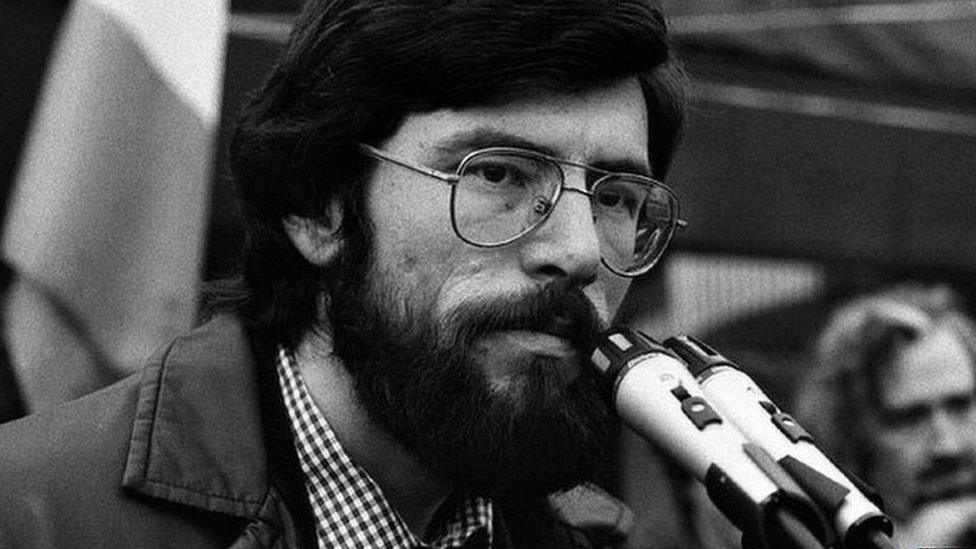
Gerry Adams is one of the most polarizing figures in Irish history—a man whose name is synonymous with both the political evolution of Sinn Féin and the dark complexities of the Troubles.
From his roots in west Belfast to his alleged involvement with the IRA, Adams has been a lightning rod for both praise and criticism. This blog explores his origins, the persistent allegations of IRA involvement, his political legacy, and his enduring role in shaping Ireland’s past and present.
Origins: From Belfast to the Frontlines of Republicanism
FAQ’s
Is Gerry Adams in the IRA?
One of the most enduring questions surrounding Adams’ legacy is his alleged role in the Provisional IRA. Adams has always denied being a member, maintaining that his involvement was purely political through Sinn Féin. However, multiple testimonies from former IRA members—including Brendan Hughes, Freddie Scappaticci, and Dolours Price—have implicated him in IRA activities.
Hughes, Adams’ one-time comrade, alleged that Adams held a senior role in the IRA’s Belfast Brigade and ordered operations such as the disappearance of Jean McConville, a widow accused of being an informer. Scappaticci, the notorious double agent Stakeknife, also implicated Adams in high-level IRA decisions. Despite these claims, Adams has consistently denied involvement, stating, “I never disassociated myself from the IRA because I was never in the IRA.”
How Many Times Was Gerry Adams Shot?
Adams was shot and severely wounded in 1984 during an assassination attempt by the Ulster Freedom Fighters (UFF), a loyalist paramilitary group. The attack occurred as he was leaving a Sinn Féin press conference in central Belfast. Adams was struck in the neck, shoulder, and arm but survived the ambush. His survival only bolstered his status within the republican community, further cementing his symbolic role as a figure of resilience.
Is the IRA the Same as Sinn Féin?
While the IRA and Sinn Féin are distinct entities, their histories are deeply intertwined. The IRA functioned as the military wing of Irish republicanism, advocating armed resistance against British rule in Northern Ireland. Sinn Féin served as the political arm, providing a platform for the republican movement to engage in elections and negotiations.
Under Adams’ leadership, Sinn Féin underwent a significant transformation, adopting a political strategy that eventually led to the Good Friday Agreement in 1998. The shift from violence to diplomacy marked a departure from the IRA’s tactics, but critics argue that Sinn Féin remains ideologically aligned with its militant past.
The Good Friday Agreement and Political Legacy
Adams played a pivotal role in the negotiations that culminated in the Good Friday Agreement, which brought an official end to the Troubles. His efforts to secure peace earned him international recognition, though the process was fraught with challenges. Many unionists remained skeptical of Adams’ intentions, citing his alleged IRA connections as evidence of duplicity.
Despite these challenges, Adams’ leadership transformed Sinn Féin into a mainstream political party. By focusing on issues like housing, healthcare, and reunification, Sinn Féin has grown to become a dominant force in Irish politics, with Adams’ groundwork laying the foundation for its modern success.
Is The Foreigner About Gerry Adams?
The Foreigner (2017), starring Jackie Chan and Pierce Brosnan, is loosely inspired by the Troubles. Brosnan’s character, Liam Hennessy, is a fictionalized depiction of a former IRA leader turned politician. While not directly based on Gerry Adams, Hennessy’s character bears similarities to Adams’ political evolution and the persistent allegations of his IRA past.
Is the Irish Army the IRA?
No, the Irish Army and the IRA are separate entities. The Irish Army is the official military force of the Republic of Ireland, while the IRA was a paramilitary organization advocating for Irish unification and the end of British rule in Northern Ireland. While the IRA’s actions were often controversial, they were not affiliated with the Irish state.
Is Ireland Still Divided?
Yes, Ireland remains divided between the Republic of Ireland, an independent state, and Northern Ireland, which is part of the United Kingdom. The Good Friday Agreement provided a framework for peace and governance, allowing for the possibility of a future referendum on reunification. While tensions persist, the border remains open, and significant progress has been made toward reconciliation.
Did the IRA Win the War?
The IRA did not achieve its ultimate goal of a united Ireland through armed struggle. However, the Good Friday Agreement, which legitimized Sinn Féin as a political force and allowed for a peaceful resolution to the conflict, is seen by many as a victory for the republican cause. The agreement demonstrated that diplomacy, not violence, could bring about meaningful change.
What Does Sinn Féin Mean?
Sinn Féin translates to “We Ourselves” in Irish, signifying the party’s emphasis on self-determination and independence. Originally founded in 1905, Sinn Féin has evolved into a modern political party advocating for Irish unity, social justice, and economic equality.
Gerry Adams’ Personal Life
Is Gerry Adams’ Wife Still Alive?
Adams married Collette McArdle in 1971. She has remained a steadfast supporter of his political career, though she has largely avoided the spotlight. Her enduring role in Adams’ life is often overshadowed by the controversies surrounding her husband.
Gerry Adams Son
Adams and McArdle have one son, Gearóid, who has kept a relatively low profile compared to his father’s prominence.
Where Is Gerry Adams Now?
Adams stepped down as Sinn Féin’s president in 2018, ending a leadership tenure of over 30 years. Today, he resides in the Belfast and continues to advocate for Irish reunification, writing books and giving lectures.
Gerry Adams Net Worth and Is He a Millionaire?
While exact figures are not publicly available, Adams’ net worth is often estimated in the low millions due to book royalties and speaking engagements. Despite these earnings, his critics question the financial disparity between Adams and the working-class communities he represents.
Is Gerry Adams Alive?
Yes, Gerry Adams is alive and remains an influential figure in Irish politics and history.
A Legacy of Controversy and Change
Gerry Adams’ life is a study in contrasts: a peacemaker accused of violence, a revolutionary turned politician, and a polarizing figure whose name will forever be associated with both the pain and progress of Northern Ireland. Whether seen as a hero or a villain, Adams’ impact on Irish history is undeniable.
For more insights into the lives and legacies of key figures in the Troubles, visit:
- Dolours Price: The Complex Legacy of an IRA Revolutionary
- Say Nothing: A Deep Dive into the Movie and Its Impact
- Freddie Scappaticci: The Dark Heart of the Troubles
- Dominic Mad Dog McGlinchey: The Fearless and Controversial INLA Leader
- Brendan “the dark” Hughes
- Dolores Price
About the Author
