Few symbols carry the weight of history quite like the Ireland flag. It’s more than just an orange, white green flag; it is a battle cry, a plea for unity, a reflection of the blood, sacrifice, and hope of a people who have fought for centuries to forge their own destiny. The Irish tricolour, as we know it today, is a powerful representation of the country’s turbulent past and its aspirations for a future built on peace and reconciliation.
But before this now-iconic orange, white green flag vertical took its place in history, Ireland flew under different banners. The old Irish flag, the blue Irish flag, and the old Irish flag with harp—each carried its own significance, reflecting the shifting tides of power, identity, and resistance.
So, where did our flag come from? What does it symbolize? And how does it continue to shape the Irish identity today? Let’s unravel the story behind the Irish flag and explore the deep meaning woven into its tricoloured fabric.
What Was the Irish Flag Before the Tricolour?
Before the orange, white green flag horizontal became the national standard, Ireland had several flags throughout history, each tied to different rulers, movements, and aspirations.
The Blue Irish Flag with the Harp
One of the oldest symbols associated with Ireland is the blue Irish flag, which featured a gold harp at its center. This flag was historically linked to the Kingdom of Ireland under English rule and was used by Irish military units fighting for the British crown. The harp, a deeply significant emblem of Irish heritage, remains part of the official Presidential Standard of Ireland today.
The Old Irish Flag with the Harp
Long before Ireland adopted the tricolour, the old Irish flag with harp was a widely recognized emblem of the island. It was frequently used by Irish rebels as a rallying symbol, especially during uprisings against British rule. The harp, a traditional Irish instrument, represented the cultural and artistic soul of the nation—a poignant reminder of Ireland’s ancient legacy.
The Green Flag with the Harp
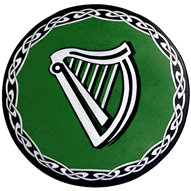
During the late 18th and early 19th centuries, Irish republicans adopted a green flag with a gold harp, popularized by groups like the United Irishmen. This flag became a symbol of rebellion and was flown in uprisings, most notably in the 1798 Rebellion against British rule.
The Birth of the Tricolour: The Story Behind the Irish Flag
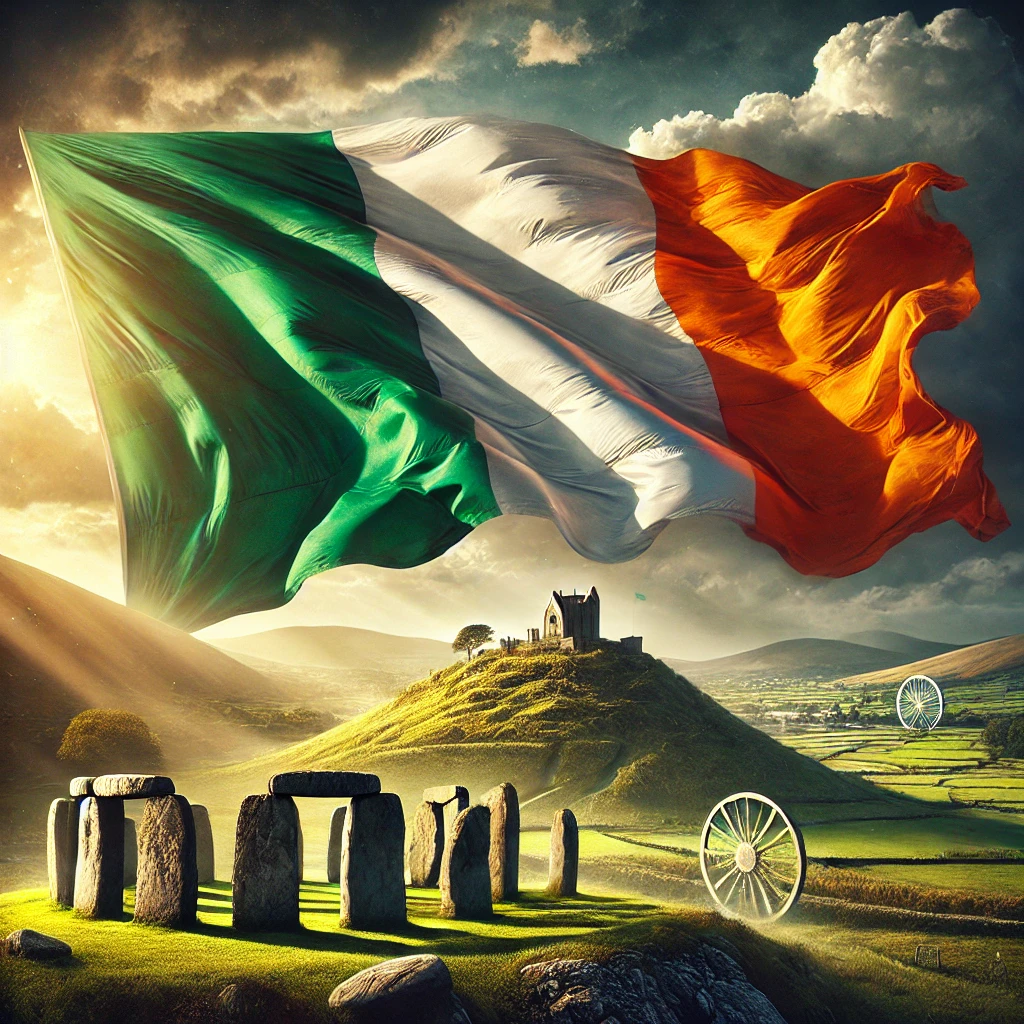
The modern orange, white green flag vertical was first introduced in 1848 by Thomas Francis Meagher, an Irish nationalist who sought inspiration from the French revolutionary movement. Presented as a gift from French supporters, the Irish tricolour was designed to symbolize unity in a divided land.
What Do the Colours of the Irish Flag Represent?
- Green: Represents the Irish Catholic and nationalist traditions.
- Orange: Represents the Protestant and unionist community.
- White: Symbolizes the hope for lasting peace and unity between the two groups.
Though Meagher introduced the flag in the 1848 Young Irelander Rebellion, it did not gain official status until the Easter Rising of 1916, when Irish republicans raised it over the General Post Office in Dublin. After Ireland gained independence, the tricolour was formally adopted as the national flag.
Why Is the Irish Flag Called Green, White and Gold?
Despite being officially recognized as an orange, white green flag, some Irish republicans prefer to describe it as green, white and gold—excluding the reference to orange due to its association with British rule and the Protestant Orange Order. However, the original design deliberately included orange to represent Protestant Irish people and the aspiration for unity rather than division.
What Does the Harp Mean in the Irish Flag?
While the harp does not appear on the national Ireland flag, it remains one of the most important national symbols. The old Irish flag with harp was used by Irish revolutionaries and continues to feature on official state documents, the Irish passport, and government emblems.
The harp, a symbol of Ireland’s poetic and musical heritage, is deeply embedded in Irish culture. Even today, it represents the resilience and creativity of the Irish people.
The Evolution of the Irish Flag: A Symbol of Rebellion and Unity
The story behind the Irish flag is one of struggle, defiance, and ultimately, hope. Its evolution reflects the shifting tides of Irish history—from colonial rule to rebellion, from division to the enduring pursuit of peace.
Today, the Ireland flag flies proudly, not just in the homeland but across the world, carried by the Irish diaspora who hold its meaning close to their hearts. Whether seen at a sporting event, a protest, or draped over the shoulders of a proud emigrant, the Irish tricolour remains a beacon of identity, resistance, and unity.
For a deeper dive into Irish history and heritage, visit Secret Ireland, where the stories of Ireland’s past come alive.
More Thoughts
The orange, white green flag we recognize today is more than just fabric. It is a declaration of identity, a representation of past struggles, and a hope for a unified Ireland. Whether you see it as green, white and gold, or orange, white green, its message remains the same: a call for unity in a land that has endured centuries of conflict and division.
As long as Ireland exists, so too will the story of its flag—a tale of defiance, resilience, and an unwavering spirit that refuses to be silenced.
The Irish Flag as a Symbol of Resistance and Identity
The story behind the Irish flag is not just a historical footnote—it is a living, breathing narrative that continues to unfold. From the battlefields of 1798 to the steps of the GPO in 1916, from the bloodied streets of Belfast to the halls of Leinster House, the Ireland flag has remained a powerful emblem of identity, resistance, and hope.
It has been burned, banned, raised, and revered. It has flown above barricades and burial sites, at moments of triumph and of tragedy. It has wrapped the shoulders of both politicians and prisoners, draped over the coffins of rebels and statesmen alike. And yet, through all of this, the tricolour endures—just like the Irish people it represents.
Even today, it is impossible to look at the orange, white green flag vertical without feeling the weight of history. It is a flag that means something. It is a flag that tells a story. And like all great Irish stories, it is one of hardship, defiance, and an unbreakable spirit.
The Tricolour in Modern Ireland: Unity or Division?
Despite its original intention to symbolize unity, the Irish tricolour has not always been embraced by all corners of the island. In Northern Ireland, where political and religious divisions remain, the Ireland flag is seen by some as a nationalist emblem rather than a shared symbol of the entire island.
Unionists continue to identify with the Union Jack, while loyalist paramilitaries have flown variations of their own flags in opposition to the tricolour. Meanwhile, Irish republicans continue to champion the green, white and gold as a banner of freedom, seeing it as unfinished business—an aspiration rather than a completed reality.
This division is part of what makes the tricolour such a compelling symbol. It is a reminder that Ireland’s story is still being written, that its people are still wrestling with their past while striving for a future where the white of the flag—symbolizing peace—can finally take center stage.
The Flag in Times of Conflict and Peace
Throughout the 20th century, the Irish flag played a key role in political movements, uprisings, and national struggles. It was raised by IRA volunteers during the War of Independence, it flew in defiance of British rule during the Troubles, and it has been carried through the streets during peace marches and civil rights demonstrations.
Even in death, the tricolour holds significance. The tradition of draping the flag over the coffin of fallen republicans is a powerful and emotional act, linking past generations of fighters to those who still believe in the cause of Irish unity.
At the same time, the flag has also been reclaimed as a positive symbol of peace and reconciliation. During the Good Friday Agreement negotiations, Irish and British leaders sought to redefine their shared history in a way that acknowledged the different traditions represented within the flag.
While the work is far from finished, the flag remains a beacon of what could be—a future where green and orange do not stand for division, but for a shared identity.
Irish Flags Across the World: A Global Symbol of Heritage
Beyond the borders of Ireland, the tricolour has found a home wherever the Irish have settled. In Boston, New York, Melbourne, and Buenos Aires, the orange, white green flag horizontal waves proudly above St. Patrick’s Day parades, Irish cultural centers, and the homes of emigrants longing for the land they left behind.
For the millions of people in the Irish diaspora, the flag is more than just a national symbol—it is a connection to home. It represents the struggle of their ancestors, the music of their culture, the poetry of their identity. Whether stitched onto a football jersey, painted on a pub wall, or waved at a rally, it remains a defining emblem of what it means to be Irish, no matter where in the world you are.
A Flag for the Future: What Lies Ahead?
The story behind the Irish flag is still unfolding. Ireland today is a country that is changing, modernizing, and evolving. The political landscape is shifting, conversations around reunification are gaining momentum, and debates over identity are more complex than ever before.
Will the tricolour one day fly over a united Ireland? Will it be redefined in a new political context? Or will it continue to stand as a symbol of a nation still grappling with its past?
No one knows for sure. But if history has taught us anything, it is that the Irish flag—like the people it represents—is not easily erased.
It is a flag that has been through war and peace, division and unity, hatred and hope. And through it all, it has remained steadfast, waving defiantly in the Irish wind.
No matter what the future holds, the tricolour will continue to tell its story—a story of struggle, sacrifice, and the undying hope that one day, all those it represents will finally stand together under its colors.
For more deep dives into Irish history, culture, and heritage, visit Secret Ireland—where the past comes alive and the stories of Ireland are told as they were meant to be.
About the Author
