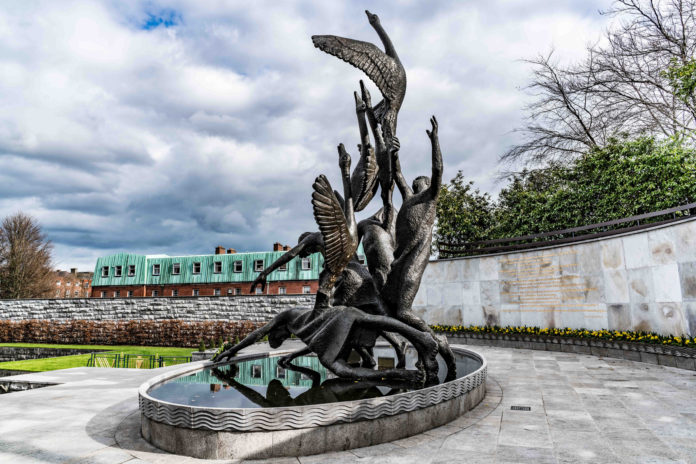
In Dublin’s Garden of Remembrance, the Children of Lir statue stands as a poignant and evocative tribute to Ireland’s enduring spirit.
Inspired by one of Ireland’s most famous myths, the statue represents themes of transformation, resilience, and the enduring power of love.
Let’s explore the history, symbolism, and story behind the Children of Lir statue, one of Ireland’s most beloved cultural landmarks.
What Do the Children of Lir Symbolize?
The Children of Lir symbolize transformation, resilience, and the power of enduring love. In Irish mythology, they were cursed to live as swans for 900 years, enduring hardship and loss but remaining connected to one another through their bond as siblings.
In the context of the Garden of Remembrance, the statue symbolizes Ireland’s struggle for freedom, the sacrifices made by its people, and the hope for rebirth and renewal. The transformation of the children into swans mirrors Ireland’s journey through oppression and eventual liberation.
What Is the Statue in the Garden of Remembrance?
The Children of Lir statue is the centerpiece of Dublin’s Garden of Remembrance. Designed by sculptor Oisín Kelly, it was unveiled in 1971 as a tribute to those who gave their lives for Irish freedom.
The statue’s depiction of swans in flight conveys a sense of movement and transformation, reflecting the resilience and strength of the Irish spirit.
Is The Children of Lir Based on a True Story?
No, the Children of Lir is a mythological tale from Irish folklore. While not based on historical events, the story is deeply rooted in Ireland’s cultural heritage and has been passed down through generations as a symbol of endurance and transformation.
Who Are the Four Children of Lir?
The four Children of Lir are:
- Fionnuala – The eldest sister, who takes on a protective and maternal role for her brothers.
- Aodh – The second child, known for his gentleness and loyalty.
- Fiachra – One of the twin brothers, symbolizing resilience and courage.
- Conn – The youngest, who embodies innocence and hope.
These siblings, cursed to live as swans for centuries, are central to the myth and the statue’s representation.
What Was the Curse of the Children of Lir?
The Children of Lir were cursed by their jealous stepmother, Aoife, who transformed them into swans. They were condemned to spend 300 years on Lough Derravaragh, 300 years on the Sea of Moyle, and 300 years on the Isle of Inishglora before being restored to human form.
The curse represents themes of suffering, endurance, and eventual redemption.
What Does Lir Mean in Irish?
The name Lir derives from the Old Irish word for “sea.” In mythology, Lir is the god of the sea, and his children’s transformation into swans emphasizes their connection to the natural world and Ireland’s enduring relationship with water.
What Is the Children of Lir About?
The Children of Lir is a tale of transformation and resilience. After being cursed, the children endure centuries of hardship as swans, witnessing the passage of time and the fading of their family and kingdom.
The curse is broken by the sound of a Christian bell, symbolizing Ireland’s transition from paganism to Christianity. The children return to human form as old and frail individuals, dying shortly after and ascending to the afterlife.
What Does the Cry of the Children Symbolize?
The cry of the children symbolizes sorrow, loss, and the longing for freedom. In the myth, their haunting cries as swans evoke the pain of separation and the hope for eventual reunion and peace.
What Is the Story Behind Tír na nÓg?
Tír na nÓg, or the “Land of Eternal Youth,” is a mythical paradise in Irish folklore. It represents a world free from suffering, where time stands still, and happiness reigns.
While distinct from the story of the Children of Lir, Tír na nÓg shares themes of transformation and the quest for a better, more harmonious existence.
Children of Lir Statue History
The Children of Lir statue was commissioned to honor those who fought and died for Irish independence. Sculptor Oisín Kelly drew on the myth to create a piece that resonates with themes of sacrifice and renewal, linking Ireland’s mythical past to its modern struggles for freedom.
The statue’s unveiling in the Garden of Remembrance in 1971 marked a significant moment in recognizing the sacrifices made during Ireland’s fight for independence.
Children of Lir Statue Meaning
The statue’s depiction of the swans in flight reflects both the sorrow of the Children of Lir’s curse and the hope of their eventual release. It symbolizes Ireland’s resilience and transformation, celebrating the enduring spirit of the nation and its people.
Children of Lir Statue Replica
While the original statue stands in Dublin’s Garden of Remembrance, replicas and artistic interpretations of the Children of Lir can be found throughout Ireland, underscoring the story’s cultural significance.
Children of Lir Statue Tickets
Visiting the Children of Lir statue in the Garden of Remembrance is free, as the park is open to the public. Located on Parnell Square East, the garden provides a serene setting for reflection and exploration of Ireland’s history.
Children of Lir Statue Dublin Directions
To visit the Children of Lir statue:
- By Foot: The Garden of Remembrance is a short walk from O’Connell Street.
- By Public Transport: Use the Luas Green Line or several Dublin Bus routes that stop nearby.
- By Car: Parking is available in nearby lots or on-street.
Search “Children of Lir statue Dublin map” for precise navigation.
Explore More Irish Monuments and Stories
If the Children of Lir statue captured your imagination, discover other iconic landmarks and stories in Ireland:
- The O’Connell Monument: A Tribute to Ireland’s Liberator
- The Oscar Wilde Monument: Celebrating Ireland’s Literary Genius
- The Jim Larkin Statue: A Monument to Ireland’s Labor Hero
- Daniel O’Connell: The Liberator and Ireland’s Champion for Justice
Why the Children of Lir Statue Endures
The Children of Lir statue stands as a powerful reminder of Ireland’s cultural heritage and its journey through transformation and resilience. Whether you’re drawn to its mythological origins, its symbolism, or its historical significance, the statue offers a moment of connection to Ireland’s enduring spirit.
For more stories about Ireland’s history, culture, and legends, visit Secret Ireland.
The Children of Lir statue invites us to reflect on themes of endurance, transformation, and hope—values that continue to resonate in Ireland’s rich cultural tapestry. It is a must-visit landmark for those seeking to connect with Ireland’s myths and its unyielding spirit.
The Children of Lir in Ireland’s Cultural Identity
The Children of Lir myth has long held a special place in Irish culture. It represents the resilience of the Irish people, their deep connection to nature, and the enduring importance of family bonds. The statue in the Garden of Remembrance is a fitting tribute to this story, symbolizing the endurance of the human spirit in the face of adversity.
This myth resonates strongly in modern Ireland as a metaphor for transformation and the struggle for identity and freedom. The image of swans in flight, so central to the story and the statue, evokes both sorrow and hope—qualities that are central to Ireland’s history and national character.
About the Author
