
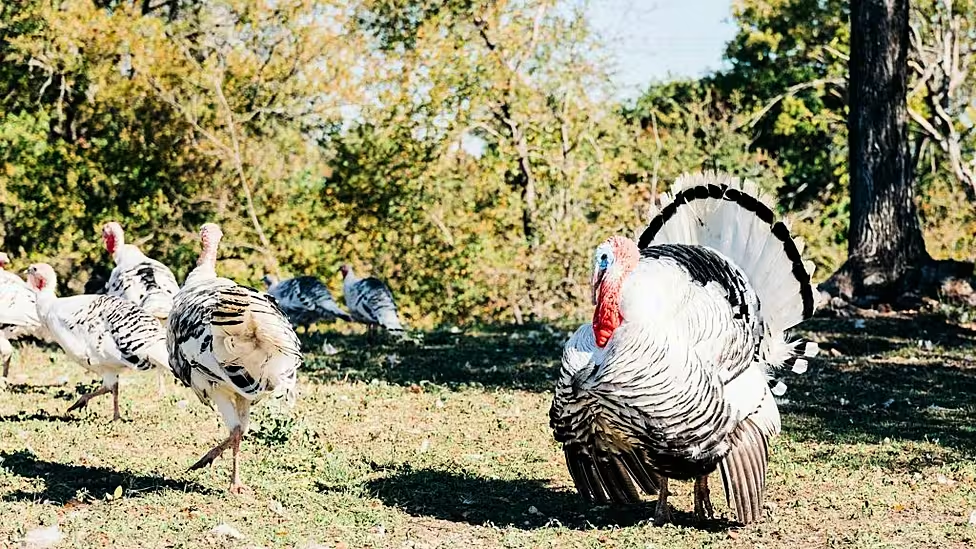
Picture this: a flock of plump, festive turkeys, dreaming of their big moment on Christmas dinner tables, now cooped up indoors like feathered prisoners, all because of a pesky virus.
In County Cork, near the famed Fota Wildlife Park, poultry farmer Robert Fitzsimmons is sweating feathers over the threat of bird flu—or, as the turkeys might call it, the ultimate party pooper.
With migratory birds playing the role of unwanted disease couriers, Fitzsimmons is fighting to keep his flock virus-free and save his Christmas turkey empire.
Bird Flu Blues: A Cork Farmer’s Nightmare
Robert Fitzsimmons, a seasoned poultry farmer based near Fota Wildlife Park, is no stranger to the ups and downs of farming. But the recent confirmation of avian flu (H5N1) at the nearby wildlife park has him more nervous than a turkey on December 24th. Three geese at Fota met a grim fate, testing positive for the virus, which prompted the park to close its gates to visitors until further notice. For Fitzsimmons, whose farm lies in the flight path of migratory birds between Ballintubber and Rostellan, this news is about as welcome as a fox in the henhouse.
In a candid chat with RTÉ’s Morning Ireland, Fitzsimmons didn’t mince words: “If, God forbid, we did get it, it would financially destroy the business.” With Christmas being the Super Bowl of turkey sales, a bird flu outbreak could turn his festive dreams into a financial horror story. Not to mention, the welfare of his feathered friends is at stake—nobody wants to see these gobblers suffer.
Fun Fact: Did you know turkeys can blush? When stressed, their heads turn bright red. Imagine a whole flock blushing at the thought of bird flu swooping in like an uninvited guest!
Why Migratory Birds Are the Real Culprits
Migratory birds, those free-spirited globetrotters of the sky, are the main suspects in spreading H5N1 avian flu. As they flap their wings over Cork, they could unknowingly drop viral payloads onto Fitzsimmons’ farm. It’s like a Hitchcockian nightmare, but instead of The Birds, it’s The Flu. The Department of Agriculture confirmed the virus in samples from Fota’s geese, highlighting the challenge of containing a disease that travels on wings.
Fitzsimmons explained, “It’s in the wild population, and we don’t know how we’re going to contain it.” With his farm directly under the migratory bird highway, he’s taking no chances. His turkeys are now indoor VIPs, shielded from the great outdoors and its viral risks. Local officials have advised against letting the birds strut outside, and Fitzsimmons is following suit, turning his farm into a fortress of biosecurity.
Biosecurity: The Turkey Defense Plan
To keep his flock safe, Fitzsimmons is pulling out all the stops. Picture him as a turkey bodyguard, disinfecting doors and limiting traffic in and out of the farm like a bouncer at an exclusive club. “We’re doing everything we can,” he said, detailing measures like minimizing visitors and ensuring every surface is cleaner than a whistle. It’s a high-stakes game of keep-away, with bird flu as the opponent.
But Fitzsimmons isn’t just worried about his own flock. He’s calling for broader action, including a potential housing order for poultry across Ireland. “I would like to see action being taken in a housing order, and definitely if it gets any worse, we do need to be very aware and get an exclusion zone because it’s our livelihoods,” he urged. He even has a message for backyard chicken keepers: don’t feed your hens outside! Those crumbs could attract wild birds, turning your backyard into a bird flu buffet.
Fun Fact: Turkeys are surprisingly social and love a good chat—well, gobble. Too bad they can’t negotiate with those migratory birds to take their flu elsewhere!
Fota Wildlife Park: A Hotspot for Bird Flu Concerns
Fota Wildlife Park, a beloved Cork attraction since 1983, is home to over 100 animal species, including endangered Asian lions, Indian rhinos, and red pandas. But the recent bird flu outbreak has cast a shadow over its conservation efforts. The park, which collaborates with the European Association of Zoos and Aquaria, is now grappling with the fallout of the virus in its bird population. The closure to the public is a stark reminder of how quickly avian flu can disrupt even the most well-managed facilities.
The Department of Agriculture is working overtime to monitor the situation, but containing a virus in wild bird populations is like trying to herd cats—or, in this case, geese. For farmers like Fitzsimmons, the park’s proximity is both a blessing (tourist traffic) and a curse (viral risks).
The Bigger Picture: Ireland’s Poultry Industry at Risk
Bird flu isn’t just a Cork problem—it’s a national concern. Ireland’s poultry industry, which supplies millions of Christmas turkeys and other poultry products, faces significant risks from H5N1. Fitzsimmons emphasized the ripple effect: “Even though the smaller producers with the backyard poultry mightn’t think they’re any threat, it matters to the greater industry.” A single outbreak could trigger widespread culling, supply chain disruptions, and skyrocketing prices—bad news for anyone craving a turkey dinner.
The challenge lies in the virus’s ability to spread through wild birds, which don’t respect farm boundaries or biosecurity protocols. The Department of Agriculture faces a Herculean task in controlling the spread, and farmers are on high alert, hoping to avoid a repeat of past outbreaks that decimated flocks across Europe.
How to Protect Your Poultry: Tips for Farmers and Backyard Keepers
Whether you’re a commercial farmer like Fitzsimmons or a hobbyist with a few hens, here are some SEO-friendly tips to keep your birds safe from bird flu:
- Keep Birds Indoors: Housing your poultry prevents contact with wild birds and their droppings.
- Enhance Biosecurity: Disinfect entrances, limit visitors, and wear dedicated clothing for handling birds.
- Avoid Outdoor Feeding: Don’t tempt wild birds with food scraps—think of it as locking up the buffet.
- Monitor Bird Health: Watch for signs of illness, like lethargy or reduced egg production, and report concerns to authorities.
- Stay Informed: Follow updates from the Department of Agriculture for the latest on bird flu risks.
Fun Fact: Turkeys can run up to 25 mph—faster than some of us chasing Black Friday deals! Too bad they can’t outrun bird flu.
What’s Next for Cork’s Turkeys?
As Christmas approaches, Fitzsimmons and other Irish poultry farmers are holding their breath, hoping their biosecurity measures hold the line. The stakes are high—not just for their livelihoods but for the holiday tables of Ireland. Will Cork’s turkeys make it to the festive feast, or will bird flu gobble up their chances? Only time will tell, but one thing’s clear: these farmers are doing everything short of hiring hawk bodyguards to protect their flocks.
For now, Fitzsimmons is keeping his turkeys under lock and key, praying that the migratory birds take their viral baggage elsewhere. In the meantime, he’s urging everyone—from industrial farmers to backyard enthusiasts—to stay vigilant. After all, nobody wants a Christmas where the main course is replaced with tofu.
About the Author
