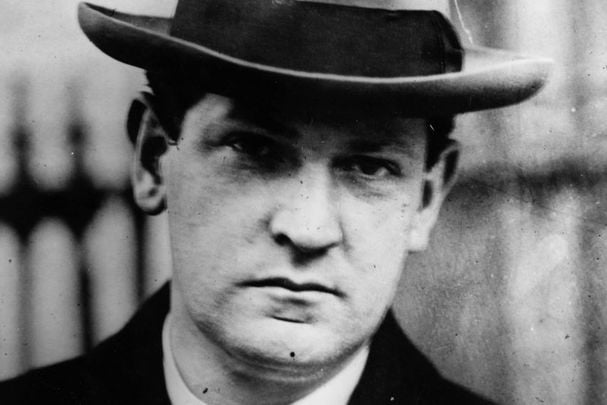
The name Michael Collins resonates deeply within the annals of Irish history. A revolutionary figure, a key architect of Irish independence, and a charismatic leader, his life was tragically cut short, leaving a void that continues to be felt.
The question, who killed Michael Collins, remains a subject of intense historical debate and speculation, a wound in the Irish psyche that has never fully healed.
Join us as we delve into the events surrounding his assassination, examine the key players, and address the lingering questions that surround this pivotal moment in Irish history.
Why Did Michael Collins Get Assassinated?
To understand the circumstances of Michael Collins’ assassination, we must first grasp the tumultuous political landscape of post-Treaty Ireland.
The Anglo-Irish Treaty, signed in 1921, granted dominion status to the Irish Free State but required an oath of allegiance to the British Crown and partitioned the island, leaving Northern Ireland as part of the United Kingdom. This treaty deeply divided the Irish Republican movement.
Collins, reluctantly, became a strong advocate for the Treaty, believing it offered the best path forward and a foundation upon which further independence could be built.
However, a significant faction, including many of his former comrades in the IRA, vehemently opposed it, viewing it as a betrayal of the Republic. This fundamental disagreement led to the outbreak of the Irish Civil War in June 1922.
Collins became the Commander-in-Chief of the National Army, tasked with suppressing the anti-Treaty IRA forces. This placed him directly in opposition to former allies, creating bitter divisions and animosities. His assassination on August 22, 1922, during an ambush at Béal na Bláth in County Cork, was a direct consequence of this brutal internal conflict. He was targeted because he was the leader of the pro-Treaty forces and a symbol of the new Irish Free State that the anti-Treaty side fought against.
What Did Churchill Say About Michael Collins?
Winston Churchill, a prominent figure in the British government during the treaty negotiations, held a complex view of Michael Collins. Initially an adversary, Churchill developed a grudging respect and even admiration for Collins’ pragmatism and leadership during the treaty process.
Upon hearing of Collins’ death, Churchill famously said: “He was a man of commanding qualities and courage. He had a genius for action and a capacity for inspiring devotion. He had risen in a few years from an unknown nobody to be a national leader… It is most deeply to be regretted that his life was cut short at the moment when his work for his country had been done.”
Churchill recognized Collins’ pivotal role in achieving a settlement, even if it fell short of full republican aspirations. His words highlight the immense loss felt at Collins’ untimely death, acknowledging his significant contributions to Irish history.
What Were Michael Collins’ Last Words?
The exact Michael Collins last words are debated, as they were uttered in the chaos and confusion of the ambush. However, the most widely accepted account comes from his comrade and fellow leader, Emmet Dalton, who was with him in the vehicle. According to Dalton, as the firing began, Collins exclaimed, “Advance! We can’t leave them there!” This reflects his characteristic bravery and concern for his men, even in the face of mortal danger.
Other accounts suggest he might have said something along the lines of “It’s them, Dev,” possibly a recognition of the anti-Treaty forces, though this is less substantiated. Regardless of the precise phrasing, the accounts paint a picture of a leader who faced death with courage and a sense of duty.
Where Is the Site of Michael Collins’ Assassination?
The site of Michael Collins assassination is Béal na Bláth (the Mouth of Flowers) in County Cork, near his birthplace. Today, a simple stone monument marks the spot where he fell. It serves as a poignant reminder of the tragic events of that day and is a place of pilgrimage for those wishing to pay their respects to this pivotal figure in Irish history.
Who Ordered Michael Collins’ Assassination?
The question of who ordered Michael Collins’ assassination remains one of the most contentious and unresolved aspects of this historical tragedy. No definitive evidence has ever emerged to conclusively identify who gave the order to ambush the convoy.
While the anti-Treaty IRA was responsible for the ambush itself, the level of authorization for such a high-profile attack has been the subject of much speculation. Some theories point to local IRA commanders acting independently, while others suggest a more centralized directive.
The name of Denis “Sonny” O’Neill, an anti-Treaty IRA member believed to have fired the fatal shot, is often mentioned. However, whether he acted on his own initiative or under orders from a higher authority remains unknown.
The role of Éamon de Valera, a prominent leader of the anti-Treaty side and a former close associate of Collins, has also been a source of intense debate. The keyword did de valera order collins’ death reflects this enduring suspicion. While no concrete proof has ever implicated de Valera directly, the deep political animosity between the two men and de Valera’s strong opposition to the Treaty have fueled speculation about his potential involvement or knowledge of the plan. Historical consensus generally leans against direct involvement due to a lack of evidence, but the question continues to linger in popular discourse.
Does the IRA Still Exist?
Yes, various paramilitary groups identifying as the IRA (Irish Republican Army) have existed since the original IRA. The Provisional IRA, which emerged during the Troubles in Northern Ireland, declared a ceasefire in 1997 and decommissioned its weapons in the early 2000s. However, smaller dissident republican groups who reject the Good Friday Agreement and continue to pursue a united Ireland through violence still exist, though they are significantly less active and do not command the same level of support as previous iterations. Therefore, while the main historical entity of the IRA that Michael Collins was a part of no longer exists in the same form, groups using the name and adhering to republican ideals persist.
Why Didn’t Michael Collins Walk on the Moon?
This question, while seemingly out of place in a discussion about his assassination, likely stems from confusion with the American astronaut Michael Collins, who was the command module pilot for the Apollo 11 mission that landed the first humans on the Moon in 1969. The Irish Michael Collins died in 1922, long before the space age. It’s a humorous reminder of the different individuals who have shared the same name and achieved fame in vastly different fields.
Did Michael Collins Speak Irish?
The extent to which Did Michael Collins speak Irish is a subject of some debate among historians. While he was undoubtedly aware of the Irish language and supportive of its revival, evidence suggests that his fluency was limited. He likely had a working knowledge and could understand some Irish, particularly common phrases, but he primarily communicated in English. The focus of his activism was largely on political organization and military strategy during a period when English was the dominant language of public life in Ireland.
What Did Churchill Say When He Died?
This question refers back to Winston Churchill. As mentioned earlier, his famous quote about Michael Collins was uttered upon Collins’ death, reflecting his immediate reaction to the news of the assassination. Churchill himself died in 1965 at the age of 90. His last words are reported to have been, “I’m bored with it all,” a rather understated remark from a man who lived such a momentous life.
Where Is Michael Collins Buried in Ireland?
Where is Michael Collins buried in Ireland? Michael Collins is buried in Glasnevin Cemetery in Dublin. His funeral was a massive public event, reflecting the profound impact of his death on the nation. His grave remains a significant site for remembrance and reflection on his life and legacy.
Where Did Michael Collins Stay Before He Died?
In the days leading up to his assassination, where did Michael Collins stay before he died? As Commander-in-Chief of the National Army, Collins was frequently on the move, traveling to various parts of the country to oversee the war effort. In the period immediately preceding his death, he was primarily based in Dublin but was on a tour of County Cork, his home region, when the ambush occurred. He stayed in various temporary accommodations during this tour, including local safe houses and billets used by the National Army.
The Aftermath and Lingering Questions: What Happened After Michael Collins Died?
The keyword What happened after Michael Collins died leads us to examine the immediate and long-term consequences of his assassination. His death was a devastating blow to the pro-Treaty side and to Ireland as a whole. It deepened the bitterness and divisions of the Civil War, which continued for several more months before the anti-Treaty forces were eventually defeated.
W.T. Cosgrave succeeded Collins as President of the Executive Council of the Irish Free State and continued the work of establishing the new government. However, the loss of Collins’ dynamic leadership and unifying potential was keenly felt.
The circumstances surrounding his death continued to be a source of controversy and speculation for decades. The lack of a thorough independent inquiry into the ambush fueled conspiracy theories and kept the wounds of the Civil War open.
The question of How old was Michael Collins when he died is a stark reminder of the potential lost. He was only 31 years old at the time of his assassination, a young man who had already achieved so much and held immense promise for the future of Ireland.
While Collins never married, the keyword Michael Collins wife often arises in searches. He was engaged to Kitty Kiernan, and their correspondence during the tumultuous years of the struggle for independence and the Civil War provides a poignant insight into his personal life and the emotional toll of the political turmoil. Their story is a tragic love story intertwined with the birth of a nation.
The question Was Michael Collins in the IRA might seem confusing given his role in the Civil War. However, it’s important to remember that Collins was a key figure in the original IRA during the War of Independence against British rule. He was a brilliant strategist and Director of Intelligence. The split in the IRA occurred after the signing of the Treaty, with Collins leading the pro-Treaty faction that formed the National Army, effectively fighting against the anti-Treaty IRA, which many of his former comrades belonged to.
The Enduring Legacy of a Fallen Hero
The story of Michael Collins and the mystery surrounding his death continue to captivate and intrigue. He remains a complex and controversial figure in Irish history, admired for his leadership and contribution to independence by some, and criticized for his role in the Civil War by others.
The search for a definitive answer to who killed Michael Collins may never yield absolute certainty, but the ongoing examination of the events of Béal na Bláth serves as a crucial reminder of the complexities and tragedies of Ireland’s struggle for self-determination.
His life, though tragically short, left an indelible mark on the Irish nation, and his legacy continues to be debated and reinterpreted by each new generation. The echoes of that fateful day in County Cork continue to reverberate through Irish history, a poignant reminder of the cost of division and the enduring mystery of a nation’s lost leader.
About the Author
