Ireland. A land of myths, mountains, and meandering coastlines. A place where the sky hums with history, the rivers whisper folklore, and the land itself feels like it’s been etched from the raw emotion of a forgotten story.
And amidst it all, there are the birds—ancient, untamed, and watching us as much as we watch them.
If you listen closely, past the rattling breath of the Atlantic winds, beyond the rush of the rivers carving through stone, you’ll hear the music of the wild. The caw of a raven in an abandoned castle, the piercing cry of a peregrine falcon over a sheer limestone cliff, the soft warble of a song thrush in the morning mist.
For those who seek more than just scenery, for those who chase the fleeting, feathered ghosts of Ireland’s sky, there are places—hidden, revered, and breathing with life—where the birds hold dominion.
If you’re looking for birdwatching Ireland experiences that grip the soul, if you want to know the best birdwatching tours Ireland has to offer, if you’re searching for where to find the rarest, the most beautiful, the most untamed of Ireland’s winged creatures—read on.
Where Is the Best Birding in Ireland?
Birdwatching in Ireland isn’t about ticking species off a list. It’s about standing on the edge of a cliff, the salt sting of the sea in your nostrils, and seeing a gannet dive into the abyss with the kind of precision that would make an Olympic diver look sloppy. It’s about trudging through the boglands, your boots sinking into the earth, and catching a fleeting glimpse of a hen harrier gliding over the heather like some spectral deity.
Dublin – A Surprising Urban Birdwatching Haven
Despite being Ireland’s most densely populated county, Dublin boasts an incredible array of bird habitats, particularly along its coastline and waterways. Some of the best places to spot both native and migratory birds include:
- Bull Island & Dublin Bay – A designated UNESCO Biosphere Reserve, Bull Island is one of the most important birding locations in Ireland. Sand dunes, mudflats, and salt marshes provide a crucial habitat for wintering waterfowl, including thousands of brent geese, redshanks, and curlews. Nearby, Sandymount Strand is another key site for observing shorebirds.
- Great South Wall & Broadmeadows Estuary – These areas attract a mix of seabirds and waders, making them prime locations for birdwatchers, particularly during migration seasons.
- Howth Head – A stunning cliffside location where kestrels, ravens, and peregrine falcons soar on coastal updrafts. The scenic walk along Howth cliffs provides plenty of opportunities to observe these birds of prey in their natural hunting grounds.
- Dalkey Island – Accessible by a short boat ride from Coliemore Harbour, this small island is home to breeding seabirds, including cormorants, gulls, and the occasional puffin.
- The Dodder River & Phoenix Park – The Dodder River, which runs through south Dublin, is a great place to spot kingfishers and dippers darting along the water’s edge. Meanwhile, Phoenix Park—Europe’s largest enclosed park—offers sightings of woodpeckers, finches, and even long-eared owls.
- Turvey Nature Reserve – One of the most diverse birdwatching sites in Dublin, this tidal estuary near Donabate is rich with a wide range of waterfowl and waders, particularly during winter.
Wexford – A Magnet for Migratory Birds
Wexford is a prime destination for birdwatchers, particularly in spring and autumn when thousands of migrating birds pass through.
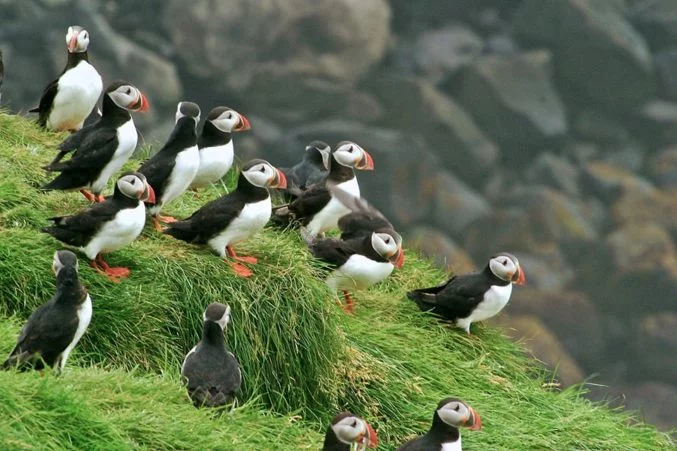
- Saltee Islands – One of the best places in Ireland to see puffins up close. These remote islands, located off the Wexford coast, are also home to razorbills, guillemots, and gannets.
- Wexford Wildfowl Reserve – A crucial stopover for migratory species, the reserve hosts tens of thousands of wintering geese, swans, and ducks, including Greenland white-fronted geese, one of Ireland’s most important avian visitors.
Meath & Louth – Estuaries Teeming with Life
- Mornington, County Meath – A stunning location where tidal estuaries and sand dunes attract little terns, ringed plovers, and other coastal species.
- Dundalk Estuary, County Louth – This vast wetland is an excellent site for observing oystercatchers, godwits, and knot as they forage along the mudflats.
Kerry & Cork – Coastal Birding at Its Best
The southwest coast of Ireland is home to some of the country’s most dramatic landscapes, where seabirds thrive in rugged, untouched habitats.
- Great Blasket Island, County Kerry – A must-visit for seabird enthusiasts. Take a boat trip from Dingle to witness nesting colonies of manx shearwaters, storm petrels, and fulmars. If luck is on your side, you might also spot dolphins and whales during the journey.
- Cape Clear Island, County Cork – Ireland’s top destination for spotting rare and vagrant bird species. This island is particularly famous for attracting transatlantic strays and is a vital location for dedicated birdwatchers.
Northern Ireland – Inland and Coastal Birdwatching
- Lough Neagh, County Armagh – The largest lake in Ireland, Lough Neagh is a haven for whooper swans, tufted ducks, and great crested grebes. Its vast reedbeds and wetlands provide crucial breeding and wintering grounds for a variety of species.
When to Go Birdwatching in Ireland?
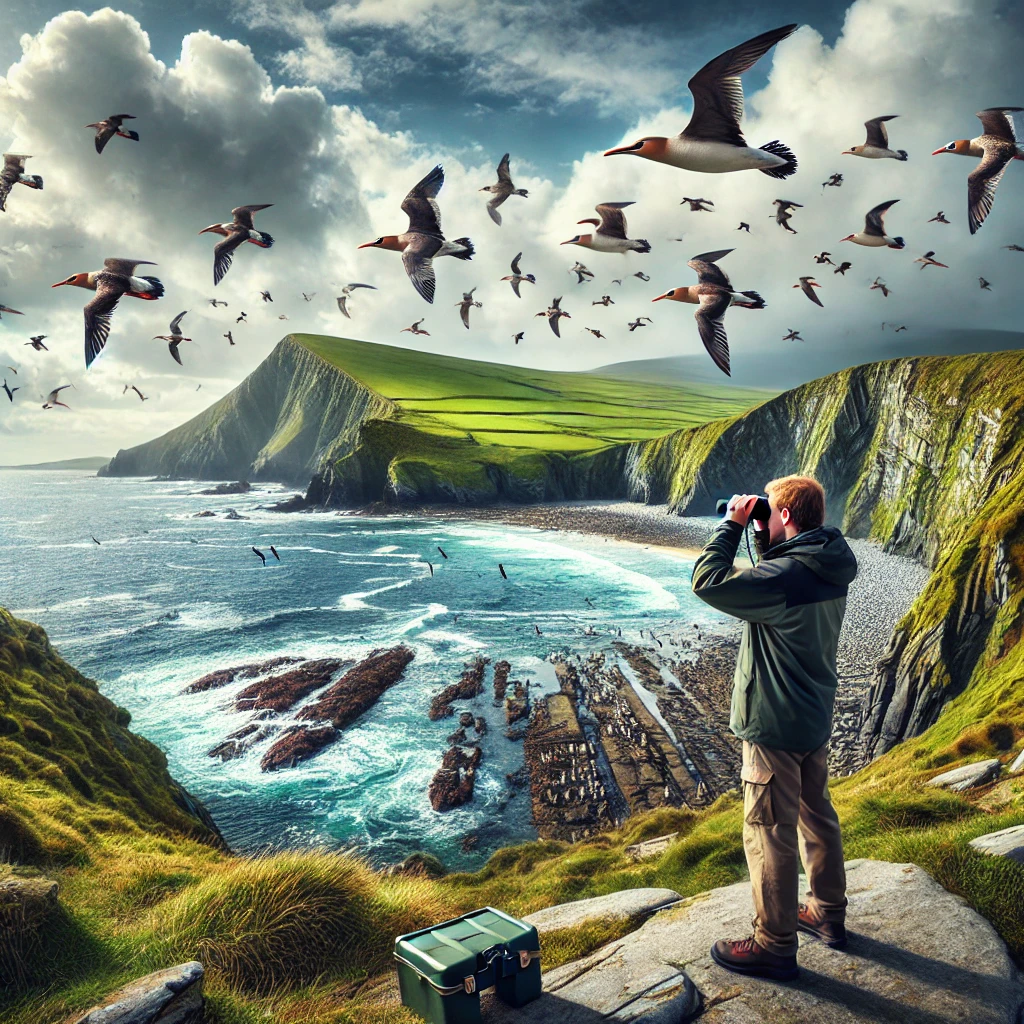
Birdwatching in Ireland offers something special in every season:
- Spring (March-May) – The return of migratory birds, with warblers, swallows, and cuckoos filling the air with song.
- Summer (June-August) – Seabird colonies are at their most active, with puffins, gannets, and razorbills nesting along the cliffs.
- Autumn (September-November) – A time of movement, as Arctic waders and geese arrive while summer visitors depart.
- Winter (December-February) – Flocks of brent geese, golden plovers, and murmurations of starlings create dramatic winter spectacles.
If you’re serious about birding, the best time for birding in Ireland is simply whenever you can get out into nature.
Birdwatching in Dublin – An Underrated Gem
Despite being one of the smallest counties in Ireland, Dublin boasts over 50 designated birdwatching sites. With its unique blend of coastal, riverine, and parkland habitats, it provides opportunities for birdwatchers year-round.
Some key locations include:
- North Dublin Coastal Sites – Skerries, Rush, Portrane, and Rogerstown offer fantastic access to a diverse range of shorebirds and seabirds.
- South Dublin Coast – Dún Laoghaire Harbour and Dalkey Island are excellent for observing migratory seabirds and occasional rare visitors.
- Inland Waterways – Dublin is home to the Liffey, Dodder, and Tolka rivers, as well as the Grand and Royal Canals, all of which offer accessible birding opportunities.
- Phoenix Park – One of the best urban birdwatching locations, hosting everything from raptors to woodland species.
Rare and Unusual Sightings in 2024
Each year brings surprising visitors to Irish shores. Some of the rarest birds recorded in 2024 include:
- Yellow-crowned Night Heron – A first-time visitor to Ireland, spotted in a small village in June.
- Least Sandpiper – A transatlantic rarity that has made a return appearance in Portrane, Dublin.
If you come across a rare species, be sure to report your sightings to Irish Birding to contribute to the conservation and monitoring of Ireland’s avian life.
Some of the Best Birdwatching Locations in Ireland
- Wexford Wildfowl Reserve – The sacred ground of migrating geese. Over 10,000 Greenland white-fronted geese descend upon Wexford in winter, their calls filling the cold air like some ancient battle hymn. If you’re looking for BirdWatch Ireland sightings today, this is where you start.
- The Cliffs of Moher, County Clare – A cathedral of stone where seabirds rule the sky. Here, the razorbills and guillemots cling to the precipices like monks in a monastery of rock, and the puffins—yes, the sacred clowns of the sea—make their summer pilgrimage.
- Skellig Michael, County Kerry – An island that looks like it was carved by the hands of the gods. The puffins here are fearless, their beaks painted in riotous colors, a contrast to the austere monastic ruins that whisper of another kind of faith.
- The Burren, County Clare – A strange, otherworldly place where the wind speaks in riddles. Here, the peregrine falcon reigns supreme, slicing through the sky with the kind of violence that is both beautiful and terrifying.
- Cape Clear Island, County Cork – The ultimate birding pilgrimage. A haven for rarities, for the unexpected, for the kind of sightings that make birders whisper in reverence. If you’re into BirdWatch Ireland membership, this is where your devotion is tested.
- Shannon Estuary, County Clare & Limerick – A place where the water meets the sky, where little egrets wade through the shallows with the kind of grace that poets dream of.
- Bull Island, Dublin – The urban escape. A place where curlews, godwits, and redshanks dance through the marshes, reminding us that even in the grasp of the city, the wild still lingers.
- Lough Boora, County Offaly – A reborn land. Once a place of industry, now a place of nature, where lapwings, snipe, and skylarks reclaim their rightful dominion.
Where Is Bird Watching Most Popular?
Birdwatching isn’t just for the reclusive or the romantics—it’s a movement. Ireland’s birding community is growing, from casual observers to the dedicated few who wake before dawn just to glimpse a rare visitor from Siberia. If you’re looking to join BirdWatch Ireland, their reserves in Wexford, Dublin, and Cork are the beating heart of Ireland’s birding world.
What Time of Year Is Best for Birding?
The best time for birding in Ireland depends on what you seek.
- Spring (March-May) – A season of awakening. The migratory birds return, the dawn chorus swells, and the land itself hums with renewal.
- Summer (June-August) – The puffins claim their cliffs, the seabird colonies explode with life, and the air is thick with the flutter of wings.
- Autumn (September-November) – A season of movement. Birds from the Arctic arrive, seeking refuge, while others depart for warmer shores.
- Winter (December-February) – A season of endurance. The geese arrive in Wexford, the starlings dance in murmuration, and the ravens remind us that even in the bleakest cold, life persists.
For true enthusiasts, the best time for birding in Ireland is always.
What Is the Most Numerous Bird in Ireland?
The wren. Small. Unassuming. A creature of hedgerows and forgotten places. And yet, in its tiny body beats the heart of Ireland itself.
Where Can You See Puffins in Ireland?
Skellig Michael. The Cliffs of Moher. Rathlin Island. The Saltee Islands. Go in summer, and you will find them—a comic, tragic, exquisite burst of color against the grey Atlantic.
Who Is the King of Birds in Ireland?
The wren. In legend, in history, in song. The tiny, cunning ruler of the avian world.
What Is the Most Attractive Bird in the World?
A question for the soul. Some say the peacock. Others, the bird of paradise. But here, in Ireland, nothing rivals the haunting beauty of the barn owl—silent, ghostly, watching.
What Bird Is Only Found in Ireland?
The Irish jay. A creature of ancient woodlands, a whisper of a time before roads and cities.
What Is the Rarest Bird in Ireland?
The corncrake. A sound once common, now an echo of the past. If you hear its rasping call, you are listening to a ghost.
Final Thoughts: The Call of the Wild
Birdwatching in Ireland is not a hobby. It is a communion. It is standing in the rain, the cold biting your skin, and feeling something stir deep inside when a hen harrier glides across the sky. It is the salt of the sea on your lips as you watch a gannet carve the ocean apart. It is the silence before a dawn chorus, when the world is on the cusp of something holy.
If you seek the wild, if you long to stand where the earth meets the sky and witness something ancient, something untamed—go. Go to the cliffs, the estuaries, the boglands, the woodlands. Find the birds. Find yourself.
For more on Ireland’s wild heritage, check out:
- The Irish Red Deer – A Majestic Icon of Ireland’s Wild Landscape
- The Irish Mountain Hare – A Mysterious Guardian of the Wild
- Irish Wolfhound – The Gentle Giant of Irish Heritage
- Secret Ireland – Explore Ireland’s Hidden History and Nature
Ireland waits. The birds wait. Will you answer the call?
About the Author
