Ireland, a land of poets, storytellers, and mystics, has long been associated with profound expressions of grief and solace. Irish culture offers a rich tapestry of blessings, poems, and sayings that bring comfort during times of loss.
Whether whispered at a graveside, shared in a card, or carried in the heart, these blessings connect us to Ireland’s deep spiritual traditions and remind us of the beauty in life, even in its passing and how one Irishman left a video recording for his funeral that broke the internet!
In this guide, we explore the most heartfelt Short Irish death blessings, Irish death blessing quotes, and prayers that have been passed down through generations.
We also answer the questions many ask in times of loss, offering insights into the words that bring comfort in Ireland.
What Do the Irish Say When Someone Dies?

In Ireland, the loss of a loved one is met with a blend of heartfelt empathy and poetic expression. One of the most common phrases you’ll hear is:
“Ar dheis Dé go raibh a anam dílis.”
This translates to “May their faithful soul rest at the right hand of God,” a traditional Catholic blessing that is both poignant and profound.
Other expressions include:
- “Ní bheidh a leithéid arís ann.” (“There will never be the like of them again.”)
- “Go dtuga Dia suaimhneas dóibh.” (“May God grant them peace.”)
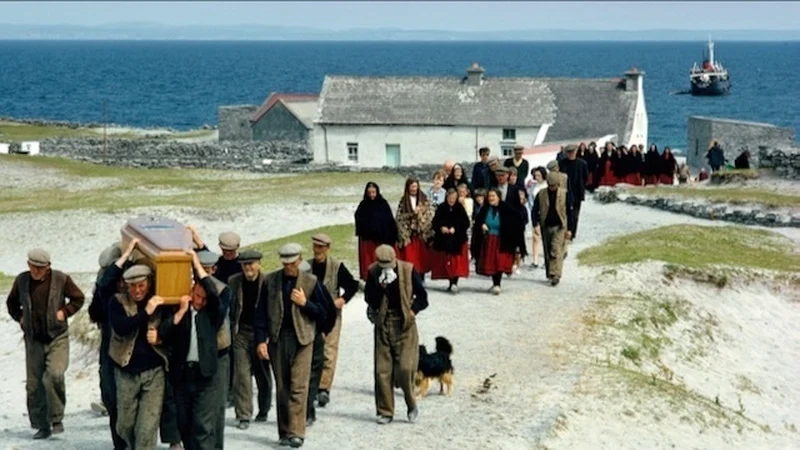
These phrases are often shared in hushed tones at wakes or funerals, where the Irish tradition of honoring the dead through storytelling, laughter, and tears is a way of celebrating life as much as mourning death.
Need to read up on Irish Wakes check out our blog!
What Is the Irish Blessing for Funerals?
The Irish funeral blessing is one of the most iconic and enduring parts of Ireland’s cultural heritage. Among the most popular is this timeless verse:
“May the road rise to meet you,
May the wind be always at your back,
May the sun shine warm upon your face,
And rains fall soft upon your fields.
And until we meet again,
May God hold you in the palm of His hand.”
This blessing is often recited at funerals, offering solace to grieving families. It reflects the Irish spirit of resilience and hope, even in the face of sorrow.
What to Say When Someone Dies in Ireland?
In Ireland, death is not simply the end—it’s seen as a transition, a journey to another realm. To comfort the bereaved, the Irish often share blessings that acknowledge this passage.
- “Tá síocháin anois aige/aici.” (“They have peace now.”)
- “Go raibh maith agat as an saol a chaith tú linn.” (“Thank you for the life you shared with us.”)
- “Go ndéana Dia trócaire ar a anam.” (“May God have mercy on their soul.”)
These phrases, steeped in faith and tradition, resonate deeply in Irish communities, where connection to the spiritual world is ever-present.
What Is the Irish Farewell Blessing?
The Irish farewell blessing carries with it a sense of closure, love, and hope for the journey ahead. A well-known version reads:
“May the blessings of light be upon you,
Light without and light within.
And in all your comings and goings,
May you ever have a kindly greeting
From them you meet along the road.”
This farewell blessing is often used to bid goodbye at the end of wakes or funerals, offering peace and comfort to those left behind.
Short Irish Death Blessing and Quotes
For those seeking succinct yet meaningful expressions, Short Irish death blessings and Irish death blessing quotes provide comfort in a few poetic words:
- “May you find rest in the arms of the angels.”
- “Death leaves a heartache no one can heal, love leaves a memory no one can steal.” (An old Irish gravestone inscription.)
- “May the light of heaven shine upon your face, and the peace of eternity rest upon your soul.”
These blessings are perfect for inscriptions, sympathy cards, or simply to share in a moment of reflection.
Irish Death Blessing Poems
Irish poetry, renowned for its lyrical beauty, often touches on themes of death and remembrance. A classic Irish death blessing poem might read:
“Do not stand at my grave and weep,
I am not there; I do not sleep.
I am a thousand winds that blow,
I am the diamond glints on snow.”
Though not uniquely Irish, this verse reflects the deep spiritual connection found in Irish traditions and is often recited at funerals.
Irish Death Blessing in Gaelic
The Irish language carries an added depth and beauty to these blessings:
“Go raibh síocháin siorraí ort,
Agus go bhfeicimid a chéile arís ar neamh.”
(“May eternal peace be upon you, and may we meet again in heaven.”)
Sharing blessings in Gaelic connects the moment to Ireland’s ancient roots, adding a timeless resonance to the words.
Irish Blessing for Death of a Friend
Losing a friend is a unique heartache, and the Irish have a way of easing that pain with words like these:
“Though you may be gone from our sight,
You will never be gone from our hearts.
May the winds of heaven whisper your name,
And bring you peace everlasting.”
These blessings remind us that friendship transcends the boundaries of life and death.
Short Irish Poems About Death
Ireland’s literary tradition offers countless Short Irish poems about death. One of the most poignant reads:
“You will find me in the whisper of the wind,
In the rustle of leaves and the song of the linnet.
Though my body rests, my spirit soars,
Forever in the heart of Ireland.”
Simple yet evocative, these lines capture the Irish ability to find beauty even in grief.
FAQ: “May He Rest in Peace” in Irish
The Irish language, known as Gaelic or Gaeilge, carries a rich cultural and spiritual heritage, particularly in expressions of condolence and remembrance.
The phrase “May he rest in peace” in Irish is a poignant example of how the Irish honor the deceased, blending Catholic faith with ancient traditions.
This FAQ explores this phrase, its pronunciation, cultural significance, and related customs, addressing common questions while weaving in key terms like Ar dheis Dé go raibh a anam, rest in peace Irish blessing death quotes, and rest in peace in Irish male. Below, we answer specific questions to provide a comprehensive understanding of these traditions.
What is “May he rest in peace” in Irish?
The phrase for “May he rest in peace” in Irish is “Ar dheis Dé go raibh a anam”, which directly translates to “May his soul be at the right hand of God.”
This is a traditional rest in peace Irish blessing death quote used primarily for a male who has passed away. The phrase reflects the Catholic belief in eternal rest and the soul’s place in heaven, a cornerstone of Irish spiritual life.
For a female, the equivalent is “Ar dheis Dé go raibh a h-anam”, with the “h-” adjusting the grammar for feminine nouns, meaning the same but gender-specific.
This expression is deeply rooted in Ireland’s history, where death is treated with reverence and community support. It’s often said during funerals, wakes, or when offering condolences, embodying a prayer for the deceased’s peace and divine favor. The phrase’s solemnity and elegance make it a cherished part of rest in peace Irish blessing death quotes Catholic.
How do you say “May he rest in peace” in Irish?
To say “May he rest in peace” in Irish for a male, you use “Ar dheis Dé go raibh a anam”, pronounced approximately as Ar dhess day go rah a an-am.
The pronunciation can vary slightly depending on regional dialects, such as those in Munster, Connacht, or Ulster. For a female, it’s “Ar dheis Dé go raibh a h-anam”, pronounced Ar dhess day go rah a han-am. The rest in peace in Irish pronunciation is critical for non-native speakers to convey respect accurately, especially during formal occasions like funerals.
Learning the pronunciation involves understanding Irish phonetics, which differ from English.
The phrase’s rhythm and intonation carry a somber yet hopeful tone, aligning with its spiritual intent. Practicing with native speakers or audio resources can help ensure accuracy when offering this condolence.
Is “Ar dheis Dé go raibh a anam” correct?
Yes, “Ar dheis Dé go raibh a anam” is the correct phrase for a male, meaning “May his soul be at the right hand of God.” It is a standard and widely recognized expression in Ireland, particularly within Catholic communities.
The phrase is grammatically precise for a male, as “anam” (soul) is masculine in Irish, and “a” is the appropriate possessive pronoun. For a female, “Ar dheis Dé go raibh a h-anam” is used, with the “h-” indicating the feminine form.
The phrase’s correctness is also cultural—it’s not just a translation but a deeply ingrained rest in peace Irish blessing death quote Ireland that carries emotional weight. Misusing it, such as applying the male form to a female, could be seen as a minor faux pas, so attention to gender is important.
What to say in Irish when someone dies?
When someone dies in Ireland, several Irish phrases express condolence and respect. The most common is “Ar dheis Dé go raibh a anam” for a male or “Ar dheis Dé go raibh a h-anam” for a female.
Another meaningful phrase is “Go ndéana Dia trócaire ar a anam” (“May God have mercy on his soul”), which is another rest in peace Irish blessing death quote Catholic. Additionally, you might say “Ní bheidh a leithéid ann arís” (“His/her like will not be seen again”), a poetic way to honor the uniqueness of the deceased.
These phrases are often accompanied by personal sentiments, such as sharing a memory of the person or offering support to the family. In Irish culture, condolences are heartfelt and communal, reflecting the tight-knit nature of Irish society.
What are traditional Irish condolences?
Traditional Irish condolences blend Gaelic language, Catholic spirituality, and communal support. Common phrases include “Ar dheis Dé go raibh a anam” for a male or “Ar dheis Dé go raibh a h-anam” for a female, both invoking divine rest.
Another is “Comhbhrón ó chroí” (“Heartfelt condolences”), which conveys deep sympathy.
These expressions are part of a broader tradition of rest in peace Irish blessing death quotes, often rooted in Catholic prayers like the Rosary or Mass intentions for the deceased.
Beyond words, Irish condolences involve actions—attending the wake, bringing food, or sharing stories of the departed. The wake, a pre-funeral gathering, is a key tradition where family and friends gather to pray, mourn, and celebrate the life of the deceased, often with music and storytelling.
What is an Irish send-off at a funeral?
An Irish send-off at a funeral is a multifaceted ritual combining solemnity and celebration. It typically begins with a wake, where the body is laid out at home or a funeral parlor, and loved ones gather to pray, share memories, and offer condolences like “Ar dheis Dé go raibh a anam male”.
The funeral itself often includes a Catholic Mass, where prayers for the soul’s rest are central, followed by burial or cremation.
Music, such as traditional Irish ballads or hymns, plays a significant role, as do eulogies that highlight the deceased’s life.
The phrase “Ar dheis Dé go raibh a anam” is often spoken during the Mass or graveside prayers. Afterward, a communal gathering with food, drink, and toasts celebrates the person’s legacy, embodying the Irish balance of mourning and honoring life.
How do you say condolences in Ireland?
In Ireland, condolences are expressed in both Irish and English. In Irish, you might say “Comhbhrón” (condolences) or “Ar dheis Dé go raibh a anam” for a male, or “Ar dheis Dé go raibh a h-anam” for a female.
In English, phrases like “I’m sorry for your loss” or “May they rest in peace” are common, especially in less traditional settings. The choice depends on the context—rural, Gaelic-speaking areas may favor Irish phrases, while urban settings might use English.
The delivery of condolences is warm and personal, often accompanied by a handshake, hug, or attending the wake or funeral. These actions reinforce community bonds, a hallmark of Irish culture.
What is the toast to the departed?
An Irish toast to the departed is a way to honor the deceased with respect and affection. A common toast might be “Ar dheis Dé go raibh a anam”, raising a glass to wish the soul divine rest.
Another is “Sláinte chuig na fir, agus go mairfidh na mná go deo” (“Health to the men, and may the women live forever”), though adapted for funerals to focus on the departed’s memory. Toasts often occur during the wake or post-funeral gathering, accompanied by whiskey or stout, reflecting Ireland’s tradition of blending sorrow with celebration.
What’s an Irish saying for goodbye?
An Irish saying for goodbye to the deceased is “Slán abhaile” (“Safe home”), a poetic wish for the soul’s safe journey to the afterlife. This is often paired with “Ar dheis Dé go raibh a anam” to invoke divine peace. Another saying is “Go dté tú i suaimhneas” (“May you go in peace”), a gentle farewell.
These phrases are part of rest in peace Irish blessing death quotes Ireland, encapsulating hope for eternal rest and a spiritual homecoming.
What is the meaning of “Ar dheis Dé go raibh a h-anam”?
“Ar dheis Dé go raibh a h-anam” means “May her soul be at the right hand of God,” used for a female.
The phrase mirrors “Ar dheis Dé go raibh a anam” for a male, with the “h-” indicating the feminine form. It’s a prayer rooted in Catholic theology, asking for the deceased’s soul to find favor and rest with God. This rest in peace Irish blessing death quote is a cornerstone of Irish funerals, symbolizing faith, respect, and communal mourning.
This FAQ highlights the depth of Irish traditions surrounding death, from the linguistic beauty of “Ar dheis Dé go raibh a anam male” to the communal rituals of wakes and toasts. These practices, steeped in rest in peace Irish blessing death quotes Catholic, reflect Ireland’s unique approach to honoring the departed with love, faith, and celebration.
Conclusion: Finding Comfort in Irish Blessings
The Irish have an unmatched ability to weave beauty and solace into words. From the classic Irish death blessing poem to Rest in peace Irish blessing death quotes Catholic, these sayings and prayers offer a timeless source of comfort. They remind us that while life is fleeting, love and memory endure.
Whether you’re seeking the perfect Irish death blessing in Gaelic or a heartfelt Irish farewell blessing, may these words bring you peace, hope, and connection to the rich spiritual heritage of Ireland.
As the Irish say, “Ní imíonn an grá. Tá sé ann go deo.” (“Love does not go away. It is there forever.”)
About the Author

Seamus
Administrator
Seamus O Hanrachtaigh is an Irish historian, explorer, and storyteller passionate about uncovering the hidden gems and forgotten heritage of Ireland. With years of hands-on exploration across every county — from misty folklore-rich glens and ancient trails to secret coastal paths and vibrant traditional music sessions — he brings authentic, experience-backed insights to travelers seeking the real Ireland beyond the tourist trails. A regular contributor to Irish Central and other publications, Seamus specializes in Celtic traditions, genealogy, Irish history, and off-the-beaten-path road trips. Every guide on SecretIreland.ie draws from personal adventures, local conversations, rigorous research, and fresh 2026 discoveries to deliver trustworthy content filled with genuine craic and hidden stories that big guidebooks miss. When not chasing the next undiscovered spot, Seamus enjoys trad music sessions and fireside storytelling with fellow enthusiasts who value Ireland’s living culture.