In Ireland, horses are spoken about in much the same way as the sky. Not with precision, but with familiarity. They are referenced casually, folded into conversation without ceremony, assumed rather than introduced. A horse’s name can surface in a pub chat as easily as a change in wind, and often with the same quiet authority. No one needs to ask why it matters. It simply does.
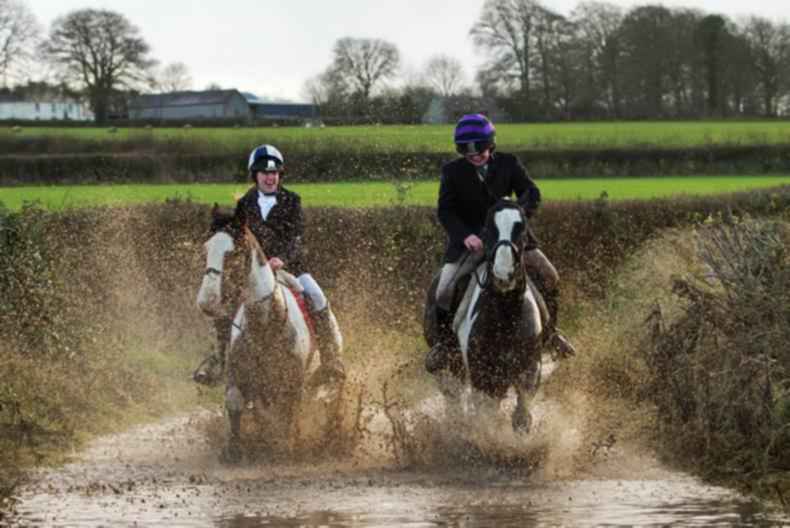
This attitude has little to do with racecards or results. It is rooted instead in proximity. Horses are part of the landscape long before they are part of sport. They stand in fields passed daily, visible from kitchen windows, known to families who may never set foot on a racecourse. Children grow up recognising bloodlines before league tables. Knowledge is absorbed slowly, almost accidentally.
Spend time in rural Ireland and you begin to notice how horses are discussed in advance of anything happening. People talk about how one might go, how another is shaping up, how the ground will suit or spoil them. It sounds less like prediction and more like observation. Horses are not framed as certainties or gambles, but as forces that will behave according to conditions only partly understood.
By the fourth paragraph of any such conversation, references to form and instinct often sit comfortably alongside horse racing betting as just another layer of interpretation rather than the point itself, a way of talking about possibility rather than outcome in a country accustomed to reading signs rather than guarantees.
The Language of Assumption
Irish conversation about horses is rarely emphatic. You will hear phrases like might go well or wouldn’t surprise you. These are not hedges so much as acknowledgements of uncertainty. Just as the weather is discussed with an acceptance that forecasts are provisional, horses are spoken about with an understanding that they answer to more than intention.
This language is learned early. It comes from watching fields change colour through seasons, from seeing animals react to rain, frost, and sun in ways no schedule can override. Horses are understood as responsive rather than predictable. That sensibility carries through to how races are followed and remembered.
Horses in the Landscape
In many parts of Ireland, horses are simply there. They mark land ownership, signal care, and hint at history. A well kept horse in a quiet field tells you something about the person who owns it. It suggests patience, routine, and a long view of time. These are not attributes easily separated from Irish rural life.
The land itself reinforces this relationship. Soft ground, shifting weather, uneven terrain. These are not inconveniences but defining features. Horses that thrive here are spoken of with respect, almost gratitude. They are seen as having learned something the rest of us have not.
Memory Over Results
Ask someone in Ireland about a horse and you are more likely to hear a story than a statistic. They will remember where they were when it ran well, who mentioned it first, what the day was like. Results fade faster than impressions. The emotional record outlasts the factual one.
This is why certain horses linger in conversation long after their careers end. They become reference points, markers in time. Much like memorable storms or long summers, they are recalled not for what they did on paper but for how they felt in the moment.
The Pub as Forecast Room
The Irish pub remains one of the few places where horse talk unfolds without agenda. There is no urgency to be right. Disagreement is gentle. Opinions drift rather than collide. Someone will mention a horse the way another mentions rain coming in from the west. It is offered for consideration, not argument.
This atmosphere shapes how horses are understood culturally. They are part of a shared environment, something everyone negotiates together. The conversation is the point, not the conclusion.
Respect for the Uncontrollable
What ultimately links horses and weather in the Irish imagination is respect. Both are powerful, changeable, and resistant to command. Attempts to dominate either are viewed with suspicion. The wiser approach is attentiveness. Watch closely. Adjust when necessary. Accept what cannot be changed.
This mindset explains why confidence is often understated. Certainty is treated as naïve. Those who claim to know exactly what will happen are rarely trusted. Experience teaches otherwise.
Why This Perspective Endures
Racing has moved forward, bringing technology, statistics, and international focus, yet it has done so without removing traditional means of seeing the world. The Irish relationship with horses is one of direct experience rather than abstraction, of horses being neighbors before they are statistics.
That continuity matters. It sustains a cultural understanding that prizes observation over assertion, patience over prediction. In an increasingly result-oriented world, Ireland has a different approach to attention.
Living with Uncertainty
In Ireland, speaking about horses is an acknowledgment of uncertainties that bring no uneasiness. Just as no one would expect Ireland’s weather to behave, no one would expect horses to behave. They would be treated as partners to chance.
This is the kind of attitude which permeates everything from how a discussion about a horse race is conducted to how a memory is kept. Horses aren’t meant to provide any kind of guarantee; they’re meant to tell us a little bit about the day, the land, and the people looking on.
In that way, horses are treated just like the weather, though not because they’re unpredictable, but because they’re affected by things we can’t control. And that’s just been understood to be part of the landscape for centuries in Ireland.
About the Author
