
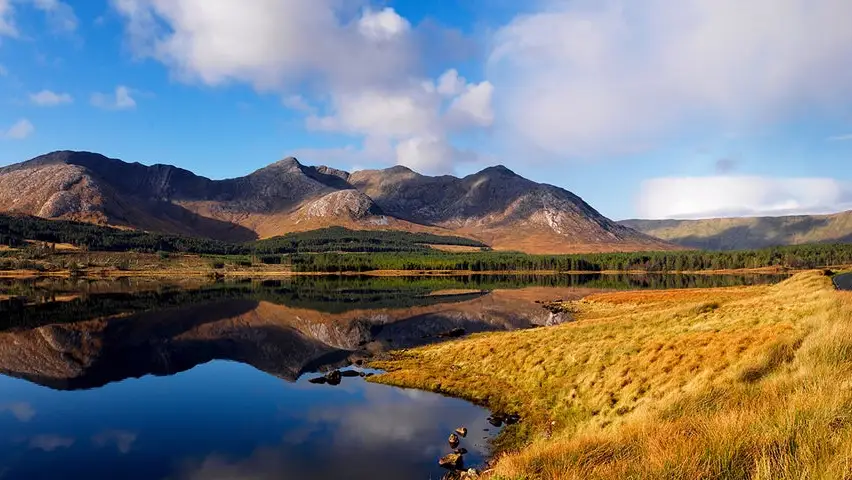
There are places in Ireland where the landscape grips you, holds you in its raw, untamed embrace, and refuses to let go.
Connemara National Park, with its rugged mountains, deep valleys, and ever-changing skies, is one of those places. Located near Letterfrack, Galway, this park is a playground for hikers, dreamers, and anyone who wants to step into a world where nature still rules.
Whether you’re here to conquer Diamond Hill, roam the Connemara National Park walks, or simply stand still and breathe in the Atlantic air, one thing is certain—you’ll leave a different person than when you arrived.
Why Connemara National Park Feels Like Another World
This isn’t a landscape that was made for postcards—it was made for poets. It’s the land that Yeats wrote about, the kind that changes with every passing cloud, revealing new colors and shadows you swear weren’t there a moment ago. Connemara National Park is a vast expanse of 2,957 hectares (7,314 acres), covering mountains, boglands, heaths, and forests. The peaks of the Twelve Bens tower over the park, standing watch over a landscape that feels as ancient as time itself.
For those who want to understand Ireland’s soul, this is where you start.
Connemara National Park Things to Do
There’s no shortage of ways to lose yourself in Connemara National Park—in the best possible way.
1. Climb Diamond Hill
The Diamond Hill trail is the park’s most famous hike, offering breathtaking views over the Atlantic, the Twelve Bens, and Kylemore Abbey. It’s a climb that starts gently but rewards those who make it to the summit with views that will stay with them forever.
2. Explore the Walking Trails
The park offers multiple walking routes, ranging from easy loops to challenging climbs. Whether you’re looking for a short nature walk or a longer trek into the wilderness, there’s a trail for you.
3. Visit the Visitor Centre
Located in Letterfrack, the Connemara National Park Visitor Centre is a great starting point to learn about the park’s history, geology, and wildlife. Maps, information, and exhibits help you get the most out of your visit.
4. Experience the Wildlife
From wild ponies to rare bird species, Connemara National Park is a haven for wildlife enthusiasts. Keep your eyes peeled for red deer, peregrine falcons, and even the occasional golden eagle.
5. Enjoy a Picnic with a View
There are designated picnic areas throughout the park where you can sit and take in the scenery. Whether you pack your own food or grab something from a local café in Letterfrack, dining outdoors in Connemara is an experience in itself.
6. Camp Under the Stars
While Connemara National Park camping options are limited, nearby campsites provide an incredible opportunity to experience the wild beauty of Connemara after dark.
7. Drive the Connemara Loop
For those who prefer four wheels to two feet, the Connemara Loop offers a stunning drive through the park’s most scenic areas. From bog roads to coastal cliffs, every turn reveals something breathtaking.
FAQs About Visiting Connemara National Park
Is Connemara National Park Worth Visiting?
Yes, Connemara National Park is absolutely worth visiting. It’s one of the few places in Ireland where you can fully immerse yourself in the wild, untouched beauty of the west coast. The landscapes here shift with the light, offering dramatic mountain views, rolling boglands, and glimpses of the Atlantic Ocean. Whether you’re an avid hiker or just someone who appreciates breathtaking scenery, Connemara will leave you in awe.
Can You Drive Through Connemara?
Yes, you can drive through Connemara, and it’s one of the best ways to experience the vast beauty of the region. The Connemara Loop, a scenic driving route, takes you through the heart of the national park, past mountains, lakes, and coastal cliffs. Whether you’re starting from Galway or Westport, the drive through Connemara offers countless opportunities to stop and take in the view.
How Long Does It Take to Hike Up Connemara National Park?
The most popular hike, Diamond Hill, takes about 2 to 3 hours round trip. The lower trails are gentler and can be completed in about an hour, while the full Connemara National Park walks to the summit take a bit longer. The climb is moderate, with well-marked paths, and the reward at the top—views stretching over Connemara, the Atlantic, and even the Aran Islands on a clear day—is worth every step.
How Much Does It Cost to Go to Connemara National Park?
Connemara National Park tickets are completely free. There is no admission fee to explore the park, including the visitor center, walking trails, and picnic areas. This makes it one of the best budget-friendly adventures in Ireland.
What Is the Prettiest Village in Connemara?
There are many contenders, but Roundstone is often considered the prettiest village in Connemara. Located on the coast, it offers stunning views of Dog’s Bay, colorful fishing boats, and charming stone cottages. Other beautiful villages include Letterfrack, the gateway to Connemara National Park, and Clifden, known as the “Capital of Connemara.”
How Do You Spend a Day in Connemara?
A perfect day in Connemara could include:
- Morning – Start with a scenic drive through the Connemara Loop.
- Midday – Hike Diamond Hill or take a shorter Connemara National Park walk.
- Lunch – Enjoy fresh seafood in Clifden or Letterfrack.
- Afternoon – Visit Kylemore Abbey, one of Ireland’s most stunning castles.
- Evening – Catch a sunset at Dog’s Bay Beach or enjoy a pint in a cozy Connemara pub.
How Hard Is Diamond Hill Connemara?
Diamond Hill is a moderate hike, suitable for most fitness levels. The lower loop is an easy walk, while the full climb to the summit has some steep sections but is well-maintained with stone paths. It’s not a technical climb, and with good weather, most people find it manageable. The effort is well worth it for the 360-degree views at the top.
Why Go to Connemara?
You go to Connemara to feel small in the best possible way. To stand on a mountain and watch the clouds race across the sky. To hear the wind whisper through the valleys, carrying stories of a land older than time. To walk, to drive, to breathe in the wild air and know that, for a moment, you are part of something bigger than yourself.
Where Does the Connemara Loop Start?
The Connemara Loop officially starts near Letterfrack, winding its way through the national park and surrounding countryside. The route offers spectacular views of lakes, mountains, and coastline, making it one of Ireland’s most scenic drives.
Plan Your Connemara Adventure
To make the most of your visit:
- Check Connemara National Park opening hours to plan your trip.
- Use a Connemara National Park map to explore the best trails.
- Visit Connemara National Park from Galway (just a 1.5-hour drive).
- Use the Connemara National Park eircode to find the visitor center.
- Consider Connemara National Park camping for an overnight experience.
For more on Ireland’s best hikes, visit Secret Ireland Hiking.
Connemara isn’t just a place—it’s a feeling. Go, and let it change you.
About the Author

Seamus
Administrator
Seamus O Hanrachtaigh is an Irish historian, explorer, and storyteller passionate about uncovering the hidden gems and forgotten heritage of Ireland. With years of hands-on exploration across every county — from misty folklore-rich glens and ancient trails to secret coastal paths and vibrant traditional music sessions — he brings authentic, experience-backed insights to travelers seeking the real Ireland beyond the tourist trails. A regular contributor to Irish Central and other publications, Seamus specializes in Celtic traditions, genealogy, Irish history, and off-the-beaten-path road trips. Every guide on SecretIreland.ie draws from personal adventures, local conversations, rigorous research, and fresh 2026 discoveries to deliver trustworthy content filled with genuine craic and hidden stories that big guidebooks miss. When not chasing the next undiscovered spot, Seamus enjoys trad music sessions and fireside storytelling with fellow enthusiasts who value Ireland’s living culture.