
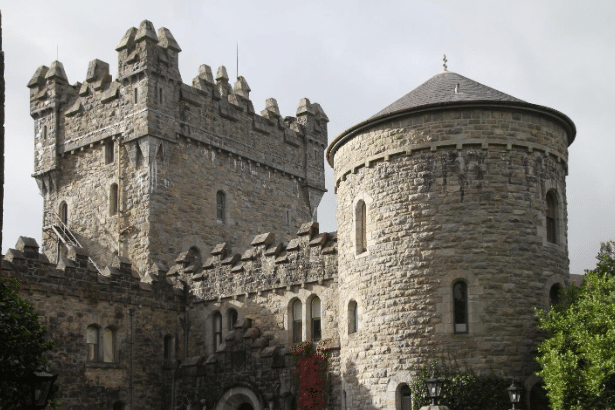
Glenveagh Castle sits in one of County Donegal’s most dramatic landscapes, surrounded by the Derryveagh Mountains, Lough Veagh, woodland, peatland, and open uplands.
The castle is certainly the obvious landmark, but the surrounding trails are where the landscape really earns its reputation. Human beings did, after all, invent castles partly so they could stand dramatically against the scenery.
Located within Glenveagh National Park, the area offers walking routes ranging from easy garden paths to strenuous mountain trails. The park covers more than 15,000 hectares and includes the castle and gardens along Lough Veagh.
For visitors interested in hiking, Glenveagh is particularly rewarding because its trails combine scenery, wildlife, and history rather than treating the castle as a standalone attraction.
What Makes Hiking Near Glenveagh Castle Special?
Glenveagh National Park occupies a rugged landscape in northwest Donegal. Its terrain includes mountains, lakes, rivers, peatlands, and native woodland, while the Derryveagh Mountains provide the backdrop around Glenveagh Castle.
The park is also part of the Cloghernagore Bog and Glenveagh National Park Special Area of Conservation and the Derryveagh and Glendowan Mountains Special Protection Area.
That means a walk around the castle can feel considerably more remote than the presence of a Victorian mansion might suggest.
The landscape also supports a variety of wildlife. Red deer are particularly associated with the upland areas, while otters, Irish hares, pine martens, bats, and numerous bird species can be found throughout the park. Golden eagles and peregrine falcons are among the birds visitors may encounter.
Easy Walks Around Glenveagh Castle
You do not need to tackle a mountain to appreciate Glenveagh. Several shorter trails are suitable for visitors who want scenery without turning their holiday into an endurance experiment.
Garden Trail
The Garden Trail is a 1-kilometre easy loop through the castle gardens. The route follows gravel paths and highlights exotic trees, shrubs, garden ornaments, and the walled garden. The gardens date from the late 19th century and provide an intentional contrast to the surrounding wilderness.
This is an especially good option for visitors who want to combine walking with a closer look at the castle grounds.
Derrylahan Nature Trail
The 2-kilometre Derrylahan Nature Trail is another relatively accessible choice.
It includes gravel tracks with both flat and steeper sections and offers views across Glenveagh Valley and native Scots pine woodland. The name Derrylahan comes from the Irish Doire Leathan, meaning broad oakwood, reflecting the area’s woodland history.
View Point Trail
For a short walk with a bigger visual payoff, the View Point Trail leads uphill from behind Glenveagh Castle.
The route is steep and stony in places, but it provides elevated views of the castle, Lough Veagh, and the surrounding mountains. The official trail guide describes it as a short loop of roughly 1 kilometre, although the detailed guide gives a longer walking distance depending on the route followed.
In other words, short does not necessarily mean flat. Ireland apparently saw no reason to make the scenery convenient.
Longer Hikes Around the Castle
Experienced walkers have more demanding options.
The Glen, or Bridle Path, Walk is approximately 8 kilometres and is classified as strenuous. Beginning behind the castle, the route follows a mostly level dirt and gravel road before gradually climbing during the final section.
It provides views of Lough Veagh and the surrounding mountains while passing old, now-derelict settlements and native woodland.
Another strenuous route is the Lough Inshagh Walk, approximately 7 kilometres. It begins near Lough Veagh and eventually reaches a quiet paved road. The route has views across the lake and offers opportunities to see red deer and various bird species.
Historically, this road connected Glenveagh Castle with Church Hill and was used by visitors travelling from the former Lough Swilly Railway connection.
For more serious hill walking, Glenveagh extends well beyond the immediate castle grounds. The National Parks of Ireland advises that the mountainous terrain is suitable only for properly prepared hikers, with route planning, appropriate equipment, weather awareness, and notification of your plans to someone else recommended.
The History Behind Glenveagh Castle
The scenery around Glenveagh has a complicated human history.
The Glenveagh estate was created in 1857, when John George Adair acquired land in Derryveagh and Glendowan. Construction of Glenveagh Castle began in the late 1860s and continued until 1873.
The castellated mansion was designed by architect John Townsend Trench and built from local granite, with its appearance influenced by the Victorian fascination with romantic Highland landscapes and earlier Irish tower-house architecture.
Adair’s ownership is also associated with one of the darker episodes in the area’s history. In 1861, approximately 244 tenants were evicted from the Derryveagh estate.
The National Parks of Ireland identifies the Derryveagh Evictions as an important part of Glenveagh’s historical story, and the park’s visitor centre includes an exhibition about them.
After Adair died in 1885, his wife Cornelia continued developing the estate and gardens. Later owners included Harvard professor Arthur Kingsley Porter and Irish-American Henry McIlhenny. McIlhenny purchased Glenveagh in 1937 and restored the castle and gardens.
The estate was eventually acquired by the Irish State, with the castle and gardens transferred to the nation in the early 1980s. Glenveagh National Park opened to the public in 1984, while the castle opened in 1986.
The result is a landscape where natural history and social history sit unusually close together.
Hiking With a Little More Context
Walking Glenveagh becomes more interesting when you pay attention to what is around the path.
An abandoned settlement is not simply an attractive collection of old stones. A lake is not merely something to photograph. Woodland tells part of the ecological story of Donegal, while the castle represents a particular period of land ownership and Victorian estate culture.
Even something as simple as spotting a deer connects the modern visitor with the estate’s history, because deer management became part of Cornelia Adair’s development of Glenveagh during the 1890s.
And if you’re coming from interests as varied as Irish heritage, outdoor recreation, or even games such as Peryagame, Glenveagh offers a useful reminder that entertainment does not have to involve screens. Sometimes the landscape has already done the work.
Practical Hiking Tips
Glenveagh’s official guidance recommends checking the weather before setting out and carrying a map and appropriate essentials for hill walking.
The park also asks visitors to remain considerate of wildlife, stay on marked trails where appropriate, take litter home, and avoid disturbing plants or other natural features.
A few practical points are particularly useful:
- Choose your trail according to ability. Easy garden and nature trails are very different from the strenuous mountain routes.
- Expect changing weather. Donegal’s mountain conditions can shift quickly.
- Wear suitable footwear. Even shorter routes can include steep, rocky, or uneven sections.
- Allow time for the castle and gardens. Hiking does not have to be the only reason to visit.
- Check transport arrangements. Glenveagh operates a shuttle between the Visitor Centre and Castle, while a walkers’ bus provides access to longer trail starting points on scheduled days.
- Respect the landscape. Glenveagh is a protected environment, not an enormous outdoor prop department.
Why Glenveagh Is Worth Exploring on Foot
Glenveagh Castle may be the landmark that brings visitors into the valley, but walking reveals the larger story.
Short trails provide views of the castle, gardens, lake, and woodland without requiring a serious hike. Longer routes move deeper into the valley and mountains, where abandoned settlements, wildlife habitats, and expansive views provide a stronger sense of Glenveagh’s scale.
Most importantly, hiking here gives visitors a chance to experience the landscape as more than a picturesque backdrop. Glenveagh is a place shaped by geology, wildlife, estate history, conservation, and generations of people. The trails simply give you a way to walk through all of it.
Sources
- National Parks of Ireland: Glenveagh National Park
- National Parks of Ireland: Things to Do and Walking Trails
- National Parks of Ireland: Glenveagh History
- Glenveagh Castle & Gardens History Guide
- National Parks of Ireland: Nature and Conservation
About the Author
