The Bloody Dawn That Still Haunts Ireland – What Really Happened in 1916, the Raw Truth Behind the GPO Ceremony on Easter Sunday 5 April 2026, and Why the British Turned a Military Failure into a National Victory.
No polished speeches. No safe history. Just the unfiltered story Secret Ireland has been dragging into the light since 2018.
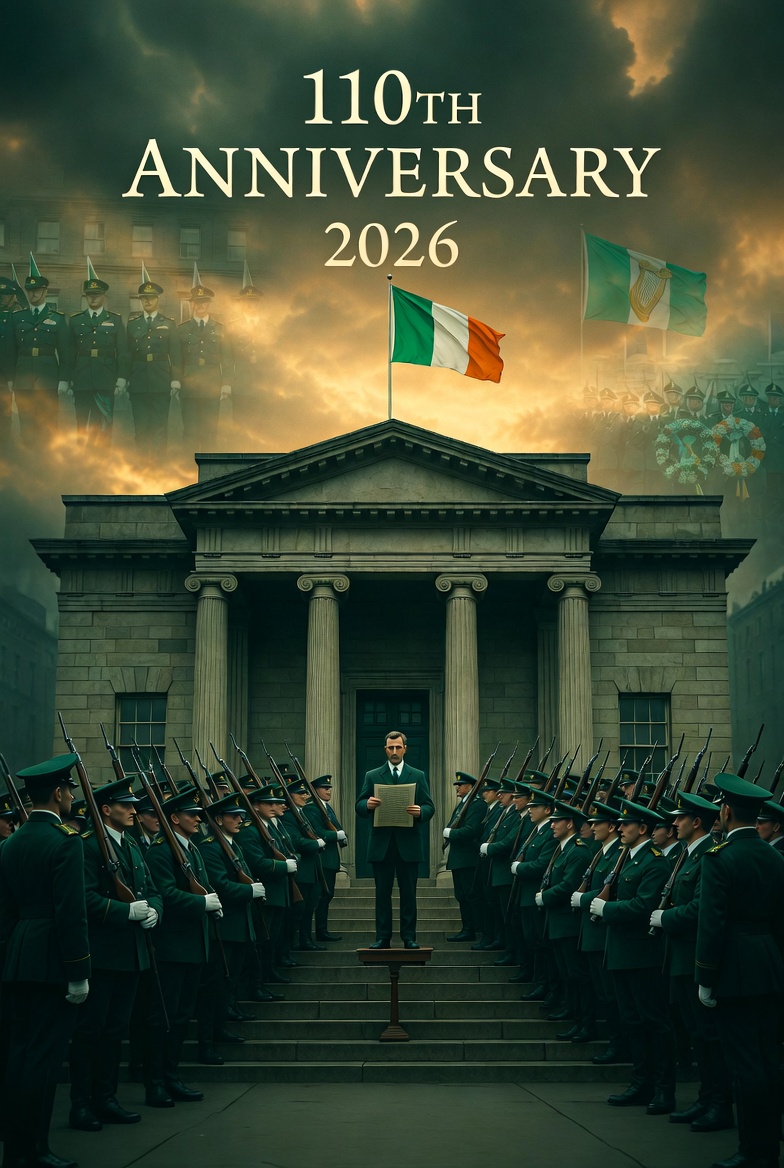
The Proclamation of the Irish Republic – the document that changed everything when it was read outside the GPO on Easter Monday 1916.
On Easter Sunday, 5 April 2026, thousands lined O’Connell Street in Dublin. The President laid a wreath at the GPO. The Defence Forces stood to attention. Captain Eva Houlihan – only the fourth woman ever to do so – read the 1916 Proclamation aloud, almost exactly 110 years after Patrick Pearse first spoke those words. The 110th anniversary of the Easter Rising was marked with ceremony, silence, and marching bands.
But here’s the part the official speeches gloss over: those seven men who signed the Proclamation knew they were signing their own death warrants. They launched a rebellion with fewer than 1,300 fighters against the greatest empire on earth. And they lost. Militarily, it was a disaster. Politically? It was the spark that lit the fuse for everything that followed.
This is the raw story of the **110th anniversary of the Easter Rising 2026** – the blood, the betrayal, the executions, and the women history tried to forget. If you’re searching for the real **Easter Rising facts**, the **Easter Rising summary**, or what actually happened in those six days in April 1916, pull up a chair. We’re not here to comfort you.
The 110th Anniversary Ceremony – What Happened on Easter Sunday 5 April 2026
The state commemoration took place outside the General Post Office on O’Connell Street, beginning at noon. President Catherine Connolly laid the wreath. The national flag on the GPO was lowered. Captain Eva Houlihan read the Proclamation. Over 200 members of the Irish Defence Forces participated, accompanied by the Combined Army Band and Pipe Band. Taoiseach Micheál Martin and other dignitaries attended, with thousands of ordinary people lining the street.
Similar events happened across the island – parades in Belfast, local commemorations, and family-friendly re-enactments at the Royal Hospital Kilmainham. But while the ceremony was solemn and respectful, the real power of the Easter Rising has always lived in the uncomfortable details the polished versions leave out.
The GPO in 1916 – headquarters of the Rising and the same spot where the 110th anniversary was marked in 2026.
Easter Rising Summary: Six Days That Broke an Empire’s Grip
Here’s the straight **Easter Rising summary**: On Easter Monday, 24 April 1916, a small group of Irish Republicans seized key buildings in Dublin, including the GPO, St Stephen’s Green, the Four Courts, and Boland’s Mill. Patrick Pearse stepped onto the GPO steps and read the Proclamation declaring the Irish Republic. For six days they held out against overwhelming British forces. Dublin city centre was shelled into rubble. Over 500 people died – many of them civilians caught in the crossfire.
The rebels surrendered on 29 April to prevent further slaughter. The British response? They turned defeat into martyrdom. Between 3 and 12 May, 16 leaders were executed by firing squad in the stonebreaker’s yard of Kilmainham Gaol. James Connolly, too badly wounded to stand, was tied to a chair and shot.
“We declare the right of the people of Ireland to the ownership of Ireland…” — From the 1916 Proclamation
The Easter Rising Executions: How Britain Created Its Own Nightmare
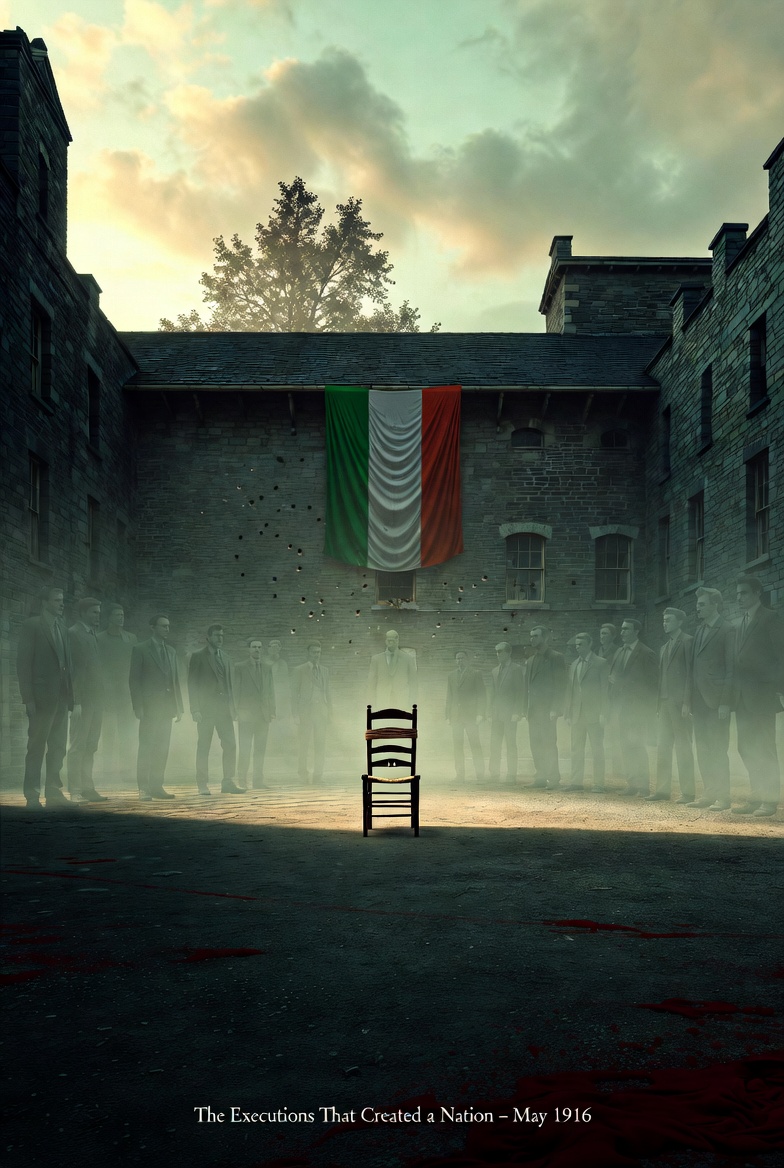
The **Easter Rising executions** remain the most gut-wrenching chapter. The 16 men shot included:
- Patrick Pearse
- Thomas Clarke
- Thomas MacDonagh
- Joseph Plunkett (married hours before his death)
- James Connolly (shot while seated)
- Seán MacDiarmada
- Éamonn Ceannt
- And nine more brave souls.
Roger Casement was hanged in London. The British thought swift justice would crush the rebellion. Instead, public opinion in Ireland flipped overnight. What had been a minority action became a national awakening. As Yeats put it, “a terrible beauty is born.”
Kilmainham Gaol – the stonebreaker’s yard where 14 of the leaders were executed in May 1916.
The Women of 1916: The Fighters History Tried to Erase
While the signatories get the statues, the women of Cumann na mBan and the Irish Citizen Army carried messages under fire, sniped from rooftops, and commanded positions. Constance Markievicz fought at St Stephen’s Green and was sentenced to death (later commuted because she was a woman). Hundreds more risked everything. Their stories are still under-told – another reason Secret Ireland exists.
Why the 110th Anniversary Still Matters in 2026
110 years on, the Easter Rising isn’t dusty history. It’s a reminder that a handful of idealists with rifles and a dream can shift the course of a nation. It exposed the fragility of empire. It proved that ideas – especially dangerous ones written on a single sheet of paper – outlive bullets and bayonets.
The 2026 commemoration at the GPO, the reading of the Proclamation by a woman officer, the crowds on O’Connell Street – all of it echoes that original Monday in 1916. But the real commemoration isn’t just wreaths and parades. It’s remembering the cost. The civilian dead. The families destroyed. The brutal reality of street fighting in a crowded city.
Read our full Easter Rising deep dive from earlier this month →
Frequently Asked Questions – 110th Anniversary Easter Rising 2026
What is the 110th anniversary of the Easter Rising?
It marks 110 years since the 1916 rebellion. The main state ceremony took place on Easter Sunday 5 April 2026 outside the GPO in Dublin, with the Proclamation read by Captain Eva Houlihan.
When was the official 2026 Easter Rising commemoration?
The 110th state commemoration was held on Easter Sunday, 5 April 2026, at noon on O’Connell Street, Dublin. Additional events ran throughout April, including tours at Collins Barracks and re-enactments at Kilmainham.
Who read the Proclamation in 2026?
Captain Eva Houlihan of the Defence Forces read the Proclamation – the fourth woman ever to do so at the official ceremony.
How many were executed after the Easter Rising?
16 leaders were executed by the British in May 1916. Their deaths transformed public opinion and paved the way for the War of Independence.
Why does the Easter Rising still matter today?
It showed that ordinary people could challenge empire and win the moral battle. The ideas in the Proclamation – equality, sovereignty, ownership of Ireland by its people – remain relevant in 2026.
The Legacy: From the GPO Steps to a Free Republic
The men and women of 1916 didn’t live to see the Republic they declared. But their blood bought the momentum that led to 1918, the War of Independence, and eventually the Republic in 1949. Every time the Proclamation is read – whether by Pearse in 1916 or Captain Houlihan in 2026 – Ireland remembers that freedom isn’t given. It’s taken.
At Secret Ireland we don’t polish these stories. We tell them raw because forgetting the uncomfortable parts means we learn nothing. The rope, the shells, the executions – they all happened. And they still echo.
Share this if you believe the truth matters more than the ceremony. And come back for the darker corners of our history that the official tours skip over.
110 years later, the fire started on Easter Monday 1916 still burns.
Back to Secret Ireland → More unfiltered Irish history
About the Author
