“Song for Ireland” is one of those rare pieces that sounds ancient the first time you hear it. The melody moves like Atlantic swell; the words are full of sky, water, pubs and music, friends and farewells.
And yet, unlike many Irish standards that were born in the 19th century (or earlier), this is a modern folk song with a very specific creator and a very clear journey into the tradition.
Below you’ll find the complete story: who wrote it and when, what it’s about, who recorded the most influential versions, how it fitted so quickly into the Irish canon—and answers to your most-searched questions. I’ll also point you to reliable discography facts and the current Irish Singles Chart #1 (as of the week ending August 28, 2025) so this guide stays grounded in today as well as yesterday.
Fast facts (for skimmers)
-
Writers: Commonly credited to Phil Colclough and his wife June Colclough, English folk artists inspired by a trip to the Dingle Peninsula in Kerry. Wikipediamainlynorfolk.info
-
First recording: Seán Cannon (1977). The song was quickly taken up by Luke Kelly, The Dubliners, Mary Black and many others. secondhandsongs.com
-
Defining versions: Luke Kelly/The Dubliners and Mary Black helped canonize it; Mary Black’s 1998 compilation Song for Ireland underlined its status. SpotifyDiscogs+1
-
Theme: A love-letter to Ireland’s west—Dingle, Galway, the Atlantic—and to Irish music, friendship, and hope for peace; a modern ballad of belonging and longing. mainlynorfolk.info
How “Song for Ireland” was born (and why it feels timeless)
Unlike anonymous ballads that drifted to us across centuries, the origin of “Song for Ireland” is unusually clear. In the mid-1970s, Phil and June Colclough travelled to the Dingle Peninsula. The trip left them brimming with images—falcons wheeling above cliffs, fiddles in crowded pubs, salmon flashing in Galway rivers, summer sunsets on the western shore. Back home, those images became a new song that sounded old—a hallmark of great folk writing. Wikipediamainlynorfolk.info
The first release was by Seán Cannon in 1977, and from there the song moved rapidly into the repertoires of Luke Kelly and The Dubliners, then Mary Black, Dick Gaughan, Ralph McTell and many others. By the 1980s it already felt like it had “always been there,” which is about the highest compliment Irish folk audiences can pay. secondhandsongs.comSpotify
A respectful rewrite of the popular explainer you shared
You may have seen short write-ups that say the song was written by “a Northern Irish singer-songwriter” and first recorded in 1977, later performed by The Dubliners and other artists. Here’s the corrected, expanded version:
“Song for Ireland” was written in the mid-1970s by Phil Colclough (often credited jointly with June Colclough), English folk songwriters who were inspired by travels along Ireland’s western seaboard, especially Dingle. The first recording appeared in 1977 (by Seán Cannon), and the song quickly became a staple of the Irish scene through celebrated versions by Luke Kelly/The Dubliners and Mary Black. Its lyric is a modern ballad of memory and homecoming: a traveller is smitten by Ireland’s people and landscape, finding that no matter where he goes he’s drawn back to the Atlantic shore, the music, and the friendships that define the place. Over time it has become a beloved standard at concerts, festivals, weddings and funerals, resonating deeply with those touched by emigration and the ache—and joy—of belonging. Wikipediamainlynorfolk.infosecondhandsongs.comSpotifyDiscogs
What is the meaning of “Song for Ireland”?
If you’re searching for “Song for Ireland meaning,” think of it as a modern love song to the west of Ireland. The narrator wanders its coasts and pubs, meets people who make him want to stay, and dreams (in one of the song’s most quoted ideas) of a land where no one has to fight.
It’s not a rebel song; it’s a peacemaker’s ballad, inviting the listener to fall in love with the place and to imagine a gentler future. That mix—visual detail, everyday music-making, friendships, and a hope for peace—is why so many singers from different traditions have adopted it. mainlynorfolk.info
Definitive recordings (and how to build a Song for Ireland playlist)
If you’re curating a Song for Ireland playlist, start here:
-
Luke Kelly – “A Song for Ireland.” Kelly’s voice gives the lyric a weathered nobility; it’s one of the canonical Dubliners tracks of the 1980s. Spotify
-
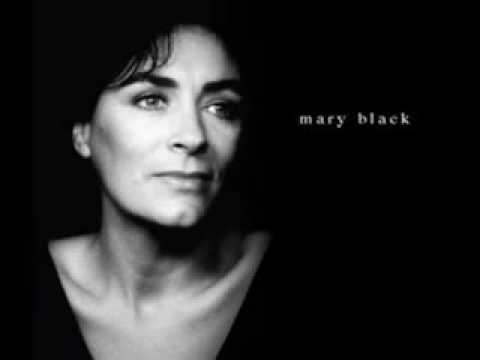
Mary Black – “Song for Ireland.” Black’s clarity and warmth helped carry the song to a global audience. Her 1998 compilation Song for Ireland shows how closely she’s associated with it. Discogs+1
-
Dick Gaughan – “Song for Ireland.” A folk singer’s folk singer; Gaughan’s phrasing brings out the quiet political hope in the lyric. mainlynorfolk.info
-
The Dubliners – live versions. The group’s signature mix of grit and grace keeps the song grounded in the session tradition. (Numerous live clips and releases circulate.) mainlynorfolk.info
Musicians’ corner: Song for Ireland lyrics and chords (how it’s usually played)
Although different singers shift keys to suit their range, many session players treat “Song for Ireland” as a slow air in G or D with a straightforward folk progression. A common beginner-friendly shape in G might move around G – Em – C – D, with the refrain rising to G – C – G – D – G to mirror the lift on lines like “I stood by your Atlantic sea.” That simple harmonic bed leaves room for the story-telling vocal and for whistle/violin lines to bloom between verses. (If you’re learning it, try a capo at 2 and play in F shapes to soften the brightness; it suits Mary Black-style delivery.)
Frequently asked questions (deep-dive answers)
1) When was “Song for Ireland” written?
The song emerged in the mid-1970s, after Phil and June Colclough’s trip to the Dingle Peninsula. The first commercial release arrived in 1977 via Seán Cannon. From there, it spread swiftly in Irish folk circles; Luke Kelly/The Dubliners and Mary Black each helped turn it into a standard. Wikipediasecondhandsongs.comSpotify
2) What is a famous Irish song?
Ireland’s treasury is deep, but a short list that comes up again and again includes:
-
“Danny Boy” (sung to the Londonderry Air), perhaps the most internationally recognized Irish song of all time. Wikipedia
-
“The Fields of Athenry” (1979, Pete St. John), the unofficial crowd anthem at matches—melancholy, melodic, and hugely beloved. Wikipedia
-
“Molly Malone” (“Cockles and Mussels”), a Dublin street-ballad that has become a city emblem.
-
“The Parting Glass,” “The Wild Rover,” “The Rocky Road to Dublin,” “Raglan Road,” and more—each iconic in their own right.
“Song for Ireland” belongs on this same shelf because it feels traditional while being contemporary in authorship and outlook.
3) What song represents Ireland?
Strictly speaking, the national anthem of Ireland is “Amhrán na bhFiann” (“The Soldier’s Song”), adopted in the early 20th century and long associated with the independence struggle. In cultural terms, songs like “Danny Boy” and “The Fields of Athenry” often serve as global musical shorthand for Ireland, depending on the occasion (state ceremony vs. sport vs. diaspora events). WikipediaClassic FM
4) What’s the number one song in Ireland?
Charts change weekly, but for the chart week 22–28 August 2025, the Official Irish Singles Chart lists “Killeagh” by Kingfishr at #1 (it has enjoyed multiple returns to the top spot across 2025). Always check the latest Official Charts Company or IRMA postings for the current week. officialcharts.com+1
5) What is the famous Irish song called?
If you mean “the” famous Irish song, most people outside Ireland would answer “Danny Boy,” while match-going fans might say “The Fields of Athenry.” In folk clubs, “The Parting Glass” or “Raglan Road” might win the vote. And among modern compositions that feel ancient, “Song for Ireland” is frequently mentioned alongside them. Wikipedia+1
6) What does Dan McCabe sing?
Dan McCabe is an Irish singer known for ballads and modern interpretations of Irish standards and contemporary songs. His viral rise came through powerful renditions of pieces like “The Parting Glass,” “Fields of Athenry,” and covers that bridge older and newer Irish repertoires. (If you’re building a Song for Ireland playlist, his style sits comfortably alongside Mary Black and contemporary folk voices.)
7) What is the Irish song about 1916?
Several important songs engage with the Easter Rising of 1916. The most widely performed are:
-
“The Foggy Dew” (generally attributed to Canon Charles O’Neill; written c. 1919), which urges Irishmen to fight at home rather than in foreign wars and vividly memorializes the Rising. Wikipediao-em.orgIrishCentral.com
-
“Grace” (1985), a later ballad about the marriage of Joseph Plunkett and Grace Gifford hours before his execution—hugely popular at concerts and commemorations.
-
“Óró, sé do bheatha ‘bhaile,” older in origin but repurposed in 1916 as a rallying march, especially in the Pádraig Pearse tradition.
8) What was the very first song ever written?
We don’t know what humanity’s first song sounded like, but the oldest complete surviving musical composition is the Seikilos Epitaph, engraved with words and notation on a stone stele from the 1st–2nd century CE (some date it a bit earlier). There are also much older Hurrian fragments (not complete) from ancient Syria. The Epitaph’s message is strikingly modern—“as long as you live, shine”—a reminder that music has been consoling and companioning us for millennia. WikipediaWIRED
Why Mary Black and The Dubliners matter so much to this song
-
Mary Black gave “Song for Ireland” a crystalline, intimate reading that travelled widely across radio and compilation albums. Her 1998 release Song for Ireland cemented the association. If you’re googling “Mary Black – Song for Ireland lyrics,” you’re probably remembering the way she lingers on the refrain: “I stood by your Atlantic sea…”—that gentle lift is part of why guitarists love arranging it. Discogs+1
-
The Dubliners brought the piece into the pub-session and concert-hall mainstream. Luke Kelly’s version frames the lyric like a lived memory; he makes “living on your western shore” feel like a home address, not just a line in a song. Spotifymainlynorfolk.info
Together, those versions explain why searches like “The Dubliners Song for Ireland lyrics” and “Mary Black Song for Ireland” keep spiking: those are the renditions listeners replay when they want to feel the song as story, not just as tune.
“Song for Ireland” in the tradition: emigration, home, and peace
The ballad speaks to a central Irish experience—leaving and returning (in body or in memory). That’s why it belongs at weddings (vows to a place and to a person), funerals (a goodbye and a homecoming), sessions (community sustained by music), and diaspora gatherings (Ireland gathered in song). It’s not an emigration lament in the narrow sense; rather, it welcomes the world in and sends a blessing out.
It’s also a peace song. When the narrator dreams of “a land where no one has to fight,” the line lands with particular force given the decades when the song travelled. It offered a gentle counter-melody to conflict—one reason so many artists across political sensibilities were happy to sing it. mainlynorfolk.info
SEO corner: finding Song for Ireland lyrics (without printing the whole text)
Because lyrics are copyrighted, most reputable sites summarize or license them rather than host full unlicensed copies. If you need “Song for Ireland lyrics,” look for authorized lyric sites, official artist pages, or legitimately licensed songbooks. For musicians searching “Song for Ireland lyrics and chords,” arrange it in G–Em–C–D (or D–Bm–G–A), keep the tempo unhurried, and let the whistle/fiddle breathe between verses. The story is the point.
Building your Song for Ireland playlist (starter pack)
-
Luke Kelly / The Dubliners – A Song for Ireland (live & studio versions). Spotify
-
Mary Black – Song for Ireland (1998 compilation; earlier recordings appear on live sets and radio sessions). Discogs+1
-
Dick Gaughan – Song for Ireland (a folk singer’s master-class). mainlynorfolk.info
-
Ralph McTell – Song for Ireland (English folk royalty saluting Irish shores). Wikipedia
Round it out with tracks that speak to the same themes—“The Parting Glass,” “The Green Fields of France,” “The Lakes of Pontchartrain,” “The Fields of Athenry,” and “Raglan Road.” Wikipedia
Why this modern song feels ancient (and why it will last)
Great folk songs do three things:
-
Paint the place. “Song for Ireland” gives you Dingle, Galway, western sunsets, pub fiddles, salmon and falcons. You can smell the sea.
-
Welcome the listener. It’s written so anyone can sing it—plain melody, human tempo, enough space to tell your own story inside of it.
-
Offer a hope. The dream of a land without fighting threads quietly through the images. It’s not naïve; it’s aspirational.
That’s why the piece jumped so quickly from a brand-new song (1977) to a trad-feeling classic that session leaders call without a second thought. The Song for Ireland original is mid-70s folk; the Song for Ireland meaning is as old as longing—and as current as today’s chart updates.
Sources & references (selected)
-
Authorship/inspiration; major cover artists: Phil Colclough page and Mainly Norfolk folk archive. Wikipediamainlynorfolk.info
-
First release (1977): SecondHandSongs recording index. secondhandsongs.com
-
Mary Black discography and 1998 compilation Song for Ireland: Mary-Black.net and Discogs. Mary Black WebsiteDiscogs+1
-
National anthem background: Amhrán na bhFiann overview; Classic FM explainer. WikipediaClassic FM
-
Irish song about 1916: The Foggy Dew. Wikipediao-em.orgIrishCentral.com
-
Current Irish #1 (week ending Aug 28, 2025): Official Irish Singles Chart (Kingfishr – Killeagh). officialcharts.com+1
Final notes for searchers
If you landed here via “mary black – song for ireland lyrics”, “The Dubliners Song for Ireland lyrics,” or “Song for Ireland lyrics and chords,” you’re in exactly the right place. Use the playlist suggestions above to find your favourite rendition, and lean on the G/Em/C/D family of chords to make it your own. And if you came looking for the “Song for Ireland original,” remember: it’s a 1970s folk composition by the Colcloughs that feels centuries older—which is precisely why it endures.
About the Author
