If you’ve ever looked at Celtic art, explored Irish mythology, or considered getting a Celtic Tree of Life tattoo, you’ve probably come across this mysterious and powerful symbol.
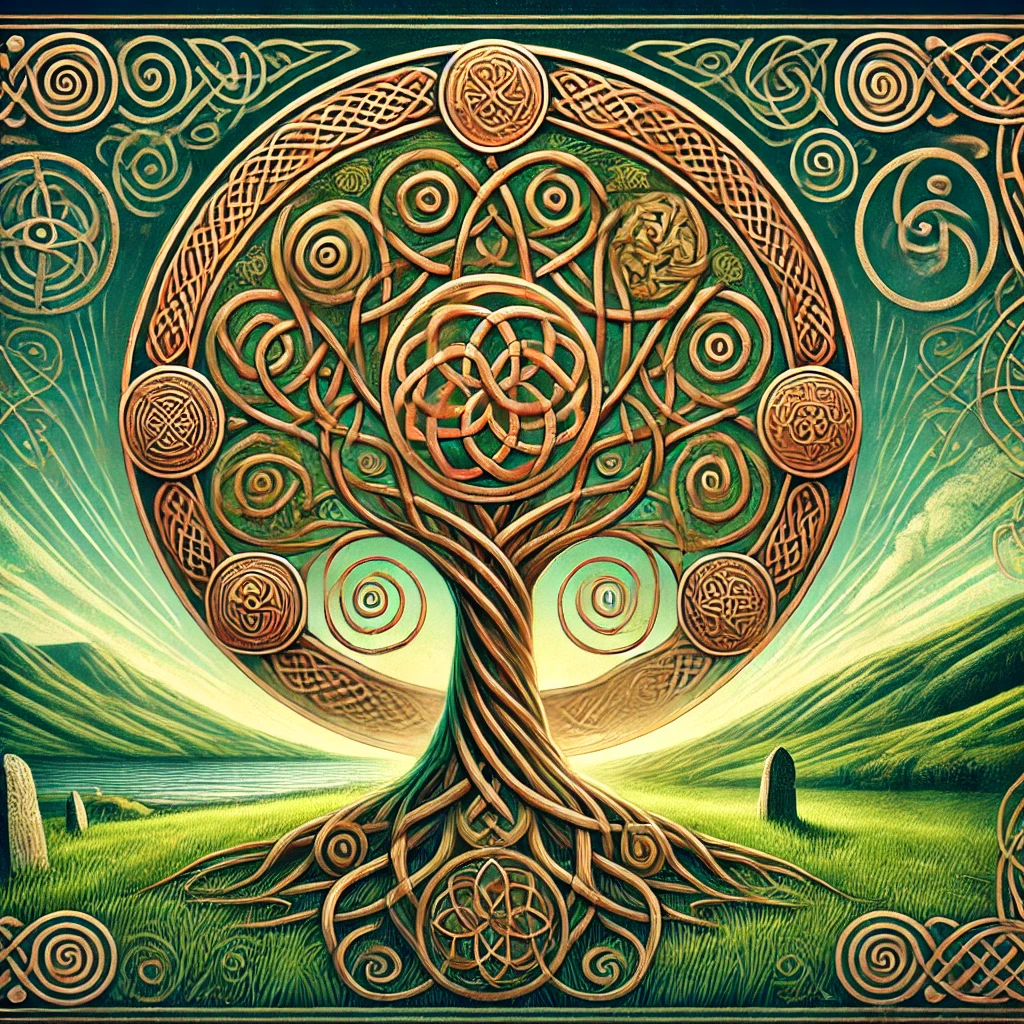
The Celtic Tree of Life isn’t just a cool design—it’s a symbol with deep roots in Irish and Scottish traditions, representing balance, connection, and the cycle of existence.
But where does it come from? What does the Celtic Tree of Life mean? How is it different from Yggdrasil, the Norse Tree of Life? And why do people still wear it, tattoo it, and honor it today?
Let’s dive in.
What Does the Celtic Tree of Life Mean?
The Celtic Tree of Life (Crann Bethadh in Irish) symbolizes harmony, balance, and interconnectedness. To the Celts, trees were more than just part of nature—they were sacred bridges between the heavens, the earth, and the underworld.
Each tree was believed to hold ancient wisdom, provide protection, and serve as a doorway to the spirit world. The Celts saw the tree as a living entity that connected all life—its branches reaching toward the sky, its roots digging deep into the earth, and its trunk standing strong in between.
Learn more about Irish mythology here.
What Is the Celtic Symbol of Life?
While the Celtic Tree of Life is the strongest and most recognizable life symbol, other Celtic symbols also represent vitality and existence:
- The Triskelion (Triple Spiral) – Represents motion, growth, and the cycle of life.
- The Awen (Three Rays of Light) – Symbolizing divine inspiration and balance.
- The Claddagh Ring – Though more modern, it symbolizes love, loyalty, and life’s eternal connections.
But no symbol carries the same depth of meaning as the Tree of Life, which stood at the center of ancient Celtic belief.
Explore more ancient Irish symbols here.
What Does the Tree of Life Symbolize?
The Tree of Life symbolizes:
- Balance & Harmony – The tree connects the earth and sky, symbolizing unity.
- Growth & Strength – Just like a tree grows stronger over time, so do we.
- Connection – The branches represent family, ancestry, and the bonds between all living things.
- Eternal Life – The Celtic knotwork around the tree often represents infinity and the cycle of rebirth.
For the Celts, cutting down a tribe’s sacred tree meant severing its spiritual and physical strength. That’s how deeply tied it was to their identity.
Read about Irish spirituality here.
What Is the Sacred Celtic Tree Name?
The Oak (Dair in Irish) was the most sacred tree in Celtic culture.
- The word “Druid” comes from the Celtic words for oak and wisdom.
- Oak trees were believed to hold powerful spiritual energy.
- The Celts thought the gods communicated through oak trees.
But other trees held meaning too:
- Rowan – Protection from evil spirits
- Hawthorn – Gateway to the fairy world
- Yew – Symbol of death and rebirth
The Celtic Ogham alphabet (an ancient script) was even based on tree names, showing just how deeply connected the Celts were to trees.
Is the Tree of Life a Pagan Symbol?
Yes, the Celtic Tree of Life is definitely a pagan symbol—but pagan in the original sense, meaning pre-Christian, nature-based belief systems.
The Tree of Life existed in Celtic Druidic traditions, but similar symbols also appear in:
- Norse mythology (Yggdrasil)
- Ancient Egypt
- Buddhist teachings
Later, Christian monks in Ireland adopted the Tree of Life symbolism into their artwork, which is why you’ll see it carved into ancient Irish crosses and illuminated manuscripts.
Discover more about Ireland’s pagan roots here.
Is Celtic Irish or Scottish?
Both.
The Celts spread across Ireland, Scotland, Wales, and parts of mainland Europe, but their strongest cultural survival is in Ireland and Scotland.
- Irish Celts developed a rich oral tradition, ogham writing, and warrior culture.
- Scottish Celts had a similar spiritual worldview but were more influenced by Norse settlers over time.
So, if you’re wondering, “Is the Tree of Life Irish or Scottish?”, the answer is: It belongs to both.
What Is the Tree of Life in Ireland?
In Ireland, the Tree of Life was called Crann Bethadh.
- Each Celtic tribe had a sacred tree at its center, often an oak.
- The tree was a gathering place for rituals, decision-making, and spiritual ceremonies.
- Cutting down a tribe’s sacred tree was the greatest insult—equivalent to destroying a kingdom’s power source.
Even today, in Irish countryside, you’ll find “fairy trees”—often lone hawthorn trees—left untouched out of deep respect.
Read more about Ireland’s sacred landscapes here.
What Is the Most Famous Celtic Symbol?
The Celtic Tree of Life is one of the most famous Celtic symbols, but it shares the spotlight with:
- The Triskelion (Three Spirals) – A symbol of motion and life cycles.
- The Claddagh – Represents love, loyalty, and friendship.
- The Celtic Cross – A fusion of Christian and ancient Irish beliefs.
Each symbol carries a piece of Ireland’s deep mythology and culture.
What Is the Pagan Symbol for Life?
The Celtic Tree of Life is the strongest pagan symbol for life in Celtic culture.
It represents:
- Birth, growth, and rebirth
- Connection to ancestors and nature
- The never-ending cycle of existence
But other pagan life symbols include:
- The Spiral of Life – Found in ancient tombs, representing eternity.
- The Green Man – A face surrounded by leaves, symbolizing nature’s spirit.
Celtic Tree of Life Tattoo Meaning
Many people choose the Celtic Tree of Life tattoo because it represents:
- Strength & Growth – A constant reminder to keep growing, despite challenges.
- Family & Connection – Symbolizing deep roots in heritage.
- Spirituality & Balance – A link between the physical and the divine.
Adding Celtic knots around the tree enhances its meaning, symbolizing eternal life.
Explore more Celtic symbolism here.
Celtic Tree of Life vs. Yggdrasil
People often compare the Celtic Tree of Life to Yggdrasil, the Norse Tree of Life.
Similarities:
- Both represent a cosmic tree that connects realms.
- Both were sacred to ancient cultures.
- Both symbolize wisdom, strength, and existence.
Differences:
- Yggdrasil has nine worlds in Norse mythology, while the Celtic Tree of Life focuses on the balance of earth, sky, and the underworld.
- Yggdrasil is connected to Odin and the Norse gods, while the Celtic tree is more tied to druids and nature spirits.
Celtic Tree of Life Poem
Throughout Irish literature and poetry, trees have symbolized wisdom and endurance. One poetic tribute might go:
“Roots in the past, branches in the sky,
A witness to centuries passing by.
Deep in the earth, its wisdom remains,
The Celtic Tree, where life sustains.”
Final Thoughts – A Symbol That Still Stands Tall
The Celtic Tree of Life isn’t just an ancient symbol—it’s alive in modern tattoos, jewelry, artwork, and spiritual traditions.
Whether you wear it, ink it, or simply respect its meaning, it remains a powerful emblem of Ireland’s soul.
Explore more of Ireland’s mystical heritage here.
About the Author
