
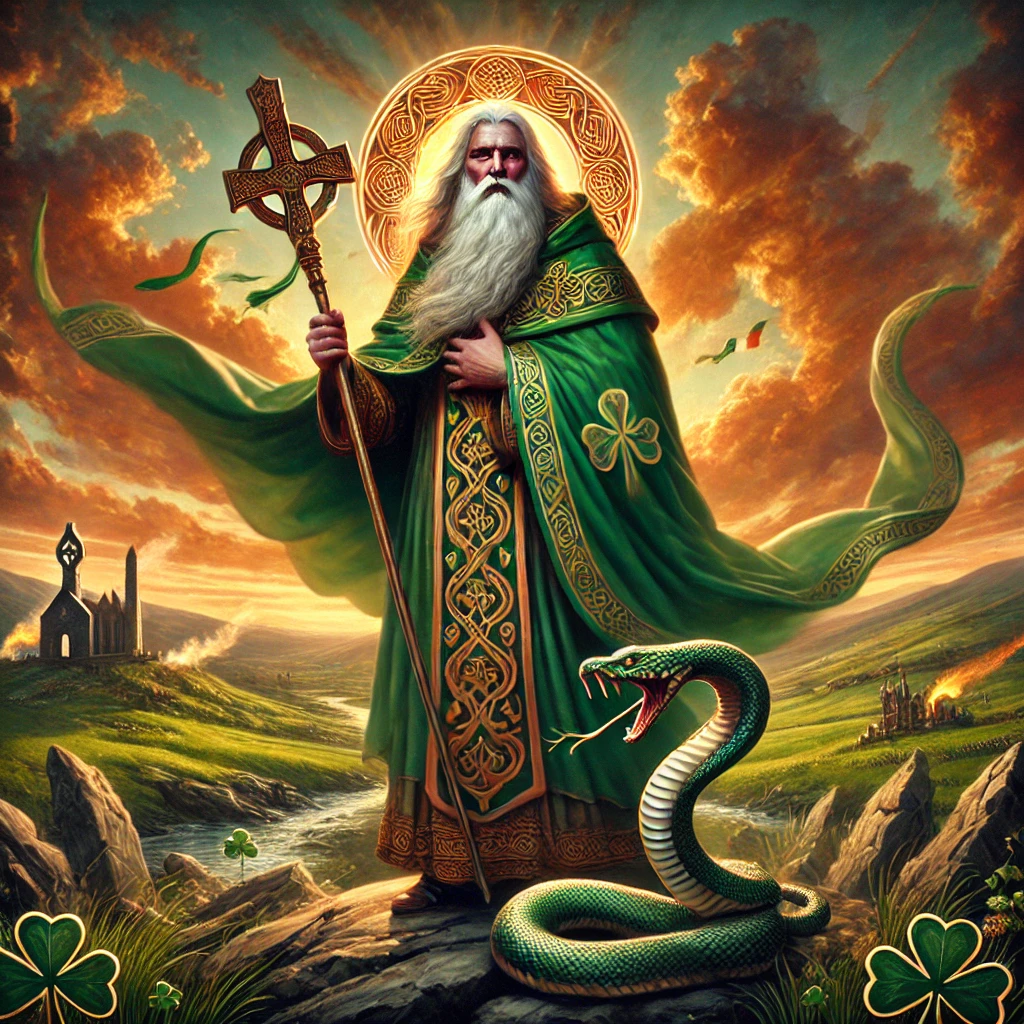
Every March 17th, the world turns green in celebration of St. Patrick’s Day—a vibrant tribute to Ireland’s patron saint. Parades march through Dublin, shamrocks adorn lapels, and pints of Guinness flow freely.
But as the confetti settles in 2025, a quieter curiosity emerges. Who was St. Patrick beyond the festivities? What hidden stories linger beneath the surface of this global holiday? At Secret Ireland, we’re peeling back the layers of myth, history, and tradition to reveal the lesser-known tales of St. Patrick that deserve a spotlight this spring.
The Man Before the Myth: Patrick’s Humble Beginnings
St. Patrick wasn’t born Irish—a fact that surprises many. Born in Roman Britain around 387 AD (exact dates remain debated), his real name was likely Maewyn Succat. As a teenager, he was kidnapped by Irish raiders and enslaved for six years, tending sheep on windswept hills—possibly in modern-day County Antrim or Mayo. This wasn’t the triumphant figure of legend wielding a staff against serpents; it was a frightened boy, far from home, who turned to prayer for solace.
His escape, guided by a divine vision, marked the beginning of his transformation. After returning to Britain, he trained as a priest and felt called back to Ireland—not out of vengeance, but to spread Christianity. This personal journey, often overshadowed by grander tales, reveals a man shaped by resilience and faith, not just miracles.
The Serpent Banishing Myth: Truth or Pre-Christian Echo?
One of the most iconic St. Patrick stories is his banishment of snakes from Ireland. It’s a vivid image: a bearded saint standing atop a hill, driving slithering creatures into the sea. Yet, science tells us Ireland never had snakes—its isolation after the Ice Age made it an inhospitable home for reptiles. So where did this legend come from?
Many historians argue it’s a metaphor. The “snakes” may symbolize the druids—pagan priests who opposed Patrick’s mission. In Irish mythology, serpents often represented wisdom and the old ways, tied to figures like Crom Cruach, a deity worshipped before Christianity’s rise. By “banishing” them, Patrick’s story could reflect the triumph of his faith over Ireland’s ancient beliefs. It’s a tale less about zoology and more about cultural conquest, woven into the fabric of Irish identity.
The Showdown at Tara: A Clash of Faiths
Perhaps the most cinematic of Patrick’s hidden stories unfolded on the Hill of Tara, the ancient seat of Ireland’s High Kings. Legend claims that in 433 AD, Patrick defied King Laoghaire by lighting a Paschal fire during Easter—a bold act that clashed with the pagan Bealtaine festival, when all fires were to be extinguished until the druids lit their sacred flame. The king’s priests, furious at this challenge, confronted Patrick in a spiritual showdown.
Accounts vary—some say miracles ensued, like Patrick raising the dead to prove his God’s power, while others depict a tense debate of wits. What’s clear is that Tara became a turning point. Patrick didn’t just preach; he engaged Ireland’s rulers and mystics head-on, blending defiance with diplomacy. Today, visitors to Tara can still feel the weight of that moment, where history and myth blur into one.
Shamrocks and the Trinity: A Teaching Tool Rooted in Nature
The shamrock is synonymous with St. Patrick’s Day, but its origin story is often oversimplified. Tradition holds that Patrick used the three-leafed plant to explain the Christian Trinity—Father, Son, and Holy Spirit—to Ireland’s pagans. It’s a charming tale, but it’s also a clever nod to the Celtic reverence for nature and triads (think of the triple goddess Brigid or the three realms of land, sea, and sky).
Did Patrick truly invent this analogy? There’s no hard evidence—his own writings, like the Confessio, don’t mention it. Yet the shamrock’s enduring symbolism shows how Patrick (or his later chroniclers) bridged old beliefs with new, making Christianity feel less foreign to the Irish. In 2025, as you pin a shamrock to your coat, consider it a quiet tribute to that fusion of cultures.
Forgotten Traditions: The St. Patrick’s Day of Old
Modern St. Patrick’s Day is loud and global, but centuries ago, it was a solemn affair. In medieval Ireland, it was a religious feast day—churches rang with hymns, not pub songs. Families gathered for simple meals, often featuring “St. Patrick’s Pot,” a stew of meat and root vegetables. The wearing of the green evolved from pinning shamrocks to full outfits, a shift boosted by Irish diaspora in America.
One lost custom worth reviving? The “drowning the shamrock”—placing your shamrock in a glass of whiskey or beer after the day’s festivities, then drinking to honor Patrick. It’s a small ritual that ties back to community and reverence, a far cry from today’s commercial excess.
St. Patrick’s Legacy in 2025: Beyond the Green Beer
As we reflect on St. Patrick’s Day 2025, the holiday’s deeper layers beckon. Patrick wasn’t just a saint; he was a bridge between worlds—Roman and Irish, pagan and Christian, history and legend. His life reminds us that Ireland’s story is one of adaptation, where invaders become icons and old gods linger in new guises.
For travelers this spring, sites tied to Patrick offer a chance to connect with that legacy. Downpatrick, where he’s said to be buried, hums with quiet reverence. Croagh Patrick, the mountain he climbed to fast for 40 days, draws pilgrims seeking both history and views. Even the River Shannon whispers tales of his baptisms. These aren’t just tourist stops—they’re windows into a past that still shapes Ireland today.
Why These Stories Matter Now
In a world of fast-paced celebrations, uncovering St. Patrick’s hidden stories feels like an act of rediscovery. They remind us that holidays aren’t static—they evolve with the people who keep them alive. At Secret Ireland, we believe the real magic of St. Patrick’s Day lies not in the parades, but in the echoes of a man who walked Ireland’s hills, faced its kings, and left a mark that time can’t erase.
So, as March fades into April 2025, take a moment to look beyond the green. Read Patrick’s Confessio for his own words. Visit a site tied to his life. Or simply raise a glass to the shamrock—and the untold tales it carries. What hidden story of St. Patrick resonates with you? Share your thoughts with us below, and let’s keep Ireland’s secrets alive together.
Explore More: Loved this dive into St. Patrick’s Day? Check out our articles on Irish folklore and ancient Irish sites for more hidden gems.
About the Author
