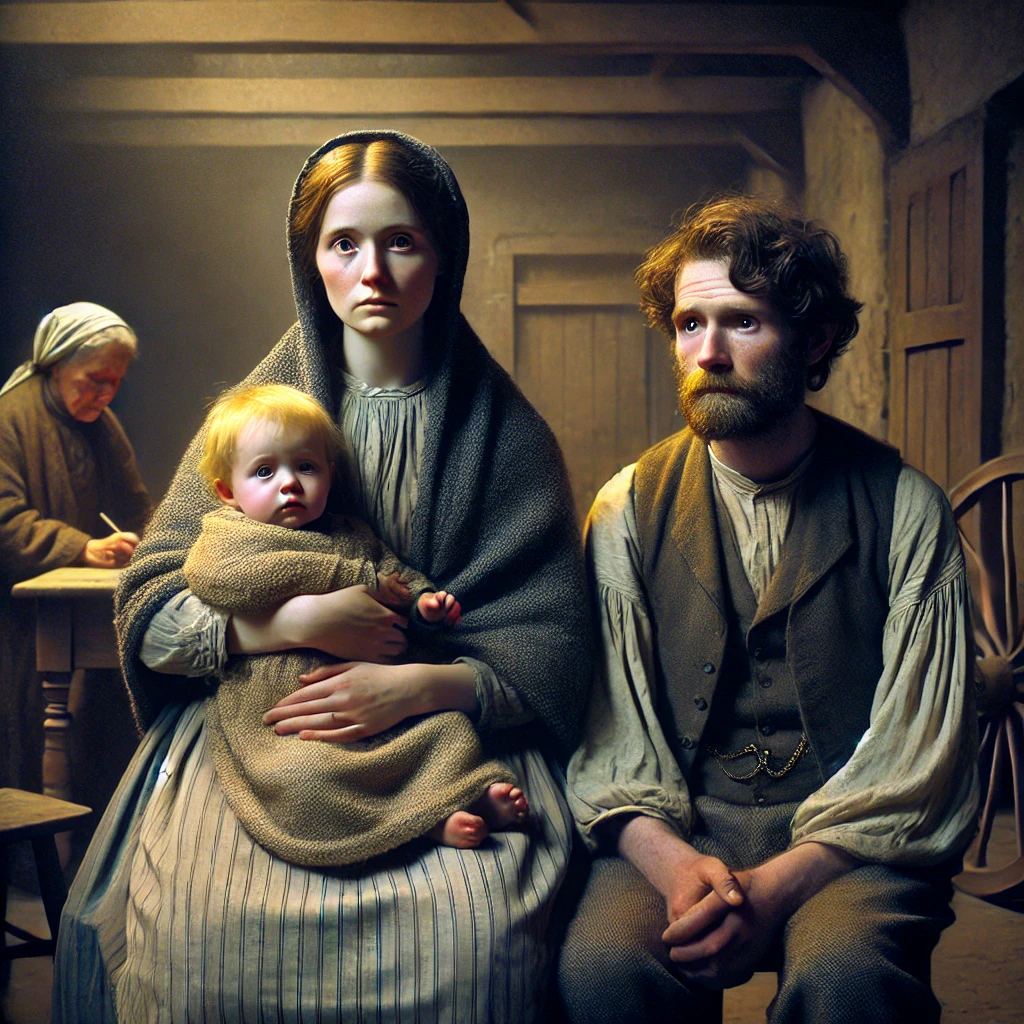
The Great Irish Famine (1845–1852) was a cataclysmic event that forced millions of Irish people to flee their homeland in search of survival. Among those who made the perilous journey to America, many found themselves in the poorhouses of New York, struggling to rebuild their lives after enduring unimaginable hardship.
Amid the despair of poverty and displacement, a poignant record of their existence emerged in the form of portraits—artistic representations and photographs that captured their humanity and resilience. These portraits provide a rare glimpse into the lives of famine victims, revealing their strength and dignity even in the face of overwhelming adversity.
The Great Famine: A Tragedy of Unimaginable Scale
The Irish Potato Famine, caused by a devastating potato blight, left millions starving and destitute. Over one million people perished, while another two million emigrated, seeking refuge primarily in America, Canada, and Britain.
For those who survived the transatlantic journey, the promise of a better life in America often remained elusive. Many Irish immigrants faced severe discrimination, poverty, and isolation, forcing them into poorhouses and workhouses in cities like New York.
New York’s Poorhouses: A Harsh Refuge
Poorhouses in 19th-century New York were intended as places of refuge for the destitute, but they were often overcrowded, unsanitary, and harsh. For Irish famine survivors, these institutions represented a continuation of the suffering they had hoped to leave behind.
Despite the difficult conditions, poorhouses became a part of the immigrant experience, providing basic shelter and food while also documenting the lives of those who passed through their doors.
The Role of Portraits in Documenting History
During this period, artists and photographers began to create portraits of the poor and marginalized as part of a broader effort to humanize their struggles. For Irish famine victims, these portraits served as a powerful testament to their resilience and individuality.
Artistic Portraits
Artists often visited poorhouses to sketch or paint their inhabitants. These works captured the weariness etched on their faces, but also their dignity and quiet strength. The portraits served as both artistic endeavors and social commentaries, shedding light on the plight of immigrants in America.
Early Photography
The advent of photography in the mid-19th century brought a new dimension to documenting history. Poorhouses began to use photographs for record-keeping, inadvertently creating a visual archive of Irish famine survivors. These images, though often somber, are invaluable historical artifacts.
The Stories Behind the Faces
Each portrait tells a story of survival, loss, and hope:
- The Children: Many portraits depict children whose faces reflect both innocence and the weight of hardship. These young immigrants often faced challenges such as malnutrition, disease, and forced labor.
- The Mothers: Women, often widowed or separated from their families, were frequent subjects of these portraits. Their eyes speak volumes about the sacrifices they made to ensure a better future for their children.
- The Elderly: Older Irish immigrants, who endured the famine and the grueling journey to America, often found themselves alone in poorhouses. Their portraits reveal lives marked by resilience and quiet fortitude.
The Impact of These Portraits
The portraits of Irish famine victims in New York poorhouses serve as more than historical records—they are reminders of the human cost of the famine and the enduring spirit of those who survived it.
Humanizing the Marginalized
By capturing the faces of famine survivors, these portraits challenge us to see beyond the statistics and remember the individual lives affected by this tragedy.
Raising Awareness
In their time, these portraits brought attention to the conditions in poorhouses and the broader struggles of Irish immigrants. Today, they continue to educate and inspire, connecting us to a pivotal moment in Irish-American history.
FAQs About Irish Famine Victims and Their Portraits
1. Why were portraits of Irish famine victims created in poorhouses?
Portraits were created for both documentation and humanitarian purposes. Artists and photographers sought to capture the humanity of the poor and draw attention to their struggles.
2. What do these portraits reveal about the lives of famine victims?
The portraits reveal the resilience, strength, and individuality of famine survivors, while also highlighting the harsh realities they faced in poorhouses.
3. Where can these portraits be viewed today?
Many of these portraits are preserved in historical archives, museums, and libraries. Institutions like the New York Public Library and the Irish American Heritage Museum often feature them in exhibitions.
4. How did Irish immigrants in poorhouses shape America?
Despite their hardships, Irish immigrants contributed significantly to America’s growth, particularly in building infrastructure, shaping labor movements, and enriching the cultural landscape.
Why These Portraits Matter Today
The portraits of Irish famine victims in New York poorhouses are poignant reminders of the resilience of the human spirit. They connect us to a chapter of history that shaped both Ireland and America, offering lessons in compassion, perseverance, and the enduring power of hope.
For more stories about Ireland’s rich history and the lives of its people, visit Secret Ireland. Explore the faces, places, and tales that continue to inspire and inform our understanding of the past.
Through these portraits, the voices of Irish famine survivors echo across generations, reminding us of their courage and the enduring ties between Ireland and its diaspora.
About the Author
