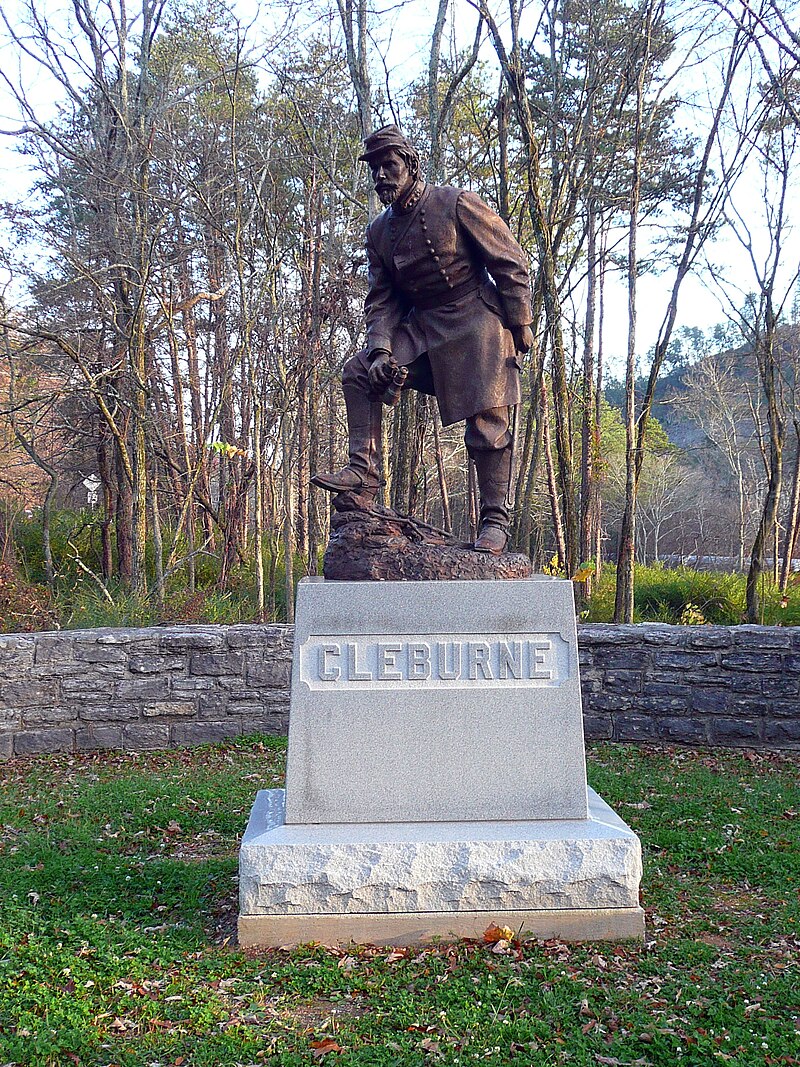
His audacious Patrick Cleburne slavery proposal to arm and emancipate enslaved people stunned the Confederacy, while his iconic Patrick Cleburne flag became a symbol of dread for Union forces.
This guide delves into his life, Patrick Cleburne Cause Of death, and complex legacy, answering FAQs like “Was Patrick Cleburne a good general?” and “What was General Cleburne’s flag?”
For more Irish history, explore Union General Thomas Francis Meagher.
Early Life: From Cork to Arkansas
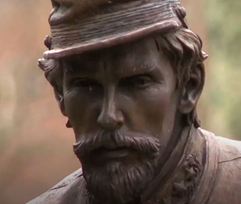
Patrick Cleburne was born at Bride Park Cottage, Ovens, County Cork, to Dr. Joseph Cleburne, a respected Anglo-Irish physician, and Mary Anne Ronayne, who died when Patrick was 18 months old.
Raised in a Protestant household, he aimed to follow his father into medicine at Trinity College Dublin but failed the entrance exam in 1846, a setback that shaped his path.
Enlisting in the British Army’s 41st Regiment of Foot, he served at Fort Westmorland on Spike Island during Queen Victoria’s 1849 Cork visit, reaching corporal before buying his discharge.
Amid the Great Famine’s devastation, Cleburne immigrated to the United States in 1849, settling in Helena, Arkansas, by 1850.
There, he thrived as a pharmacist, lawyer, and Southern Democrat, embracing his adopted state despite nativist hostility toward Irish immigrants.
National Library of Ireland Archives highlight his rapid assimilation, with Patrick Cleburne biography sources noting his defense of Irish immigrants against Know-Nothing prejudice.
The Road to War: Cleburne’s Confederate Commitment
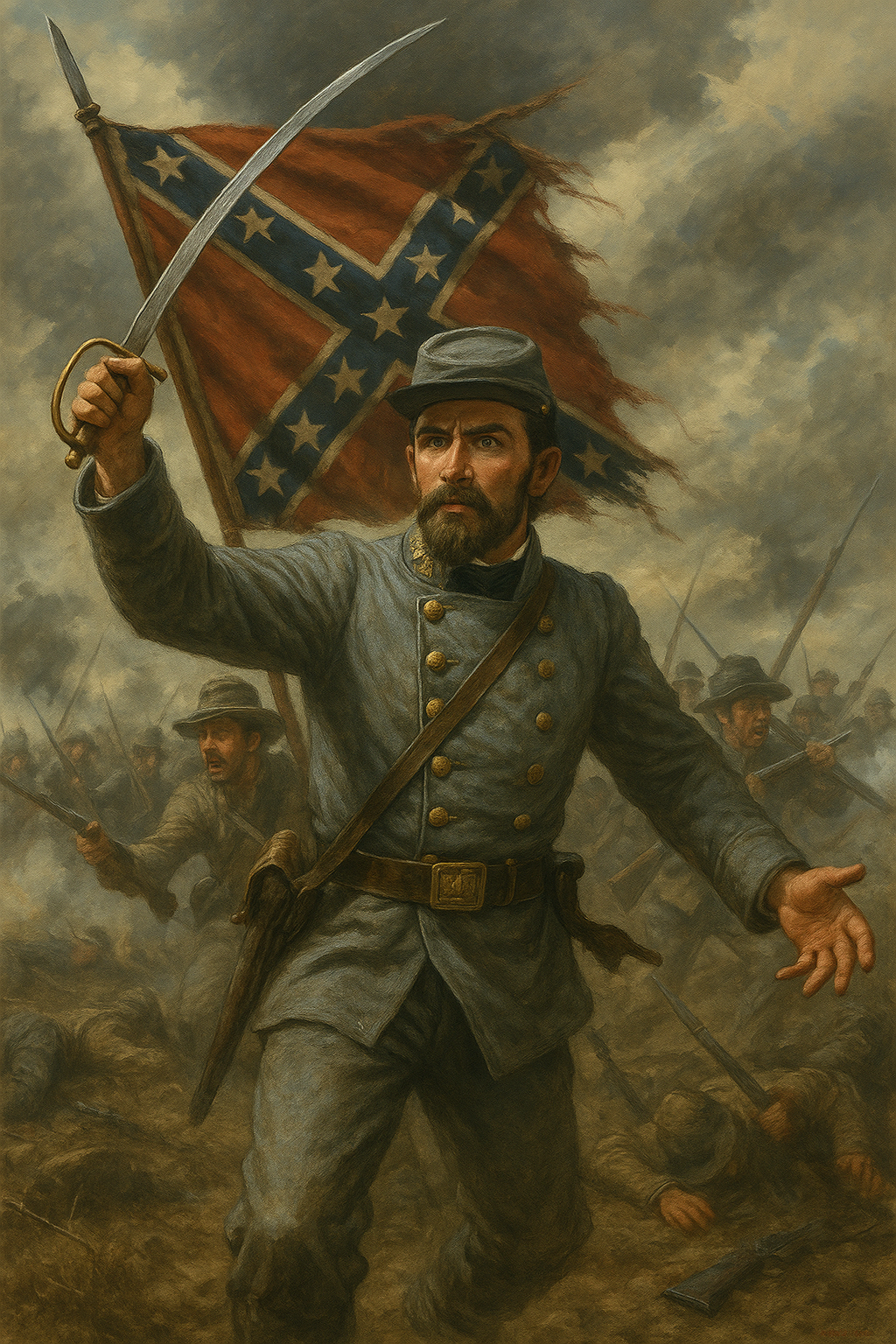
As tensions over slavery and states’ rights escalated, Cleburne’s loyalty to Arkansas drew him to the Confederacy in 1861. Not driven by slavery—he never owned slaves—but by gratitude for the South’s welcome, he joined the Yell Rifles as a private, seizing Little Rock’s Federal Arsenal.
Elected captain, he became colonel of the 15th Arkansas Infantry, wearing the Major General Patrick Cleburne uniform that would define his legend. His promotions were swift: brigadier general in March 1862 and major general by December 1862.
Battles like Shiloh (1862), Richmond, Perryville, and Stones River showcased his tactical genius, earning him the “Stonewall of the West” title from General Robert E. Lee, who called him “a meteor shining from a clouded sky.”
American Battlefield Trust praises his ability to hold ground, with his Patrick Cleburne flag signaling relentless assaults.
The Slavery Proposal: A Radical Vision
In January 1864, facing Confederate manpower shortages, Cleburne unveiled his controversial Patrick Cleburne slavery proposal at a Dalton, Georgia, meeting of the Army of Tennessee’s leadership.
He argued that slavery was “a source of weakness,” proposing to arm and emancipate enslaved people and their families for military service. His Patrick Cleburne quotes resonate: “Surrender means that the history of this heroic struggle will be written by the enemy … Let us meet the proclamation of Lincoln with a better one.”
He envisioned freedom, land, and legal rights for Black soldiers, citing historical precedents like Sparta’s helots. Suppressed by Jefferson Davis, who ordered copies destroyed, the proposal likely cost Cleburne a lieutenant general promotion.
A surviving copy, preserved by Major Calhoun Benham, resurfaced in 1898, as noted by Battle of Franklin Trust. The proposal’s rejection highlighted Cleburne’s isolation, with X posts like @northerndixie95 praising his foresight but noting its naivety.
General Cleburne’s Flag: A Symbol of Valor
The Patrick Cleburne flag, a blue battle flag with a white crescent moon and star, was the emblem of his division’s ferocity. Known as General Cleburne’s flag, it struck terror into Union hearts at battles like Chickamauga (1863) and Ringgold Gap, where Cleburne’s defense earned Congressional thanks.
National Park Service records Federal soldiers’ dread of its appearance, a testament to Cleburne’s tactical mastery.
The flag’s legacy endures in Civil War reenactments, though debates over Confederate symbols, as seen in Irish Times Reports, complicate its modern perception.
The Battle of Franklin: Patrick Cleburne’s Tragic End
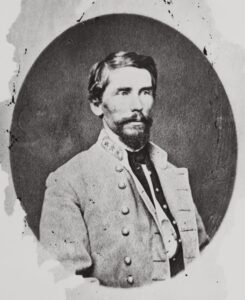
The Patrick Cleburne Cause Of death was a bullet to the abdomen or heart during the Battle of Franklin, Tennessee, on November 30, 1864. Under General John Bell Hood’s command, Cleburne opposed the frontal assault against fortified Union lines, warning of its futility.
His haunting Patrick Cleburne quotes to Brigadier-General Daniel Govan—“Well Govan, if we are to die, let us die like men”—proved prescient. After losing two horses, Cleburne charged on foot, sword aloft, falling 50 yards from Union trenches near the Carter cotton gin.
His body, stripped of boots and watch, was identified by John McQuade. Irish in the American Civil War describes the slaughter, with 1,750 Confederate deaths, including six generals. Cleburne’s death devastated Southern morale, with General Cheatham noting bodies “piled like shocks of wheat.”
Patrick Cleburne’s Grave: A Restless Journey
After Patrick Cleburne died, his remains faced a turbulent path. Initially buried in Columbia Cemetery’s “potter’s field” alongside Union soldiers and freedmen, General Lucius Polk arranged reburial at St. John’s Episcopal Church near Mount Pleasant, Tennessee, a site Cleburne admired for its Irish-like serenity.
In 1870, the Nebraska Ladies Confederate Memorial Association moved his body to Maple Hill Cemetery’s Confederate section in Helena, Arkansas, overlooking the Mississippi River.
The Patrick Cleburne grave, adorned with an Irish harp and clover, is a pilgrimage site, as detailed by Find a Grave. General William J. Hardee’s eulogy—“Where this division attacked, no numbers resisted its onslaught, save only once; and there is the grave of Cleburne”—cemented its sanctity.
FAQs About Patrick Cleburne
1. Was Patrick Cleburne a Good General?
Patrick Cleburne was an exceptional general, lauded as the “Stonewall of the West” for his strategic brilliance. His victories at Stones River, Chickamauga, and Ringgold Gap showcased his ability to outmaneuver larger forces without formal training.
His Patrick Cleburne flag terrified Union troops, with historian Craig Symonds calling him “the Confederacy’s finest division commander.”
2. Who Was the Irish Confederate Officer?
Patrick Cleburne, the highest-ranking Irish-born Confederate officer, was the Irish Confederate officer. Born in Ovens, County Cork, he immigrated to Arkansas in 1849, becoming a lawyer and Southern Democrat.
His Patrick Cleburne biography traces his rise from private to major general, leading the 15th Arkansas Infantry and a division. A Protestant, he was admired by Irish Americans but rejected Fenian nationalism, as noted in The Irish Story. His anti-slavery proposal and Confederate service make his legacy complex.
3. What Was Patrick Cleburne’s Proposal?
Patrick Cleburne’s proposal, presented in January 1864, called for arming and emancipating enslaved people to fight for the Confederacy, addressing manpower shortages and seeking foreign support.
He argued slavery weakened the South, proposing freedom and land for Black soldiers. Suppressed by Jefferson Davis, the Patrick Cleburne slavery proposal resurfaced in 1898 via Major Calhoun Benham, as per Encyclopedia of Arkansas. Though backed by some generals, its rejection cost Cleburne a promotion, highlighting his radical vision.
4. What Was General Cleburne’s Flag?
General Cleburne’s flag, a blue battle flag with a white crescent moon and star, symbolized his division’s elite status. Feared by Union troops at Missionary Ridge and Ringgold Gap, it marked Cleburne’s tactical triumphs. American Battlefield Trust notes its psychological impact. The Patrick Cleburne flag remains iconic in Civil War lore, though its Confederate ties spark debate, as seen in Irish Times Reports.
Contradictions and Character: The Man Behind the Myth
Cleburne’s Patrick Cleburne biography reveals a man of contradictions. Over six feet tall with grey-blue eyes, his appearance was debated—some called him striking, others plain, with a Cork accent noted by Abbeville Institute. A devout Episcopalian, he avoided religious debates but defended Irish immigrants against nativism.
His Patrick Cleburne quotes, like “I am with the South in life or in death, in victory or defeat,” reflect his loyalty, not to slavery but to Arkansas.
His rejection of Fenian calls to liberate Ireland, as recounted in Irish in the American Civil War, underscores his focus on the South. Yet, his Patrick Cleburne slavery proposal, advocating emancipation, set him apart from peers like slave-owning General Leonidas Polk.
Commemoration: A Contested Legacy
Cleburne’s memory is enshrined in Cleburne County, Alabama and Arkansas, Cleburne, Texas, and his Ovens, Cork, home, marked with a plaque. In 1999, the Ovens Cleburne Society proposed naming Cork’s Ballincollig bypass after him, citing his anti-slavery stance and tourism potential. Critics, including Donal Moynihan, favored Irish patriots, as reported in The Irish Story.
The debate fizzled, but Cleburne’s Patrick Cleburne grave in Helena remains a pilgrimage site. In 2019, Georgia’s defense of Confederate monuments, including Cleburne’s, clashed with Black Lives Matter protests, highlighting his fraught legacy. X posts from @wilding_within reflect ongoing fascination with his Patrick Cleburne flag and anti-slavery stance.
Modern Debates: Cleburne’s Place in History
The Patrick Cleburne Civil War legacy sparks heated debate. His Patrick Cleburne slavery proposal, praised by historians like Anne J. Bailey as “noble but naïve,” contrasts with his role defending a slave-based Confederacy. In Cork, GAA fans’ use of Confederate flags, mistaken for local colors, drew criticism in 2017, as per Irish Times Reports.
In 2020, the GAA banned such symbols, reflecting global sensitivity. Cleburne’s Major General Patrick Cleburne uniform and Patrick Cleburne flag inspire reenactors, but their Confederate ties challenge modern ethics. His Patrick Cleburne grave in Helena, visited by enthusiasts like John P. McAnaw, remains a focal point for reflection, as noted in Find a Grave.
Conclusion
Patrick Cleburne’s journey from Cork to the Confederacy is a tale of valor, vision, and paradox. His Patrick Cleburne biography reveals a tactical genius whose Patrick Cleburne slavery proposal challenged the South’s core.
His Patrick Cleburne flag and Major General Patrick Cleburne uniform defined his battlefield legacy, ended by his Patrick Cleburne Cause Of death at Franklin. Visit his Patrick Cleburne grave in Helena or explore Find a Grave for insights.
Captivated by Patrick Cleburne? Share this guide, visit his Patrick Cleburne grave, or explore Phoenix Park Murders. What’s your take on his complex legacy? Comment below!
About the Author
