
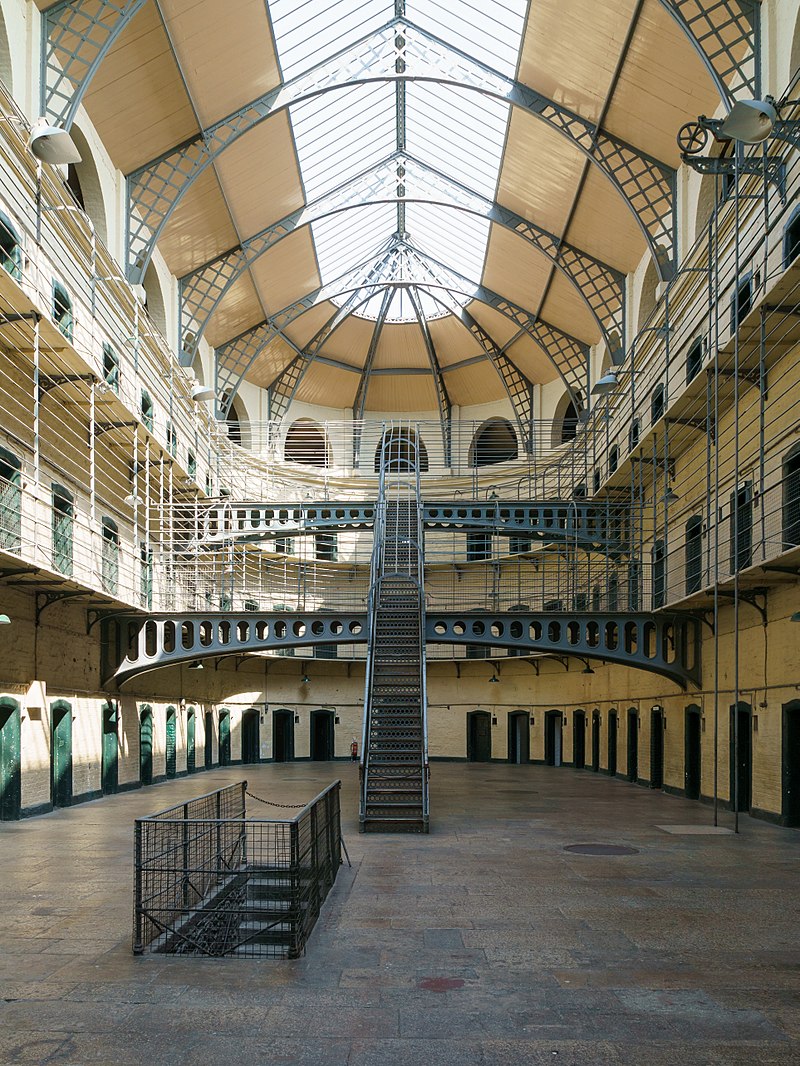
Kilmainham Gaol, the looming gray edifice on the outskirts of Dublin, is not just a prison—it’s a stark reminder of Ireland’s turbulent journey toward independence. Every stone, every cell, and every shadowed corner of this building whispers stories of rebellion, sacrifice, and unyielding hope.
In this in-depth exploration, we delve into the haunting history of Kilmainham Gaol, its famous prisoners, its role in Irish history, and its unexpected presence in pop culture.
Why Is Kilmainham Jail Famous?
Kilmainham Gaol is famous for its role as both a literal and symbolic prison during some of the most defining moments in Irish history.
- A Revolutionary Stronghold: From the 1798 Rebellion to the 1916 Easter Rising, Kilmainham housed some of Ireland’s most iconic freedom fighters, including Padraig Pearse, James Connolly, and Joseph Plunkett. Their imprisonment and execution here galvanized a nation, transforming the prison into a symbol of Irish resistance.
- Architectural Gravitas: The gaol’s Victorian architecture, stark and imposing, reflects the grim reality of 19th and early 20th-century incarceration. Its Panopticon design—intended to maximize surveillance—embodies a cold, calculated control.
- Cultural Legacy: Beyond its revolutionary significance, Kilmainham has become a cultural and artistic landmark, featured in films, exhibitions, and literature.
Kilmainham Gaol isn’t just a relic of the past—it’s a living testament to Ireland’s resilience.
Who Was Executed in Kilmainham Jail?
Some of the most tragic and poignant moments in Kilmainham’s history came with the execution of the leaders of the 1916 Easter Rising.
- Padraig Pearse: The face of the rebellion, Pearse was executed in Kilmainham’s Stonebreaker’s Yard on May 3, 1916. His writings and speeches remain etched in Irish consciousness.
- James Connolly: Already gravely wounded, Connolly was tied to a chair for his execution on May 12, 1916. His death became a rallying cry for Irish independence.
- Joseph Plunkett: Hours before his execution, Plunkett married his fiancée, Grace Gifford, in the prison chapel—a story that immortalizes love amid despair.
The Stonebreaker’s Yard, where these men met their fate, stands as one of Ireland’s most hallowed grounds.
Who Got Married in Kilmainham Jail?
Joseph Plunkett and Grace Gifford’s marriage is one of Kilmainham’s most enduring and poignant stories.
- The Night Before Execution: On May 3, 1916, Plunkett and Gifford were wed in the prison chapel under the watchful eyes of British guards. Their union lasted mere hours; Plunkett was executed at dawn.
- Grace’s Legacy: Grace went on to become a symbol of Irish defiance, dedicating her life to the cause her husband died for. Today, the chapel serves as a moving reminder of love’s ability to endure even in the darkest times.
Who Was the Youngest Prisoner in Kilmainham Gaol?
Kilmainham Gaol held prisoners of all ages, including children as young as seven years old. These young inmates were often incarcerated for petty crimes such as stealing bread or loitering—grim reflections of Ireland’s socioeconomic struggles during the 19th century.
What Movies Were Filmed in Kilmainham Jail?
Kilmainham Gaol’s haunting ambiance has made it a popular filming location:
- In the Name of the Father (1993): Yes, this powerful drama about the Guildford Four was filmed partly in Kilmainham. Its oppressive atmosphere served as the perfect backdrop for the harrowing tale.
- Michael Collins (1996): Liam Neeson brought Ireland’s revolutionary hero to life in this iconic film, with Kilmainham playing a central role in the story.
- Paddington 2 (2017): Surprisingly, this heartwarming sequel used Kilmainham to depict prison scenes, blending its dark history with whimsical storytelling.
Kilmainham Gaol Prisoners List and the Last Prisoner
Famous Prisoners
From Robert Emmet to Eamon de Valera, Kilmainham’s cells housed Ireland’s revolutionary pantheon. These names are etched into Irish history, their imprisonment symbolizing the cost of freedom.
The Last Prisoner
Eamon de Valera, who later became Ireland’s president, was among the last prisoners to leave Kilmainham Gaol when it officially closed in 1924.
Kilmainham Jail History Facts
- When Did Kilmainham Jail Close? The prison ceased operations in 1924, after serving as a detention center for nearly 130 years.
- Where Is Kilmainham Jail in Dublin? Kilmainham Gaol is located in Kilmainham, Dublin 8, a short distance from the city center and easily accessible via public transport.
- Kilmainham Gaol Tickets Sold Out? Due to its popularity, tickets often sell out in advance. It’s advisable to book Kilmainham Gaol tickets online well ahead of your visit. For last-minute options, check for Kilmainham Gaol cancellation tickets.
Experience Kilmainham Today
Kilmainham Gaol is more than a museum—it’s an immersive experience that brings Irish history to life. Visitors can explore:
- The Stonebreaker’s Yard: A solemn place where the 1916 leaders were executed.
- The Chapel: The site of Plunkett and Gifford’s tragic wedding.
- Interactive Exhibits: Learn about the gaol’s history and its impact on Irish independence.
Discover Dublin Beyond Kilmainham
Kilmainham Gaol is just one of many historical treasures in Dublin. Pair your visit with these experiences:
- Historical Places in Dublin, Ireland: A Journey Through Time.
- Scenic Walks Near Dublin: Where Nature Meets the City.
- The Grand Canal Dock: Dublin’s Vibrant Waterfront Jewel.
After your history-filled day, unwind at one of Dublin’s best restaurants or hotels:
- Best Restaurants in Dublin: A Journey Through the City’s Culinary Soul.
- Best Places to Stay in Dublin: A Local’s Guide.
Kilmainham Gaol: Ireland’s Legacy of Sacrifice
Kilmainham Gaol is more than bricks and mortar; it’s the heart of Ireland’s struggle for freedom. Each cell, each corridor, and each chilling story echoes the sacrifices made for the Ireland we know today.
For more insights into Ireland’s history, heritage, and hidden gems, visit Secret Ireland. 🍀 Step into Kilmainham Gaol and walk through the shadows of Ireland’s past.
Kilmainham Gaol: Ireland’s Prison of Revolution and Reflection
Kilmainham Gaol isn’t just a building. It’s a witness. Its walls bear silent testimony to a nation’s pain, its triumphs, and its relentless quest for identity. Built in 1796, the gray stone corridors of this foreboding structure have housed ordinary criminals, desperate children, and Ireland’s most iconic heroes. It’s not just a part of Irish history—it is Irish history, etched in stone and soaked in sacrifice.
A Tragic Stage for the Fight for Freedom
Kilmainham Gaol’s legacy is inextricably tied to Ireland’s struggles for independence, but its stories are as human as they are political. Here are just a few of the prison’s most harrowing tales:
Joseph Plunkett and Grace Gifford: A Love Sealed in Chains
Joseph Plunkett was a poet, a dreamer, and a man who knew his life would end in sacrifice. He played a central role in the 1916 Easter Rising, drafting military strategies that would fail but inspire a nation. Arrested and sentenced to death, Plunkett had one final wish: to marry Grace Gifford, the love of his life.
On the night before his execution, Grace entered the prison chapel. In the dim candlelight, under the cold gaze of British guards, they exchanged vows. Hours later, as dawn broke over the city, Plunkett faced a firing squad in the Stonebreaker’s Yard, his love immortalized by the cruelty of circumstance.
Today, visitors can stand in that yard, feeling the weight of that sacrifice, and in the chapel, where love defied the grim finality of death.
The Forgotten Faces of Kilmainham
Kilmainham didn’t just house leaders and poets—it held children, the impoverished, and the forgotten.
John McKeown, a 10-year-old boy, was sent to Kilmainham for stealing food to feed his siblings. He wasn’t a revolutionary; he was a casualty of a system that criminalized poverty. Locked in dark cells with hardened criminals, boys like John often left prison more broken than when they entered.
Children weren’t just collateral damage—they were statistics. From 1796 to the early 1900s, Kilmainham housed over 5,000 minors, many of whom never found freedom in any meaningful sense.
The Execution of James Connolly
When James Connolly was brought to Kilmainham, he wasn’t a soldier preparing for a noble death—he was a broken man. Gravely wounded during the Easter Rising, Connolly was carried to the prison on a stretcher. His body was failing, but his spirit wasn’t.
British forces tied him to a chair for his execution, unable to stand, let alone walk. The volley of shots that rang out in the Stonebreaker’s Yard on May 12, 1916, didn’t just kill Connolly; it ignited a fury across Ireland. The sight of a dying man, executed with such cruelty, galvanized a movement that would never be stopped.
Women of Kilmainham: Forgotten Fighters
Kilmainham wasn’t just a prison for men—it was a battleground for women who defied the conventions of their time to fight for Ireland’s future.
Anne Devlin: A Revolutionary’s Loyal Shadow
Anne Devlin was no stranger to pain. As an ally of Robert Emmet, she endured months of torture in Kilmainham, refusing to betray her comrades. Stripped of her dignity, placed in solitary confinement, and starved, Anne’s resilience became a symbol of the silent strength of Irish women.
Her name isn’t in the textbooks, but her spirit lives in the cells of Kilmainham.
Constance Markievicz: The Countess Who Defied Empires
The first woman elected to the British Parliament, Constance Markievicz, was more than a politician—she was a revolutionary. Arrested for her role in the 1916 Rising, she spent months in Kilmainham, her fiery speeches echoing through the cold halls.
Markievicz’s imprisonment symbolized the shifting tides of gender and power in Ireland’s fight for independence.
Kilmainham in Pop Culture: A Prison Immortalized
Kilmainham Gaol’s haunting atmosphere has made it a favorite for filmmakers seeking to capture its historical gravitas.
- In the Name of the Father: This powerful film, chronicling the wrongful imprisonment of the Guildford Four, used Kilmainham’s eerie corridors to convey the weight of injustice.
- Michael Collins: Liam Neeson’s portrayal of Ireland’s revolutionary hero brought Kilmainham’s tragic stories to a global audience.
- Paddington 2: In an unexpected twist, Kilmainham’s stark interiors were used as the fictional prison where Paddington charmed inmates and thwarted villains.
These films have ensured that Kilmainham’s legacy extends beyond history books, reaching new generations through the silver screen.
Modern Kilmainham: A Journey into the Past
Today, Kilmainham Gaol Museum serves as a portal to the past, drawing visitors from around the world.
Plan Your Visit
- Kilmainham Gaol Tickets Online: Tickets often sell out, so book early to avoid disappointment.
- Kilmainham Gaol Tickets on the Day: A limited number of tickets may be available for walk-ins, but it’s best to check availability.
- Cancellation Tickets: Keep an eye out for last-minute openings.
Visitor Highlights
- Walk through the Stonebreaker’s Yard, where history was written in blood.
- Stand in the cells of Padraig Pearse, Eamon de Valera, and Constance Markievicz.
- Reflect on Ireland’s journey toward independence in the interactive exhibits.
Explore Dublin’s Historic Treasures
Kilmainham Gaol is just one chapter in Dublin’s rich history. Enhance your journey with these related experiences:
- Historical Places in Dublin, Ireland: A Journey Through Time.
- The Grand Canal Dock: Dublin’s Vibrant Waterfront Jewel.
- Scenic Walks Near Dublin: Where Nature Meets the City.
After immersing yourself in history, unwind with Dublin’s best dining and accommodations:
- Best Restaurants in Dublin: A Journey Through the City’s Culinary Soul.
- Best Places to Stay in Dublin: A Local’s Guide.
Kilmainham Gaol: A Living Monument
Kilmainham Gaol isn’t just a building. It’s a shadow, a memory, and a mirror reflecting Ireland’s past and present. From the cries of young prisoners to the last breaths of revolutionaries, every story here matters.
To walk Kilmainham’s halls is to feel the weight of history pressing against your chest. It’s to understand that freedom isn’t free, that hope comes at a cost, and that love and resilience endure, even in the darkest cells.
For more on Ireland’s hidden gems and historical landmarks, visit Secret Ireland. 🍀 Step inside Kilmainham Gaol, and let history speak.
A Symbol of Ireland’s Pain and Resilience
Kilmainham Gaol is more than just a prison—it’s a crucible of Irish identity. For over a century, it was a holding pen for rebellion, a stage for martyrdom, and a stark reflection of Ireland’s social and political struggles. Its gray walls have absorbed the voices of countless souls, from revolutionaries to ordinary citizens trapped by the harsh realities of their time.
Uncovering Kilmainham’s Forgotten Stories
The Ghost of Robert Emmet
Before the 1916 Easter Rising, there was the Rebellion of 1803, led by Robert Emmet. Emmet’s bold attempt to overthrow British rule ended in failure, and he was executed at the tender age of 25. Though he wasn’t imprisoned in Kilmainham for long, his trial and sentencing took place here.
Kilmainham Gaol became the backdrop to Emmet’s stirring final speech, where he asked for no epitaph until Ireland was free. That request resonates through the annals of Irish history, and the spirit of Emmet lingers in every corner of the gaol.
The Women of the Irish Civil War
During the Irish Civil War, Kilmainham held many female prisoners who defied societal norms to fight for Ireland’s freedom. Figures like Mary MacSwiney, the sister of Terence MacSwiney, endured brutal conditions in Kilmainham, refusing to bow to their oppressors.
Their stories are often overshadowed by the men of the Rising, but the courage of these women underscores the universal sacrifices made in Ireland’s fight for independence.
Children Behind Bars
Kilmainham Gaol’s history is not just one of political prisoners and revolutionaries—it’s also a story of desperation and survival. In the 19th century, many of Kilmainham’s inmates were children, some as young as seven years old, incarcerated for crimes born of poverty and hunger.
One particularly haunting account is that of a 12-year-old boy imprisoned for stealing a loaf of bread. He spent months in Kilmainham, his only “crime” being the need to survive in a society that had abandoned him. These stories remind us of the broader social inequalities that Kilmainham Gaol represents.
Kilmainham as a Witness to Irish Social Change
When Kilmainham closed in 1924, it was no longer a prison—it was a relic. Its closure marked the end of an era of repression and the beginning of a new chapter for Ireland. For decades, the gaol was left derelict, a crumbling monument to a painful past.
In the 1960s, a group of volunteers began restoring the building, recognizing its value not as a place of punishment but as a site of remembrance. Today, Kilmainham Gaol stands as a symbol of resilience, a place where Ireland’s darkest moments gave birth to its brightest hopes.
The Modern Experience: Walking Through History
Kilmainham Gaol Museum
Visitors to Kilmainham Gaol today can explore a thoughtfully curated museum that brings its history to life. Interactive exhibits include personal artifacts, prisoner letters, and detailed accounts of life inside the prison.
The Stonebreaker’s Yard
Walking into the Stonebreaker’s Yard, where the leaders of the 1916 Easter Rising were executed, is a profound experience. The quietness of the space contrasts with the violent events it witnessed, leaving visitors with a deep sense of reflection.
The Chapel
The prison chapel, where Joseph Plunkett and Grace Gifford were married, is another highlight. The simplicity of the space belies the emotional weight it carries, a place where love defied the inevitability of death.
Tips for Visiting Kilmainham Gaol
- Book Ahead: Due to its popularity, Kilmainham Gaol tickets online are often sold out weeks in advance. Plan ahead to ensure your visit.
- Last-Minute Options: If tickets are unavailable, look for Kilmainham Gaol cancellation tickets or try your luck for tickets on the day.
- Guided Tours: To fully appreciate the history and significance of the gaol, opt for a guided tour. Knowledgeable guides bring the stories of the prison to life with vivid detail.
Explore Dublin Beyond Kilmainham
Kilmainham Gaol is a cornerstone of Dublin’s historical landscape, but the city offers so much more for history enthusiasts:
- Historical Places in Dublin, Ireland: A Journey Through Time.
- Scenic Walks Near Dublin: Where Nature Meets the City.
- The Grand Canal Dock: Dublin’s Vibrant Waterfront Jewel.
For those looking to unwind after a day of exploring, Dublin’s culinary scene offers a wealth of options:
- Best Restaurants in Dublin: A Journey Through the City’s Culinary Soul.
- Healthy Restaurants in Dublin: Savoring Wellness in the Heart of the City.
Kilmainham Gaol: A Timeless Reminder
Kilmainham Gaol is more than a museum—it’s a mirror held up to Ireland’s soul. It reflects the sacrifices made for freedom, the injustices suffered by the vulnerable, and the resilience of a people who refused to bow.
To walk its corridors is to step into the heart of Irish history, to feel the weight of the past pressing against your shoulders, and to understand that freedom, like love, often comes at the highest cost.
For more on Ireland’s hidden treasures and untold stories, visit Secret Ireland. 🍀 Kilmainham Gaol awaits—where history is alive, and every shadow tells a story.
About the Author
Seamus
Administrator
Seamus O Hanrachtaigh is an Irish historian, explorer, and storyteller passionate about uncovering the hidden gems and forgotten heritage of Ireland. With years of hands-on exploration across every county — from misty folklore-rich glens and ancient trails to secret coastal paths and vibrant traditional music sessions — he brings authentic, experience-backed insights to travelers seeking the real Ireland beyond the tourist trails. A regular contributor to Irish Central and other publications, Seamus specializes in Celtic traditions, genealogy, Irish history, and off-the-beaten-path road trips. Every guide on SecretIreland.ie draws from personal adventures, local conversations, rigorous research, and fresh 2026 discoveries to deliver trustworthy content filled with genuine craic and hidden stories that big guidebooks miss. When not chasing the next undiscovered spot, Seamus enjoys trad music sessions and fireside storytelling with fellow enthusiasts who value Ireland’s living culture.
