Ireland, a land steeped in myths and legends, has a history scarred by suffering, resilience, and survival. While the narrative of Irish slavery is contentious, the harsh realities faced by countless Irish people over centuries bear undeniable similarities to slavery—oppression, exploitation, and dehumanization. From the construction of famine roads under the British to the harrowing tales of Barbary pirates raiding Irish shores, the story of the Irish people is one of indomitable spirit amidst unimaginable hardship.
Famine Roads: A Testament to Suffering
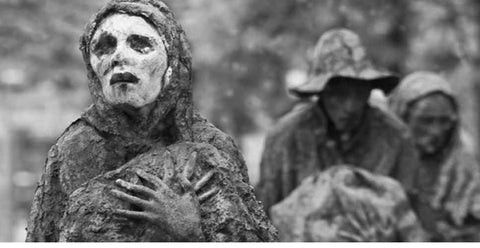
The Irish Famine of the mid-19th century, or An Gorta Mór, was one of the darkest periods in Ireland’s history. Between 1845 and 1852, the failure of the potato crop, coupled with British indifference and mismanagement, led to mass starvation and emigration. Yet, amidst this humanitarian crisis, the British government implemented so-called “relief efforts” that were anything but compassionate.
Building Roads for Soup
- What Were Famine Roads?
Famine roads were infrastructure projects designed to provide employment for the starving population. Men, women, and children were forced to work long hours constructing roads that often led nowhere. These roads were colloquially called “roads to nowhere” because they had no practical purpose beyond occupying and exploiting the desperate. - In Exchange for Soup
Payment was meager—often a single bowl of soup or a few pennies. For many Irish Catholics, accepting soup meant converting to Protestantism, earning the nickname “souperism.” The choice was stark: starvation or the erosion of cultural and religious identity. - Conditions
Workers, weakened by hunger, toiled in harsh weather, breaking stones with rudimentary tools. Many collapsed and died at the very sites they were building, their suffering immortalized in the silent, overgrown paths that crisscross Ireland today.
The Barbary Pirates and the Sack of Baltimore
Ireland’s suffering wasn’t confined to the British-imposed hardships on its soil. Across the seas, another sinister force preyed upon its people. In 1631, the remote village of Baltimore in West Cork experienced a horror that left an indelible mark on Irish history.
The Raid
- What Happened in Baltimore?
On the night of June 20, 1631, Barbary pirates from North Africa, led by Dutch captain Jan Janszoon (known as Murat Reis), stormed the quiet fishing village of Baltimore. They captured over 100 men, women, and children, dragging them from their homes and transporting them to Algiers and other ports in the Ottoman Empire. - Why Target Baltimore?
Baltimore was a vulnerable outpost, sparsely populated and poorly defended. The raid was part of a larger pattern of slave-taking expeditions by Barbary pirates, who targeted coastal villages across Europe.
Life in Captivity
- Sold into Slavery
The captured Irish were sold in bustling slave markets. Many were forced into hard labor, while women and children were often subjected to even more horrifying fates. - Cultural Erasure
Stripped of their names, language, and identity, the captives faced a life of servitude in a foreign land. Only a handful ever returned to Ireland, their stories etched into local memory.
Were the Irish Slaves?
The term “Irish slaves” has been debated among historians, with some arguing that the experiences of Irish people under British rule and in transatlantic labor systems do not meet the technical definition of chattel slavery. However, the lived realities of forced labor, exploitation, and systemic dehumanization share many parallels with slavery.
Indentured Servitude
- During the 17th and 18th centuries, thousands of Irish people were sent to the Americas and the Caribbean as indentured servants. While not technically slaves, these individuals endured brutal conditions, long periods of servitude, and the constant threat of violence.
- The distinction between indentured servitude and slavery often blurred, particularly when it came to the treatment of the Irish.
Cultural and Religious Suppression
Under British rule, Irish Catholics were stripped of their rights, land, and cultural identity. The Penal Laws ensured they were second-class citizens in their own country, perpetuating a cycle of poverty and oppression.
A Legacy of Resilience
Despite centuries of exploitation, the Irish people have displayed extraordinary resilience and a fierce determination to preserve their culture and identity.
Commemorating the Past
Today, famine roads, like those in Connemara and Donegal, stand as silent reminders of Ireland’s suffering and perseverance. Memorials and stories keep alive the memory of the Baltimore raid, ensuring the tragedies of the past are not forgotten.
Reclaiming Identity
Through music, literature, and activism, Ireland has reclaimed its narrative, transforming tales of oppression into symbols of strength.
FAQs About Irish Slaves
What were famine roads?
Famine roads were infrastructure projects during the Great Famine where starving Irish people worked in exchange for minimal payment or food. These roads often served no practical purpose.
What happened during the sack of Baltimore?
In 1631, Barbary pirates raided the village of Baltimore, West Cork, capturing over 100 villagers and selling them into slavery in North Africa.
Were the Irish considered slaves?
While the term “Irish slaves” is debated, Irish people endured forms of exploitation and forced labor under British rule and as indentured servants in the Americas and Caribbean.
Remembering Ireland’s Pain and Perseverance
The stories of Irish famine roads and the Barbary pirate raids are not just tales of hardship; they are testimonies to the resilience of a people who refused to be broken. From the silent paths of famine roads to the haunting echoes of Baltimore’s raid, these chapters in Irish history remind us of the strength that arises from suffering.
For more explorations into Ireland’s rich and complex history, visit:
- The Bandog and the Banshee: A Haunting Irish Tale
- The Rock of Dunamase: The Home of Vikings, Normans, Gaelic Lords, and Banshees
- Discover the Magic of Irish Mythology Tours
- The Best Way to Learn Irish: Embrace the Language of Myth and Heritage
The past may be painful, but it also reveals the unyielding spirit of a nation that has emerged stronger, prouder, and ever more determined to honor its heritage.
The Irish Diaspora: Scattered Seeds of Survival
The forced migration of Irish people during the famine years and through centuries of British colonial rule contributed to one of the most significant diasporas in history. While many Irish were displaced by starvation and poverty, others were coerced or tricked into indentured servitude, often a mere euphemism for slavery. This diaspora not only spread Irish culture around the world but also left a haunting legacy of resilience forged in the fires of hardship.
Indentured Servitude: The Irish in the Americas
- Barbados and the “Redlegs”: Thousands of Irish men, women, and children were sent to the West Indies in the 17th century, becoming known as the “Redlegs” due to their sunburnt skin. Forced to work in brutal conditions on sugar plantations, many perished under the weight of unbearable labor and tropical diseases.
- The United States: In colonial America, Irish indentured servants often worked alongside African slaves. While their servitude was technically temporary, many Irish workers endured relentless exploitation, and death before their term ended was common.
Echoes of Baltimore in Irish Lore
The trauma of the Barbary pirate raids, particularly the sack of Baltimore, became etched into Irish folk memory. Stories passed through generations spoke of the “night of terror” when villagers were dragged from their homes to a fate unknown. This event became a symbol of vulnerability, a grim reminder of how Ireland’s isolation offered little protection from the wider world’s cruelties.
Famine Roads: A Landscape of Silent Suffering
To walk along a famine road in Ireland today is to tread upon the echoes of anguish. These roads, now often overgrown and leading to nowhere, are stark reminders of the inhumanity that characterized British relief efforts during the Great Famine.
The Reality of Forced Labor
- Starving men and women, many of whom had already lost family members to the famine, were conscripted into grueling labor. They were made to break rocks, haul stones, and lay paths across rugged Irish terrain—all without proper tools or sustenance.
- The roads were often purposeless, leading to desolate hillsides or cutting across barren landscapes. These “roads to nowhere” epitomized the futility and cruelty of the policies imposed by British administrators who sought to “manage” the famine while maintaining economic orthodoxy.
The Cost of Soup
The term “taking the soup” became synonymous with betrayal during this period. Those who accepted food from Protestant soup kitchens were often required to renounce their Catholic faith. For many, the choice was a tormenting moral dilemma: die in starvation or convert and live with the stigma of betraying their identity and community.
Baltimore’s Forgotten Souls
The sack of Baltimore in 1631 remains a chilling story, not just because of its brutality but also for how it disrupted a peaceful Irish community. Entire families were torn apart, and their fate is largely unknown.
Tracing the Survivors
- Very few of the 100+ captives ever returned. Those who did brought back tales of servitude in Algiers and Tunis, describing lives spent in harsh labor or servile domestic work. For the women, the realities were often far worse, involving forced concubinage or marriage.
The Legacy of Fear
The raid created a lasting sense of vulnerability in coastal Irish communities. Fear of further pirate attacks influenced migration patterns, with some families moving inland to escape the threat of abduction.
Resilience Through Storytelling
Irish culture has always relied on storytelling to process trauma and preserve history. Through songs, poems, and oral traditions, the pain of famine roads, indentured servitude, and pirate raids transformed into lessons of endurance.
Irish Literature and Famine Roads
Authors and poets have immortalized the suffering endured on famine roads:
- Patrick Kavanagh: Wrote haunting verses about the silent scars left on the Irish landscape by famine.
- Seamus Heaney: Explored the human cost of Ireland’s historical hardships in his evocative poetry.
Songs of the Barbary Raids
Traditional Irish ballads recount tales of villagers taken by pirates, keeping their memory alive in the hearts of modern generations.
Irish Slavery: A Legacy of Debate
The term “Irish slaves” continues to spark debate among historians, but what cannot be disputed is the brutal treatment endured by countless Irish people under British rule and abroad. Whether labeled as slaves, indentured servants, or victims of oppression, their experiences reflect a broader truth: the Irish people were systematically dehumanized, exploited, and oppressed for centuries.
Lessons from the Past
The histories of famine roads and the Barbary pirate raids are not just tales of sorrow—they are also stories of survival and defiance. The Irish endured unimaginable hardships, yet their culture, language, and identity endured.
What We Can Learn
- Preserving Heritage: The stories of Irish oppression underscore the importance of remembering and honoring cultural history.
- Resilience: The survival of the Irish people, despite centuries of adversity, serves as a testament to human resilience.
- Justice: Recognizing and learning from historical injustices can inspire us to create a more equitable future.
For Further Exploration
To delve deeper into Ireland’s complex history and mythology, visit:
- The Bandog and the Banshee: A Haunting Irish Tale
- The Rock of Dunamase: The Home of Vikings, Normans, Gaelic Lords, and Banshees
- Discover the Magic of Irish Mythology Tours
- The Best Way to Learn Irish: Embrace the Language of Myth and Heritage
The roads built on starvation and the cries of Baltimore’s lost souls may be silent now, but their echoes remind us of a truth etched into Irish identity: we are a people who endure, who remember, and who rise again.
About the Author
