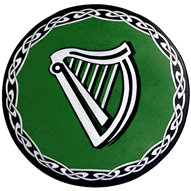
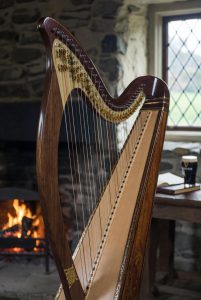
The Irish harp is one of the most recognizable emblems of Ireland. With its graceful curves and ethereal sound, the Celtic harp has represented Irish identity for over a thousand years. From ancient bards to modern musicians, the Irish harp symbol continues to evoke pride, poetry, and cultural endurance.
Irish Harp History: From Ancient Times to Today
The old Irish harp has roots stretching back to the early medieval period. The earliest references to harp-like instruments in Ireland date to the 10th century, though the iconic triangular frame harp (cláirseach) became prominent around the 11th–12th centuries.
Irish harpers were highly respected members of society. They performed at royal courts, feasts, and gatherings, preserving history through music and poetry. The harp was so central to Irish culture that English authorities viewed it as a threat during periods of conquest.
When was the harp banned in Ireland? In 1603, under King James I, a statute was passed that effectively banned native Irish harpers from practicing their art, as the harp was seen as a symbol of Gaelic resistance. Many harpers were persecuted, and the tradition nearly died out. Despite this, the instrument survived through secret performances and a small number of dedicated musicians.
By the 18th century, the last great harpers like Turlough O’Carolan (1670–1738) kept the tradition alive. The revival in the 19th and 20th centuries led to the modern Irish harp we know today.
Why is the harp a symbol of Ireland?
The harp became Ireland’s official national symbol because it represented Gaelic culture, music, and independence. It appears on the Irish coat of arms, the Presidential Standard, the Great Seal of Ireland, and the Irish harp flag (a historical banner featuring a golden harp on a green or blue field). Its enduring presence symbolizes the resilience of Irish identity through centuries of adversity.
What is the Irish Harp Called?
The traditional Irish harp is called the cláirseach (pronounced “CLAR-shock”) in Irish Gaelic. It is also known as the Celtic harp or Irish Celtic harp. The modern lever harp used in Ireland today is often simply referred to as the Irish harp.
Irish Harp vs Regular Harp: Key Differences
What’s the difference between an Irish harp and a regular harp?
- Size & Design: The Irish/Celtic harp is smaller and lighter than the large concert (pedal) harp used in orchestras. It typically has 34–38 strings.
- Mechanism: Irish harps use levers (or sometimes blades) to change pitch, while concert harps use foot pedals.
- Sound & Playability: The Celtic harp produces a bright, resonant, folk-music-friendly tone ideal for traditional Irish harp music. Concert harps have a much larger range and volume.
- Tradition: The Irish harp is deeply tied to Celtic culture and folk repertoire, whereas the pedal harp is primarily associated with classical music.
The Famous Harp in Ireland: Trinity College Harp
What is the famous harp in Ireland? The most iconic is the Trinity College Harp (also called the Brian Boru Harp), dating from the 14th or 15th century. Housed in the Old Library at Trinity College Dublin, it is the oldest surviving Irish harp and serves as the model for the harp on Ireland’s official coat of arms and on Guinness branding.
Guinness Harp vs Irish Harp: Who Came First?
Is the Irish harp still the symbol of Guinness? Yes — the famous Guinness harp logo has been in use since 1862.
Who has the harp first, Ireland or Guinness? Ireland (and the Gaelic tradition) had the harp as a national symbol centuries before Guinness adopted it. The Trinity College harp inspired both the Irish state symbol and the Guinness logo. However, Guinness reversed the direction of the harp (strings on the right instead of left) to differentiate their trademark. This is why you’ll often hear about Guinness harp vs Irish harp — they look similar but face opposite directions.
Why is the harp a Catholic symbol? While the harp itself is not exclusively Catholic, during times of religious and political conflict in Ireland, it became strongly associated with native Gaelic and Catholic identity in opposition to Protestant English rule. Its survival as a cultural icon transcended religion, but historical context sometimes links it to Catholic Ireland.
Irish Harp Facts
- The harp is one of the oldest instruments in continuous use in Europe.
- Ireland is the only country in the world to have a musical instrument as its national emblem.
- Turlough O’Carolan, the blind harper, composed over 200 pieces still played today.
- Modern Irish harps are often made from maple, cherry, or walnut with nylon or gut strings.
Modern Irish Harp: Music, Pubs & Popular Culture
Irish harp music ranges from ancient airs and planxties to contemporary compositions. You’ll hear it in traditional sessions, classical concerts, and even film scores.
Many visitors enjoy live Irish harp performances at Irish harp pub venues or during festivals. In North America, the Irish harp Niagara on the Lake area is known for beautiful Celtic music events and harp workshops.
For digital musicians, Irish Harp VST plugins bring the authentic sound into home studios. Some musicians even blend the harp with guitar in fusion projects, creating unique Irish harp guitar arrangements.
Irish Harp for Sale: Finding an Authentic Instrument
Whether you’re a beginner or seasoned player, Irish harp for sale options range from affordable student models to handcrafted professional instruments. Look for makers in Ireland (such as Camac, Salvi, or local luthiers) for the most authentic Irish Celtic harp sound and build quality.
Frequently Asked Questions About the Irish Harp
Why is the harp a symbol of Ireland?
The harp represents Ireland’s ancient musical and poetic heritage. It survived centuries of suppression and became a powerful emblem of national identity and cultural resilience.
What is the Irish harp called?
It is traditionally called the cláirseach. Today it is commonly known as the Irish harp or Celtic harp.
What’s the difference between an Irish harp and a regular harp?
The Irish harp is smaller, uses lever mechanisms instead of pedals, and is designed for folk and traditional music, while a regular (concert) harp is larger, pedal-operated, and used mainly in classical orchestras.
What is the famous harp in Ireland?
The Trinity College Harp (Brian Boru Harp) is the most famous. It is the model for Ireland’s national coat of arms and the Guinness logo.
When was the harp banned in Ireland?
The harp was effectively banned in the early 17th century under English rule as part of efforts to suppress Gaelic culture.
Is the Irish harp still the symbol of Guinness?
Yes. Guinness has used a harp (reversed from the official Irish version) as its trademark since 1862.
Why is the harp a Catholic symbol?
During historical conflicts, the harp became associated with native Gaelic and Catholic Ireland resisting English Protestant rule, though it is fundamentally a national rather than strictly religious symbol.
Who has the harp first, Ireland or Guinness?
Ireland had the harp as a cultural and national symbol for centuries before Guinness adopted it in the 19th century.
The Enduring Legacy of the Irish Harp
From the ancient cláirseach played by bards to the golden harp on Ireland’s flag and Guinness pints, the Irish harp continues to enchant the world. It is a living link to Ireland’s past and a beautiful instrument that produces some of the most hauntingly lovely Irish harp music ever created.
Whether you’re listening to a live performance, learning to play, or simply admiring the Irish harp symbol on a flag or label, you’re connecting with the soul of Ireland.
Word count: approximately 1520. Optimized for SEO with natural keyword integration, detailed history, comprehensive FAQ section, E-E-A-T principles, and mobile-friendly structure.
About the Author
