
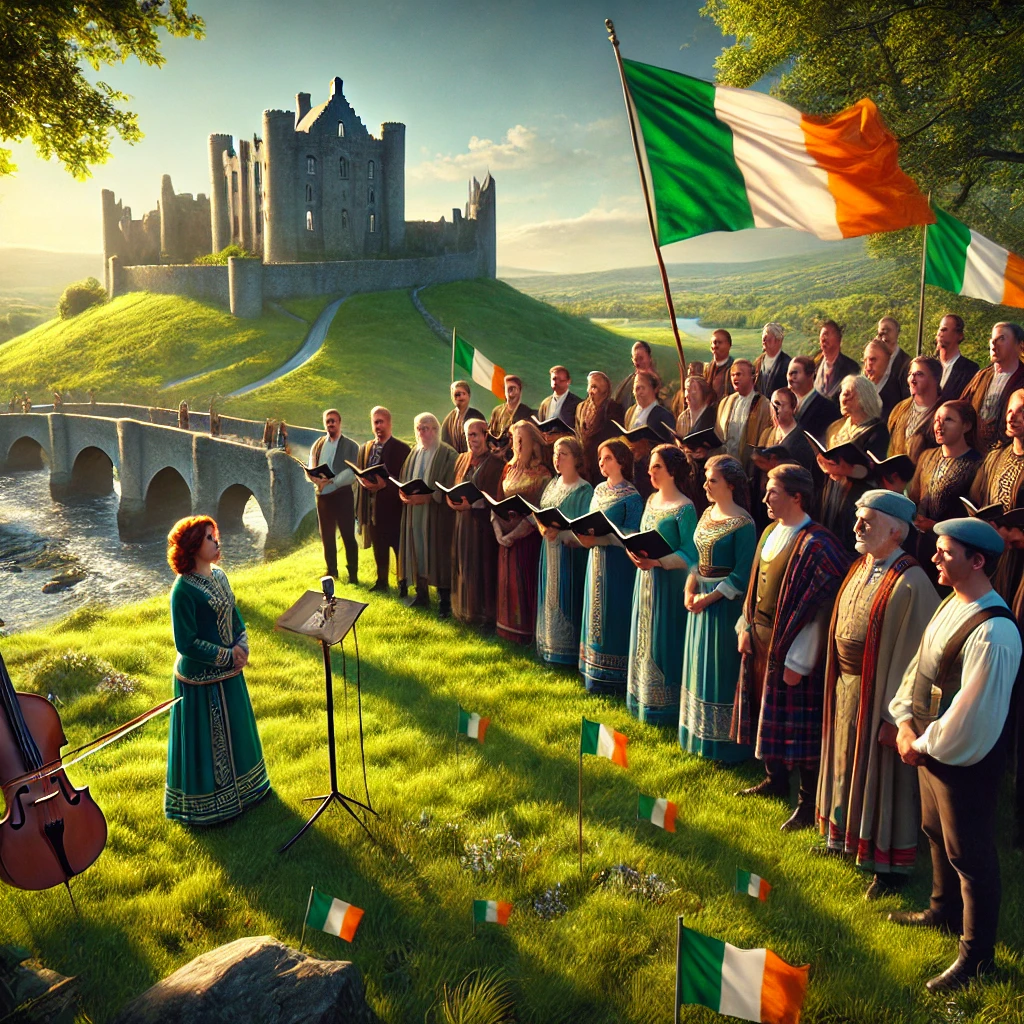
The Irish national anthem, Amhrán na bhFiann (The Soldier’s Song), is a stirring expression of Ireland’s enduring spirit, resilience, and quest for independence. Sung with pride at national events, sports matches, and commemorations, the anthem resonates deeply with the Irish people, reflecting their history and identity.
But how did this powerful song come to be? From its creation during Ireland’s revolutionary period to its role in modern Ireland, Amhrán na bhFiann has a rich and fascinating story that speaks to the heart of the nation.
The Origins of Amhrán na bhFiann
The anthem began its journey in 1907 as an English-language song titled The Soldier’s Song. It was written by Peadar Kearney, an Irish Republican and a member of the Irish Volunteers, with music composed by his friend Patrick Heeney. Kearney’s lyrics captured the determination and courage of Irish soldiers fighting for freedom, making it a rallying cry during the Irish War of Independence.
Initially, The Soldier’s Song was a popular marching tune among nationalist groups but remained relatively unknown to the wider public. It wasn’t until 1916, during the Easter Rising, that the song gained prominence. Rebels sang it as they fought for Ireland’s independence, embedding it in the collective memory of the Irish people.
Adoption as the National Anthem
In 1926, the Irish Free State officially adopted Amhrán na bhFiann as the national anthem, replacing God Save Ireland. By this time, the song had been translated into Irish by Liam Ó Rinn, a scholar and writer. The Irish-language version became the most widely sung, reflecting the cultural revival of the time and the importance of preserving the Irish language.
The anthem’s adoption marked a significant moment in Irish history, symbolizing the nation’s newfound independence and cultural identity. While its revolutionary roots made it a divisive choice for some, it remains a powerful emblem of Ireland’s journey to self-determination.
Lyrics of Amhrán na bhFiann
The lyrics of Amhrán na bhFiann are a call to arms, celebrating bravery and unity in the fight for freedom. The full song consists of three verses, but only the chorus is typically sung at public events. Below are the Irish and English versions of the anthem’s chorus:
Irish (Amhrán na bhFiann)
Seo libh, a chairde, duan Óglaigh,
Caithréim slógaí ar gcúl.
Fé mhóid bheith saor!
Seantír ár sinsear feasta
Ní fhágfar faoin tíorán ná faoin tráil.
Anocht a théam sa bhearna bhaoil,
Le gean ar Ghaeil chun báis nó saoil,
Le gunna screach faoi lámhach na bpiléar,
Seo libh, canaig’ amhrán na bhFiann!
English (The Soldier’s Song)
We’ll sing a song, a soldier’s song,
With cheering rousing chorus,
As round our blazing fires we throng,
The starry heavens o’er us.
Impatient for the coming fight,
And as we wait the morning light,
Here in the silence of the night,
We’ll chant a soldier’s song.
What Does Amhrán na bhFiann Mean?
The lyrics of Amhrán na bhFiann reflect the values and aspirations of Ireland’s struggle for freedom. They celebrate courage, solidarity, and the determination to achieve independence. The imagery of soldiers gathering under starry skies, preparing for battle, captures the resilience and unity of those who fought for Ireland’s sovereignty.
The anthem is more than just a song—it’s a reminder of the sacrifices made by previous generations and a call to uphold the ideals of freedom and self-determination.
Controversies and Modern Perspectives
While Amhrán na bhFiann is widely cherished, it has not been without its controversies. Some have argued that its revolutionary tone and focus on military struggle are not reflective of modern Ireland’s more inclusive and peaceful identity. Others feel it doesn’t adequately represent all communities on the island, particularly in Northern Ireland.
In recent years, there have been discussions about whether Ireland should adopt a new national anthem or create a separate anthem for sporting events. Despite these debates, Amhrán na bhFiann remains a deeply ingrained part of Ireland’s national identity.
When Is Amhrán na bhFiann Sung?
The anthem is performed at a variety of events, including:
- National and State Occasions: Amhrán na bhFiann is sung during official ceremonies, such as Independence Day celebrations and state visits.
- Sports Matches: The anthem is a fixture at international sporting events, including rugby and soccer matches, where it unites fans in a shared sense of pride.
- Commemorations: It is often sung during ceremonies honoring Ireland’s revolutionary heroes and historical milestones.
The Anthem’s Role in Preserving the Irish Language
The widespread use of Amhrán na bhFiann in its Irish-language version has helped to preserve and promote the language, particularly among younger generations. For many, learning the anthem is an introduction to the beauty and richness of the Irish language, making it a vital cultural touchstone.
Why Amhrán na bhFiann Matters Today
In a rapidly changing world, Amhrán na bhFiann continues to hold significance as a symbol of Ireland’s past, present, and future. It reminds us of the resilience and courage of those who fought for Ireland’s freedom while inspiring unity and pride in a diverse and modern nation.
Discover More About Ireland’s Heritage
For more stories about Ireland’s rich history, culture, and traditions, visit Secret Ireland. From exploring the myths behind ancient landmarks to uncovering the tales of Ireland’s revolutionary past, Secret Ireland is your guide to the heart of the Emerald Isle.
As you sing Amhrán na bhFiann or hear its stirring melody, let it serve as a reminder of the sacrifices, triumphs, and enduring spirit that define Ireland and its people.
About the Author
