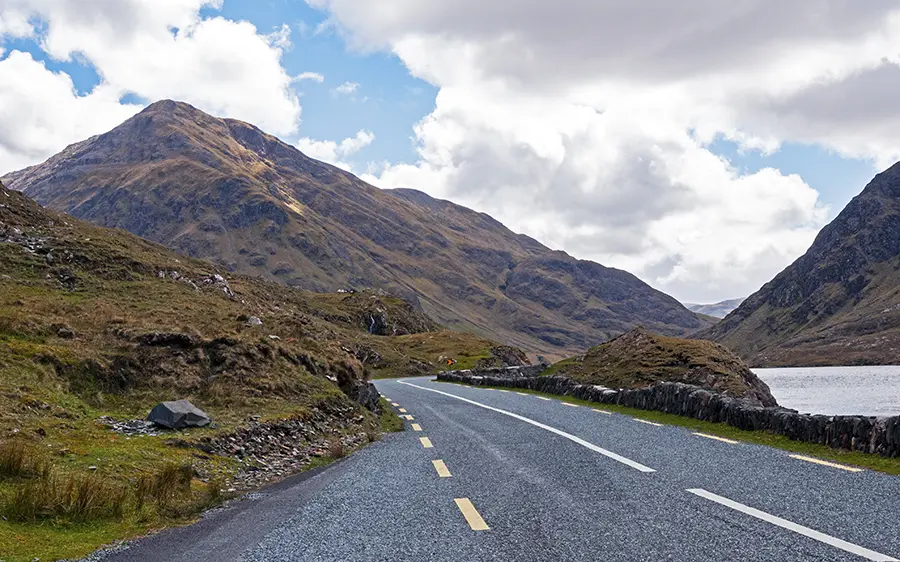
Doolough Valley isn’t just a place—it’s a reckoning. A vast, windswept expanse tucked into County Mayo’s western wilds, it grips you with a rawness that no photograph could ever capture.
Here, the mountains loom like ancient sentinels, the lake waters reflect the sky’s brooding moods, and the wind carries whispers of a past too painful to ignore.
Doolough isn’t just part of Ireland’s Wild Atlantic Way; it’s a chapter in a story that’s equal parts beauty and tragedy.
To stand here is to confront Ireland itself—its scars, its spirit, its unbreakable bond with the land.
A Landscape Forged by Time
The Doolough Valley is a masterpiece of nature’s making. Flanked by the Mweelrea and Sheeffry Hills, its rugged beauty feels almost otherworldly. The centerpiece of the valley is Doolough Lake, a body of water so still it feels like a mirror reflecting the soul of the Irish wilderness.
Driving through this valley is like stepping into a painting—except it’s real, and it’s alive, and it makes you feel small in the best possible way. The Wild Atlantic Way has many breathtaking stops, but Doolough Valley feels like the pulse of something deeper, something eternal.
For those seeking more hidden gems along Ireland’s western coast, don’t miss Dunquin Pier: Ireland’s Gateway to the Blasket Islands and the Edge of the World.
A History Written in Blood
To understand Doolough Valley is to grapple with its past. On March 30, 1849, during Ireland’s Great Famine, hundreds of starving men, women, and children embarked on a harrowing journey from Louisburgh to Delphi Lodge. They walked over 12 miles, through cold and rain, hoping to beg for food or relief. They were turned away.
As they made the return trek through Doolough Valley, many succumbed to hunger and exposure, their bodies left along the roadside. The tragedy is remembered as the Doolough Famine Walk, a dark chapter in Irish history that remains etched into the valley’s bones.
Today, a simple stone cross marks the site, bearing the words, “To commemorate the Doolough Tragedy, which took place during the famine, as a result of official negligence.” It’s not just a monument; it’s a reminder of what happens when humanity fails.
For more on Ireland’s history and heritage, visit Ireland’s National Famine Museum, a key resource for understanding this defining period.
Doolough Valley and the Wild Atlantic Way
Doolough Valley is one of the Wild Atlantic Way’s most unforgettable stops, and it offers an experience that goes beyond sightseeing. It’s about feeling—feeling the weight of history, the majesty of nature, and the resilience of a people who endured the unendurable.
- Wild Atlantic Way Route: The valley lies between Louisburgh and Leenane, a stretch of road that will leave you in awe. Use a Wild Atlantic Way map PDF to navigate this extraordinary journey.
- Wild Atlantic Way Distance: The Doolough stretch may only take an hour to drive, but its impact will last a lifetime.
What to Do in Doolough Valley
1. The Doolough Famine Walk
Trace the footsteps of those who made the tragic journey in 1849. The annual Doolough Famine Walk honors their memory and raises awareness of global hunger and injustice.
2. Scenic Drives and Hikes
The valley offers some of the most spectacular views on the Wild Atlantic Way drive. If you’re feeling adventurous, hike the trails around Mweelrea Mountain, Connacht’s highest peak.
3. Reflect at Doolough Cross
Pay your respects at the famine memorial and take a moment to reflect on the lives lost in this unforgiving yet sacred landscape.
4. Explore Delphi Lodge
Located at the end of the valley, Delphi Lodge offers a glimpse into Ireland’s aristocratic past. Today, it serves as a luxury retreat, but its role in the famine tragedy adds a haunting layer to its history.
For more hiking options in the area, consult Discover Ireland’s Hiking Guide.
Practical Tips for Visiting Doolough Valley
1. Pack for All Seasons
The weather in Doolough Valley is as unpredictable as it is dramatic. Layers, waterproofs, and sturdy footwear are essential.
2. Start Early
The valley’s beauty is at its most evocative in the early morning light, when the mist lingers over the lake.
3. Respect the Land
Doolough Valley is more than a scenic spot—it’s a living memorial. Treat it with the reverence it deserves. Stick to designated paths and leave no trace.
Why Doolough Valley Matters
Doolough Valley isn’t just a place you visit; it’s a place that visits you. It seeps into your bones and stays there, whispering stories of resilience, tragedy, and redemption. In a world that often feels too noisy, too crowded, Doolough Valley offers something rare: silence that speaks volumes.
Whether you’re exploring the Wild Atlantic Way or simply seeking a connection to Ireland’s untamed beauty, Doolough Valley is a journey you’ll never forget.
For a deeper dive into the wonders of Ireland’s west coast, check out these guides:
- Dunquin Pier: Ireland’s Gateway to the Blasket Islands and the Edge of the World
- The Wild Atlantic Way: Ireland’s Fierce Frontier of Freedom and Wonder
For additional historical context, visit Ireland’s National Archives and The Great Famine Voices, both excellent resources for exploring Ireland’s history.
Doolough Valley: A Place to Remember, a Place to Be Changed
Doolough Valley doesn’t offer easy answers or neatly wrapped experiences. It demands something of you—your attention, your reverence, your willingness to feel. It’s a place where Ireland’s past and present collide, where beauty and tragedy coexist, and where the road ahead is as mysterious as the road behind.
So grab your map, lace up your boots, and let the valley take you. Because in Doolough, you don’t just see Ireland—you feel it. And once you do, you’ll never be the same.
The Spirit of Doolough Valley: A Journey Into Ireland’s Soul
There are places in the world that leave an impression. Then there are places like Doolough Valley—where the land becomes a mirror, reflecting truths you didn’t know you were searching for. It’s not just the sweeping beauty or the haunting silence that sets this valley apart; it’s the way it forces you to confront the duality of life itself. The joy and the sorrow, the resilience and the fragility, the beauty and the tragedy.
Standing on the shores of Doolough Lake, it’s impossible not to feel the weight of history pressing down on you. Yet, it’s also impossible not to feel uplifted by the sheer majesty of the place. This is Ireland in its purest form—a land that doesn’t shy away from its scars but wears them as a badge of honor.
A Place of Stories
Every rock, every gust of wind, every ripple on the lake feels like it carries a story. The Doolough Valley doesn’t just tell one story; it tells thousands. Stories of those who walked this land before us, of those who struggled, survived, and sometimes didn’t. It tells the story of a people who refused to be broken, who found a way to endure even when endurance seemed impossible.
You might not see these stories carved into stone or written on plaques, but you’ll feel them. They’re in the air, in the water, in the very essence of this sacred valley.
Doolough Valley and the Wild Atlantic Way Drive
Doolough Valley is an integral part of the Wild Atlantic Way drive, a journey that winds through some of the most breathtaking landscapes Ireland has to offer. But Doolough is more than just a stop on the route—it’s a destination that embodies the spirit of the Wild Atlantic Way. It’s wild, untamed, and unapologetically itself.
Here’s how Doolough Valley fits into the Wild Atlantic Way experience:
- The Route
The valley lies between Louisburgh and Leenane, two charming towns that offer plenty of opportunities for exploration and reflection. Use a Wild Atlantic Way map PDF to navigate this stretch of road and ensure you don’t miss any of the valley’s hidden treasures. - The Stops
Along the way, you’ll find plenty of places to pull over and take in the view. Whether it’s a quiet spot by the lake or a panoramic vantage point on the hills, each stop offers a new perspective on this extraordinary landscape. - The Connections
From Doolough Valley, you’re within easy reach of other Wild Atlantic Way highlights, such as the fjord at Killary Harbour and the stunning Delphi Valley. Each of these places adds a new layer to your journey, deepening your appreciation for Ireland’s west coast.
The Emotional Weight of the Valley
It’s impossible to visit Doolough Valley without feeling something profound. For some, it’s a sense of peace, a connection to nature that feels almost spiritual. For others, it’s a heavy sadness, a reminder of the lives lost here during the Great Famine.
But for most, it’s a mixture of the two. The beauty of Doolough Valley doesn’t erase its history, and its history doesn’t diminish its beauty. Instead, the two exist side by side, creating a place that’s as complex and multifaceted as Ireland itself.
The Role of Memory
Doolough Valley is a place of remembrance. It asks us to remember the past, not just as a collection of facts and figures but as something living and breathing. It asks us to honor the people who walked this land before us, to acknowledge their struggles and sacrifices, and to ensure their stories are never forgotten.
The annual Doolough Famine Walk is one way this memory is kept alive. Each year, participants retrace the steps of those who made the tragic journey in 1849. It’s a powerful act of remembrance, one that reminds us of the importance of compassion, justice, and humanity.
For more information on the walk and its significance, visit Mayo.ie, a trusted resource for exploring County Mayo’s history and culture.
A Place to Be Still
In a world that often feels too fast, too loud, and too crowded, Doolough Valley offers a rare gift: stillness. It’s a place where you can stop, breathe, and simply be. Whether you’re standing by the lake, hiking through the hills, or sitting quietly at the famine memorial, Doolough Valley invites you to slow down and reconnect—with nature, with history, and with yourself.
Practical Information for Visiting
- Getting There: Doolough Valley is best explored by car. The drive from Westport takes about 45 minutes, and the journey itself is part of the experience, offering stunning views at every turn.
- Best Time to Visit: While the valley is beautiful year-round, spring and autumn offer the best weather for exploring. Early mornings and late afternoons provide the most dramatic lighting for photography.
- Local Accommodations: For those who want to stay nearby, Delphi Lodge offers a luxurious retreat with a deep connection to the valley’s history. Alternatively, Westport and Leenane provide a range of options to suit all budgets.
The Legacy of Doolough Valley
Doolough Valley is a place that lingers. Long after you’ve left, you’ll find yourself thinking about its beauty, its history, and its unshakable sense of place. It’s a reminder of what makes Ireland so special—not just the landscapes, but the stories those landscapes hold.
Whether you’re traveling the Wild Atlantic Way or simply looking for a place to reflect, Doolough Valley is a destination that will leave a mark on your soul. For more guides to Ireland’s most iconic locations, don’t miss these:
- Dunquin Pier: Ireland’s Gateway to the Blasket Islands and the Edge of the World
- The Wild Atlantic Way: Ireland’s Fierce Frontier of Freedom and Wonder
And remember, the true magic of Doolough Valley lies not in the destination but in the journey itself. So, take your time, open your heart, and let the valley show you its secrets.
For more on the Wild Atlantic Way and its iconic destinations, check out The Wild Atlantic Way: Ireland’s Fierce Frontier of Freedom and Wonder.
About the Author

Seamus
Administrator
Seamus O Hanrachtaigh is an Irish historian, explorer, and storyteller passionate about uncovering the hidden gems and forgotten heritage of Ireland. With years of hands-on exploration across every county — from misty folklore-rich glens and ancient trails to secret coastal paths and vibrant traditional music sessions — he brings authentic, experience-backed insights to travelers seeking the real Ireland beyond the tourist trails. A regular contributor to Irish Central and other publications, Seamus specializes in Celtic traditions, genealogy, Irish history, and off-the-beaten-path road trips. Every guide on SecretIreland.ie draws from personal adventures, local conversations, rigorous research, and fresh 2026 discoveries to deliver trustworthy content filled with genuine craic and hidden stories that big guidebooks miss. When not chasing the next undiscovered spot, Seamus enjoys trad music sessions and fireside storytelling with fellow enthusiasts who value Ireland’s living culture.