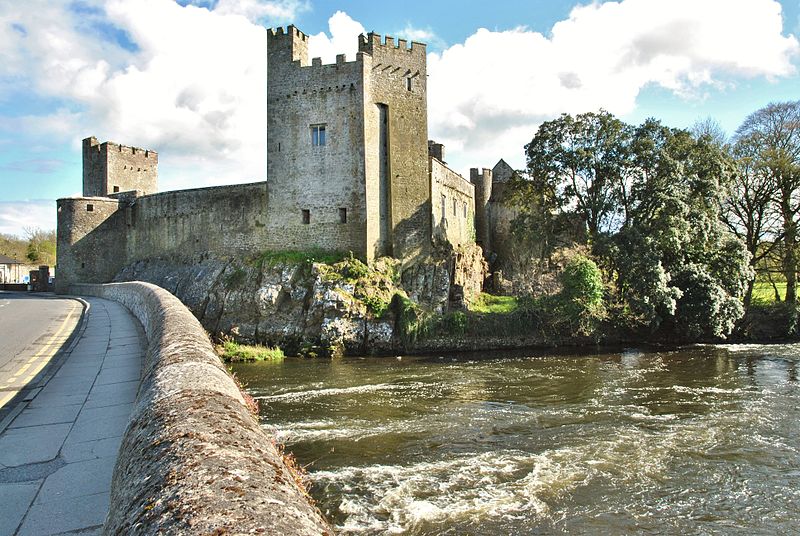
Rising from the banks of the River Suir, Cahir Castle is one of Ireland’s most well-preserved medieval fortresses, standing as a monument to war, power, and cinematic history.
Located in County Tipperary, this mighty stronghold has witnessed centuries of battles, betrayals, and ownership shifts, each leaving a mark on its weathered stone walls.
From Norman invaders to Hollywood filmmakers, Cahir Castle has stood the test of time, drawing visitors who wish to walk through its turbulent past. Its towers, dungeons, and defensive walls remain intact, giving it an authentic medieval atmosphere, making it a must-visit destination for history lovers and film buffs alike.
What Was Filmed at Cahir Castle?
Cahir Castle has been a backdrop for some of the most famous historical films and TV shows, including Excalibur (1981), where it played Camelot’s stronghold, and The Tudors, which used it as a setting for various medieval scenes. More recently, it featured in Ridley Scott’s The Last Duel (2021), adding to its long-standing reputation as a filmmaker’s favorite medieval castle.
A Fortress Built to Withstand Time
Cahir Castle History: A Stronghold of Power and Siege
Built in 1142 by the O’Brien family, Cahir Castle was a strategic Norman fortress before becoming the stronghold of the Butler family, one of Ireland’s most powerful Anglo-Norman dynasties. It survived multiple sieges, including a famous one in 1599 by the Earl of Essex, and was later taken by Cromwellian forces in 1650. Unlike many Irish castles that fell into ruin, Cahir remained remarkably intact, thanks to restoration efforts in the 19th and 20th centuries.
Who Owned Cahir Castle?
For centuries, Cahir Castle was controlled by the Butler family, a powerful Anglo-Norman dynasty that ruled much of Tipperary. The castle remained under Butler ownership until the last direct descendant, Lord Cahir, died in 1961, at which point the Irish state took ownership.
How Long Does It Take to See Cahir Castle?
A standard visit takes around 1 hour, though history enthusiasts could spend up to 90 minutes exploring its towers, courtyards, and defensive features.
Cahir Castle Tickets, Opening Hours & Visitor Info
Cahir Castle Opening Hours
- Daily: 9:00 AM – 5:30 PM (varies seasonally)
- Closed on major holidays
Cahir Castle Tickets & Prices
- Adults: ~€5-€7
- Students/Seniors: ~€4
- Family Pass: ~€16
(Prices subject to change; check official sources before visiting.)
Cahir Castle or Rock of Cashel: Which Should You Visit?
If you have limited time in Tipperary, both castles offer unique experiences:
- Cahir Castle is a medieval military stronghold, fortified, well-preserved, and featured in famous films.
- The Rock of Cashel is a historic religious site with ancient ruins, high crosses, and panoramic views.
For a true medieval fortress experience, Cahir Castle is the better choice. For legend, spirituality, and breathtaking scenery, go to the Rock of Cashel—or better yet, visit both.
What Are the Features of Cahir Castle?
Cahir Castle is one of Ireland’s best-preserved medieval fortresses, featuring:
- Massive defensive walls that repelled invaders for centuries.
- A keep and gatehouse, showcasing Norman military architecture.
- Underground passages and dungeons, adding to its historic intrigue.
- A restored great hall, where visitors can explore medieval life.
Where Is Cahir Castle in Ireland?
Cahir Castle sits in the heart of County Tipperary, along the River Suir, easily accessible from major Irish cities:
- Dublin to Cahir Castle: ~2 hours by car
- Cork to Cahir Castle: ~1 hour
- Limerick to Cahir Castle: ~1 hour
Its central location makes it an ideal stop for those exploring Ireland’s Ancient East.
Cahir Castle Movies & Pop Culture Legacy
Over the years, Cahir Castle has been immortalized on screen, making it one of Ireland’s most famous cinematic castles. Some of its most notable appearances include:
- Excalibur (1981) – A legendary Arthurian film where Cahir stood in for Camelot.
- The Tudors (2007-2010) – Used for various medieval scenes, adding authenticity to the historical drama.
- The Last Duel (2021) – Ridley Scott’s epic period film, with Cahir Castle providing a gritty medieval backdrop.
The castle’s dramatic towers, stone walls, and timeless aesthetic make it a perfect filming location, ensuring its legacy far beyond Ireland’s borders.
Discover More of Ireland’s Castle Legacy
- The Rock of Cashel: Ireland’s Crown Jewel of History and Myth
- The Top 7 Places to Visit in County Tipperary
- Ireland’s Ancient East: Where Myths, Legends, and History Collide
- Hidden Gems of Ireland’s Ancient East You Need to Visit
- Slane Village: The Jewel in Ireland’s Ancient East
Final Thoughts: A Fortress That Stands the Test of Time
Cahir Castle is more than just stone walls and medieval towers—it is a living piece of Irish history, a fortress that has survived war, rebellion, and time itself. Whether you visit for its dramatic history, cinematic fame, or simply to wander through one of Ireland’s best-preserved castles, Cahir Castle never disappoints.
If walls could talk, Cahir’s would have stories that rival the greatest tales of kings, knights, and battles.
About the Author
