Ireland’s history is steeped in myth, legend, and an uneasy intersection of ancient traditions and modernity. Among the most haunting tales of this cultural crossroads is the tragic story of Bridget Cleary, a young woman whose life was brutally cut short in 1895 in an act that has been remembered as the last “witch-burning” in Ireland. But Bridget Cleary was no witch; her murder exposes the dark undercurrents of superstition, societal pressures, and patriarchal control.
This story, equal parts chilling and tragic, reflects the tension between Ireland’s ancient folklore and its steps into a more modern, rational era. It’s a tale of fear and control cloaked in the guise of tradition—one that still resonates today.
Who Was Bridget Cleary?
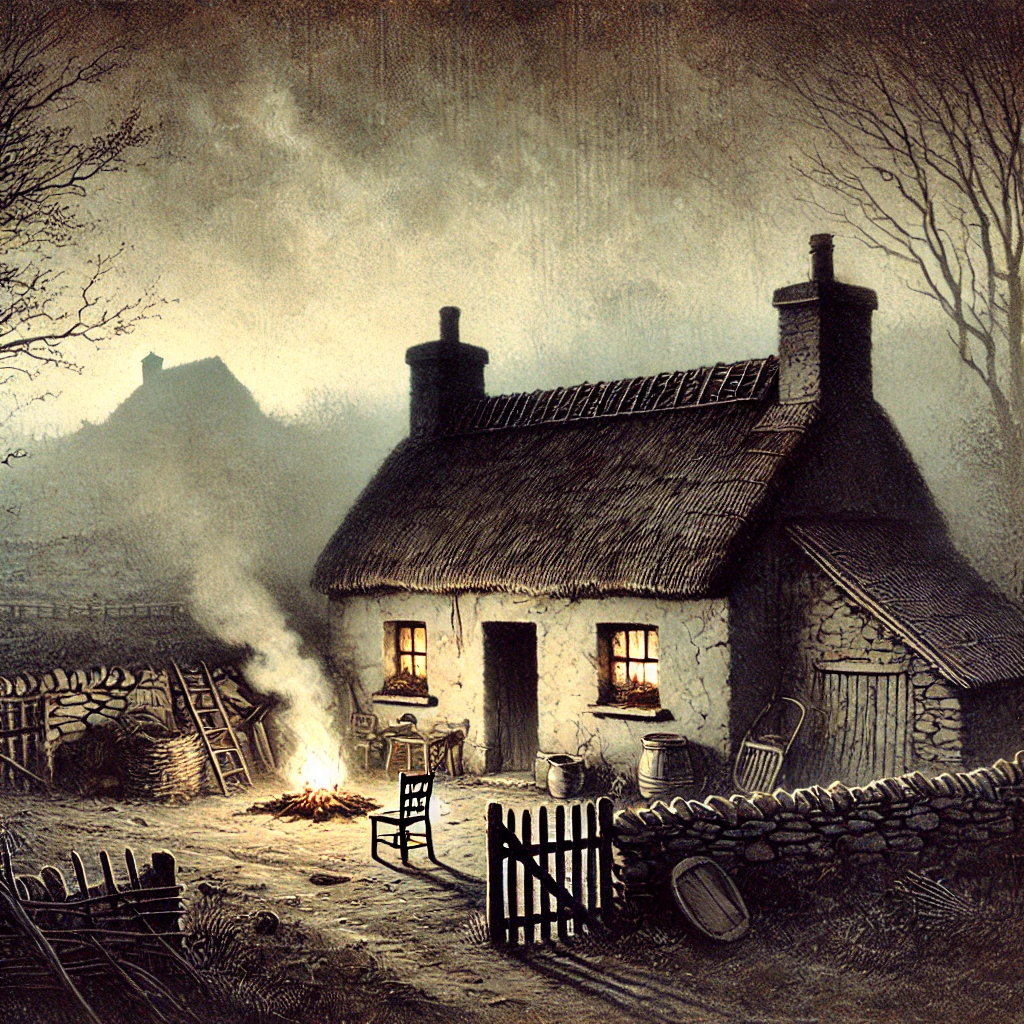
Bridget Cleary was a bright, independent woman living in Ballyvadlea, County Tipperary, in the late 19th century. At 26 years old, she was a skilled dressmaker and poultry-keeper, earning her own income—a rarity for women of her time. She lived with her husband, Michael Cleary, and her family in a modest home.
Bridget’s confidence, independence, and beauty set her apart, qualities that some in her rural community viewed with suspicion. In a society deeply influenced by patriarchal norms and old superstitions, her individuality was seen not as strength but as something dangerous and “other.”
A Clash of Beliefs: Superstition vs. Modernity
Ireland in the 1890s was a land caught between two worlds. On the one hand, the Industrial Revolution and advances in medicine and education were bringing modernization to even the most rural areas. On the other, ancient folklore and belief in the supernatural still held a firm grip on many communities.
One of the most persistent beliefs was in changelings—fairy imposters who, according to legend, replaced real people, often those who were sick or behaving strangely. These beliefs were particularly strong in areas like Tipperary, where tales of faeries and faerie forts (sacred, untouched patches of land) were woven into everyday life.
Bridget’s Illness and Accusations of Witchcraft
In March 1895, Bridget fell ill with what was likely bronchitis or pneumonia. Her symptoms—lethargy, confusion, and fever—were not fully understood at the time, leading her husband and others to believe she had been taken by the faeries and replaced by a changeling.
Michael Cleary became convinced that his wife was no longer herself. He consulted local “wise men” and herbalists, who fed his growing paranoia. They advised that Bridget could only be “cured” through extreme measures, leading to a series of violent rituals aimed at driving out the changeling and bringing back the “real” Bridget.
The Tragic Death of Bridget Cleary
On the night of March 15, 1895, these rituals escalated into outright violence. In front of witnesses—including family members—Michael forced Bridget to drink herbal concoctions, interrogated her, and burned her with firebrands, all while demanding she admit she was a changeling.
As the night wore on, Michael’s violence spiraled out of control. He set Bridget on fire, claiming it was the only way to banish the changeling and restore his true wife. Bridget Cleary succumbed to her injuries, and her charred body was later discovered buried in a shallow grave.
The Aftermath: Justice or Scapegoating?
Bridget Cleary’s murder sent shockwaves through Ireland and beyond. Michael Cleary and several accomplices were arrested and charged with her death. During the trial, Michael defended his actions by claiming he genuinely believed Bridget was a changeling, not his wife.
In the end, Michael Cleary was convicted of manslaughter, not murder, and sentenced to 15 years of penal servitude. His light sentence sparked outrage and debates over the role of superstition in Irish society.
Legacy of Bridget Cleary’s Tragic Story
Bridget Cleary’s death is remembered as the last witch-burning in Ireland, though it was far more than an act of superstition. Her murder reveals the ways patriarchal control, fear of the unknown, and societal tensions can manifest in violence. It also serves as a stark reminder of how dangerous it can be when folklore is used to justify cruelty.
Today, Bridget’s story is both a cautionary tale and a poignant reminder of the cost of fear and ignorance. She was not a witch, nor a changeling—she was a woman caught between worlds, silenced by forces beyond her control.
Modern Reflections: What Bridget Cleary Teaches Us
The tragedy of Bridget Cleary resonates today in discussions about how society treats individuals who defy norms or challenge deeply held beliefs. Her story has inspired books, plays, and academic studies exploring themes of gender, power, and superstition.
Bridget’s life and death invite us to reflect on:
- The dangers of unchecked superstition and fear.
- The societal pressures faced by women, particularly those who assert independence.
- The ways cultural narratives can be weaponized to control or harm others.
Visiting Bridget Cleary’s Ireland
For those interested in exploring the context of Bridget Cleary’s story, the Irish countryside offers a window into the world she inhabited:
- County Tipperary: Visit the region where Bridget lived, with its rolling fields, historical landmarks, and remnants of old faerie lore.
- Faerie Forts: Explore the mysterious ringforts scattered across Ireland, symbols of the folklore that shaped Bridget’s community.
- Irish Folklore Museums: Learn more about the myths and legends that continue to influence Irish culture.
To delve deeper into stories like Bridget Cleary’s and Ireland’s rich tapestry of history and folklore, visit SecretIreland.ie.
Conclusion: Remembering Bridget Cleary
Bridget Cleary’s story is one of sorrow, injustice, and the complexities of cultural transformation. She was not a witch or a changeling but a woman whose life and death were shaped by a society caught between its ancient roots and a modernizing world.
Her story reminds us to question the beliefs we hold and the narratives we perpetuate. It challenges us to see the humanity in others, even when fear and superstition threaten to blind us.
As we reflect on Bridget’s life, let us honor her memory by striving for a world where understanding triumphs over ignorance and compassion over fear. Her story is a haunting chapter in Ireland’s history, one that continues to stir hearts and minds today.
About the Author
