Ah, lads and lassies, pull up a stool. The fire’s crackling, the Guinness is settling, and the fiddle’s tuning up in the corner. You’re not just reading about an Irish pub — you’re stepping into one. T
his is no glossy tourist brochure. This is the raw, beating heart of Ireland, told the only way I know how: with the fire and fury of a man who’s spent more nights in these sacred rooms than he cares to count.
Welcome to the Deep dive into Irish pub — from its ancient, muddy origins to the neon-lit outposts conquering the world in 2026.
Irish Pub Origin: Where the Story Begins in the Mud and the Mist
Let’s go back. Not to the 19th century with its temperance preachers and Victorian snugs. Not even to the Normans with their wine merchants and stone taverns.
We’re talking 900 AD — when the River Shannon still ran wild and a man named Luain Mac Luighdeach opened an inn at the great ford in what is now Athlone. That inn is Sean’s Bar, officially Ireland’s oldest pub, recognised by Guinness World Records. The walls are still there — horsehair, sticks, and mud — whispering secrets older than most nations.
The Irish Pub origin is Viking, Celtic, and monastic all at once. The Northmen brought communal drinking halls in the 10th century. Alewives — fierce women who brewed the beer — ran the early shebeens. Irish monks, starved of earthly pleasures but never of thirst, perfected distillation and gave the world uisce beatha — whiskey, the water of life. By the 13th century, Norman barons demanded taverns. By 1635 the English crown insisted on licences. But the soul was already forged.
Through famine and rebellion, the Traditional Irish pub became more than a drinking den. During the Great Hunger, some pubs doubled as morgues and undertakers’ parlours.
Publicans arranged wakes when the State couldn’t cope. In the 1800s the temperance movement forced diversification — groceries, post offices, even makeshift banks sat beside the barrels. The Victorian era gave us the iconic snug: tiny private booths where priests, rebels, and courting couples could talk without the whole parish listening.
What Defines an Irish Pub? What Makes It an Irish Pub?
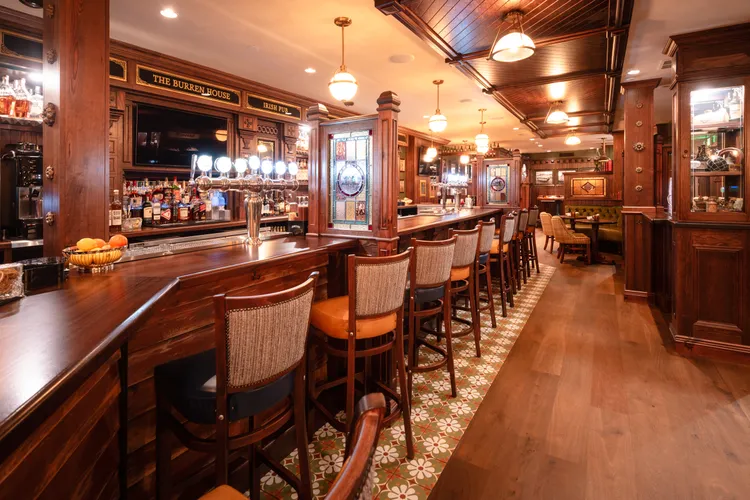
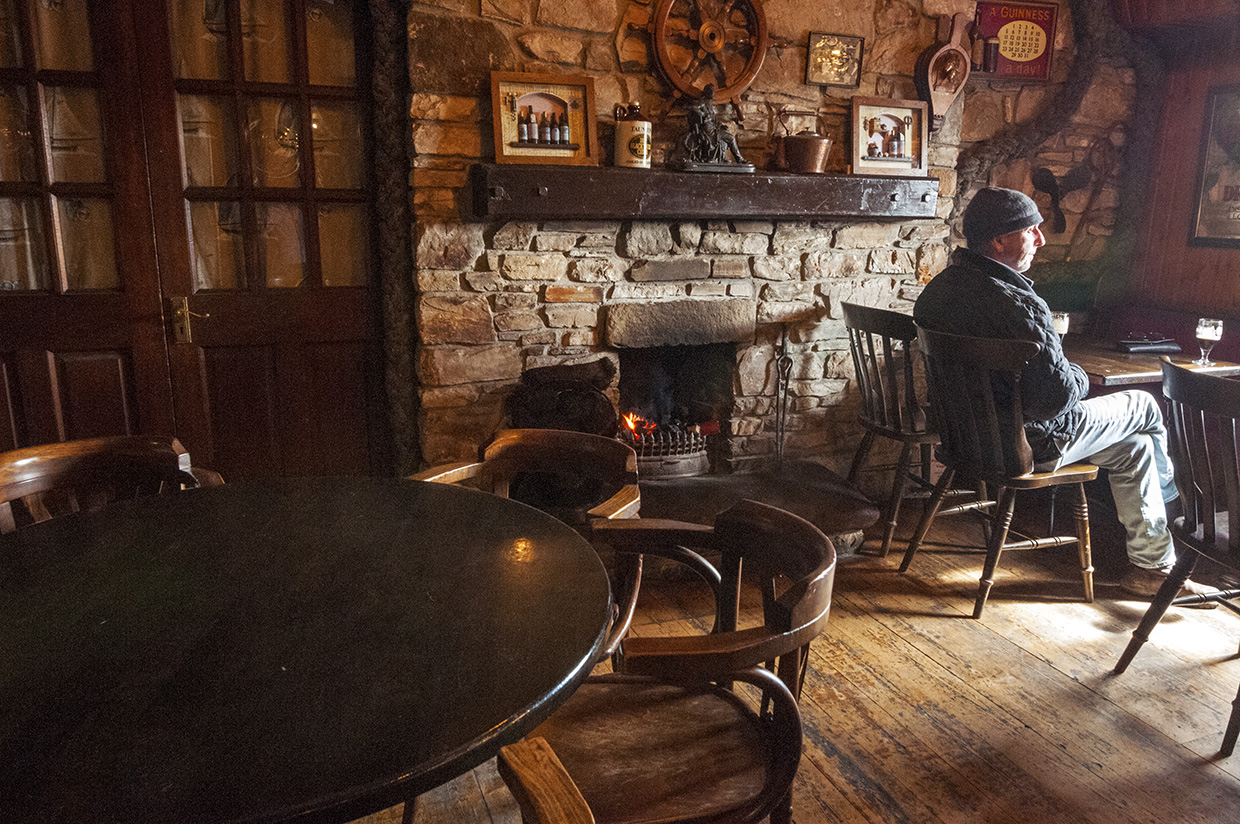
Ask ten Irish people and you’ll get eleven answers, but the truth is carved in dark mahogany and turf smoke. A real Irish pub is family-run, named after the publican, and feels like your granny’s front room — only with better whiskey. Dark wood, low ceilings, open fires, snugs, faded photographs of dead hurlers and poets on the walls. No 15 flat-screens blasting American sports. No Coors Light. Just creamy pints of Guinness pulled with reverence, Jameson or Bushmills, and the unmistakable sound of craic.
What makes it an Irish pub is the atmosphere. It’s not about the drink — it’s about the conversation. Strangers become friends in minutes. Politics, GAA, music, and heartbreak are all fair game. The golden rule?
We’ll get to that. But first, understand this: an Irish pub is a third space — neither home nor work — where the working class, the poet, the farmer, and the returning emigrant all belong. It’s democratic. It’s sacred. And in 2026, with Google’s latest core updates rewarding authentic, experience-rich content, we’re telling you the truth, not the filtered version.
Famous Irish Pubs in Ireland: The Ones That Still Matter
Irish pubs in Ireland are not museums — they’re living history. Sean’s Bar in Athlone (900 AD) still serves the same riverbank pints.
The Brazen Head in Dublin (1198) claims to be the city’s oldest and has seen everyone from Jonathan Swift to modern rock stars. Matt Molloy’s in Westport — owned by the Chieftains flautist — is trad music heaven. Johnnie Fox’s high in the Dublin Mountains serves the best Irish stew with views that stop your heart. The Palace Bar, Toner’s (Yeats drank here), The Long Hall, The Celt, and the Gravediggers (next to Glasnevin Cemetery — best pint in Dublin, they say).
These aren’t just pubs. They’re where James Joyce wrote, where Brendan Behan sang, where the 1916 Rising was plotted in back rooms. Visit them. Feel the ghosts cheering you on.
Irish Pub Culture and Etiquette: The Unwritten Rules That Bind Us
Here’s the part the guidebooks get wrong. Irish pub culture and etiquette is simple but iron-clad. The golden rule of Irish pub etiquette is this: Buy your round. Never, ever skip your turn. If the group is five deep and someone mutters “whose round is it?”, look in the mirror — it’s you. Couples don’t count as one. Everyone who drinks buys. Leave without buying and you’re marked for life. It’s not about money. It’s about equality. It’s about saying: I belong here with you.
Other rules: Tip only if table service (10-15%). Share your crisps — split the bag wide open. Don’t talk over the trad session. And never, ever rush the barman pouring the perfect Guinness (two parts, 119.5 seconds minimum).
Irish Pub Menu & Irish Pub Food: More Than Just Pub Grub
The irish pub menu is comfort made sacred. Think slow-cooked Irish stew thick with lamb and root vegetables, boxty (potato pancakes), soda bread still warm from the oven, fish and chips with mushy peas, shepherd’s pie, Guinness beef stew, and colcannon. In 2026 the best pubs have elevated this without losing the soul — wild Atlantic seafood, foraged herbs, but always the classics. Pair it with a pint. The food is designed to soak up the drink and keep the conversation flowing till closing.
Irish Pubs in America & the Global Export: From Chicago to Kathmandu
The Irish pub didn’t stay home. Famine, rebellion, and the 1990s Irish Pub Company turned it into the world’s favourite export. Irish pubs in America number in the thousands. In irish pub chicago you’ll find The Kerryman, Emerald Loop, and Chief O’Neill’s — proper pints and live music. Irish pub houston has legends like Pimlico (Guinness Excellence Award winner), McGonigel’s Mucky Duck, and Griff’s. Irish pub dallas boasts Blackfriar Pub, Cannon’s Corner, and The Playwright. Even in irish pub kathmandu you’ll find expats and trekkers raising a glass in Himalayan Irish bars that somehow feel like home.
Search “irish pub near” anywhere on the planet and you’ll find one. They’re the embassies of the Irish soul — places where homesick emigrants and curious locals gather for the same craic.
The Modern Era: Irish Pubs in 2026 and Beyond
Today the Irish pub faces challenges — rising costs, changing drinking habits, tourism overload in Temple Bar — but it adapts. The best ones blend tradition with new energy: craft Irish whiskey lists, zero-alcohol Guinness for the designated drivers, and trad sessions streamed live for the diaspora. Google’s 2026 core updates (February Discover, March Core) reward exactly this: deep, original, experience-first content like the one you’re reading now. Not thin AI spam. Real stories. Real history. Real heart.
The Irish pub wiki page will tell you facts. This article tells you the truth: the Irish pub is resilience. It survived Vikings, famine, British rule, and economic crashes because it is the one place where every Irish person — at home or abroad — can still feel connected.
Frequently Asked Questions About the Irish Pub
What defines an Irish pub?
An authentic Irish pub is defined by its warm, communal atmosphere, dark wood interiors, snugs, open fires, traditional Irish music, hearty food like Irish stew, and the unbreakable rule of buying rounds. It’s more than a bar — it’s a living room for the soul of Ireland.
What are the most famous pubs in Ireland?
Sean’s Bar in Athlone (oldest), The Brazen Head in Dublin, Matt Molloy’s in Westport, Johnnie Fox’s, The Palace Bar, Toner’s, and The Gravediggers.
What pub does Ed Sheeran own?
Ed Sheeran does not own a public Irish pub. He recreated a private pub called Lancaster Lock in his English garden using fixtures bought on eBay. He famously filmed the ‘Galway Girl’ video at O’Connell’s Pub in Salthill, Galway.
Which bar is the oldest Irish pub?
Sean’s Bar in Athlone, County Westmeath, dates back to 900 AD and holds the Guinness World Records title as Ireland’s oldest pub.
What makes it an Irish pub?
It’s the craic — the conversation, the music, the hospitality, the dark wood, the smell of turf fire mixed with Guinness, and the unwritten rules of community and rounds.
What is the golden rule of Irish pub etiquette?
Buy your round. Never skip your turn. If someone asks “whose round is it?”, it’s almost definitely yours.
Conclusion: The Pint That Never Ends
So there you have it — the full, unvarnished Deep dive into Irish pub. From the mud walls of Sean’s Bar in 900 AD to the gleaming counters of Irish pubs in Chicago, Houston, Dallas, and even Kathmandu, the story is the same: people need a place to belong. In an age of algorithms and isolation, the Irish pub remains stubbornly human. Next time you’re searching for an “irish pub restaurant near me”, remember you’re not just looking for a drink. You’re looking for connection.
Sláinte. Now go buy your round.
Written for SecretIreland.ie • Real stories. Real Ireland. Real craic.
Share this article • Internal links: Irish Pub Food | Irish Pubs in America
About the Author
