

Expert Polar Historian & Analyst | Updated: November 13, 2025
A staggering 107 years after the vessel was crushed by sea ice and sank, scientists located the **Ernest Shackleton ship** at a depth of 3,000 metres in the treacherous **Weddell Sea**. Expedition Director Mensun Bound described the wreck as “by far the finest wooden shipwreck I have ever seen… intact, and in a brilliant state of preservation.” The ship’s physical endurance, even at the bottom of the “worst portion of the worst sea in the world,” is an apt reflection of the human spirit demonstrated by Shackleton and his men.
🧊 The Imperial Trans-Antarctic Expedition: Survival, Not Conquest
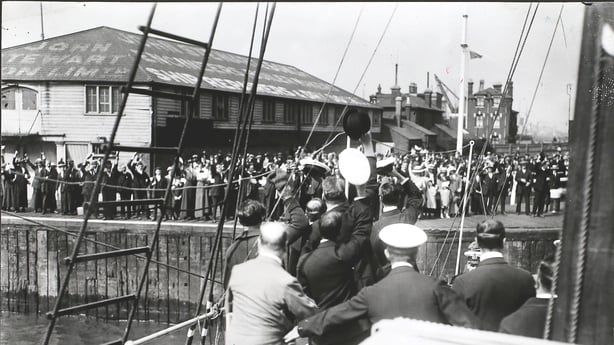
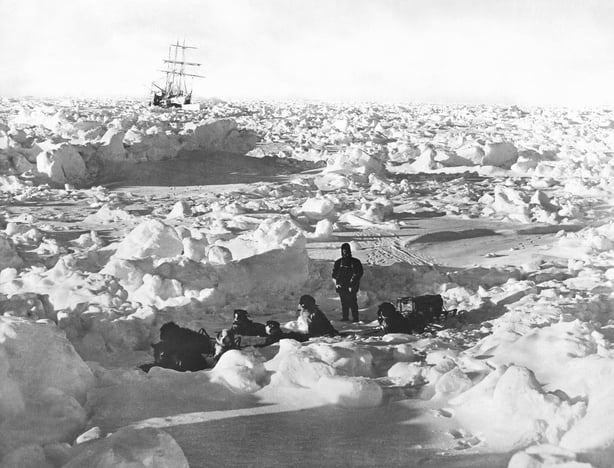
The mission began in August 1914, just as the Great War was erupting. The crew of 28 men, led by **Ernest Shackleton**, set sail with ambitious goals. However, the ship became hopelessly trapped in the thick, multi-year ice of the Weddell Sea in January 1915. After ten months, the pressure became too great, forcing Shackleton to give the painful order to abandon ship in October 1915, weeks before the **Endurance** finally succumbed to the ice in November.
This pivot from exploration to survival is why Shackleton is eternally revered. The journey that followed is the core of the **Ernest Shackleton Endurance expedition** legend:
- **The Ice Camp:** Stranded on the shifting sea ice, the crew lived for months, relying on seals and penguins for sustenance. This phase tested their mental fortitude and discipline, skills honed through reading and a clear hierarchy maintained by Shackleton.
- **The Ocean Row:** In April 1916, they took to three lifeboats, navigating the perilous waters to reach the tiny, uninhabited **Elephant Island**.
- **The *James Caird* Epic:** Recognizing Elephant Island offered no salvation, **Shackleton** and five others undertook an almost unimaginable feat of navigation. They customized the lifeboat **James Caird**, sailing 1,300km (800 nautical miles) through the most violent seas on Earth to reach the whaling stations of South Georgia in May 1916.
This extreme voyage—often considered the most astonishing small-boat journey ever completed—allowed Shackleton to organize the final rescue. On his fourth attempt, he returned to Elephant Island in August 1916 and successfully picked up the rest of the crew. Miraculously, **every single one of the 28 men returned home alive**. This flawless record of leadership under catastrophe is what **Ernest Shackleton was famous for**, forever cementing his place in history.
🔬 Shackleton’s Leadership and Logistics: How They Avoided Scurvy
The survival of the crew, particularly their avoidance of **scurvy**—a disease that plagued earlier polar missions—is a testament to Shackleton’s planning and leadership. Scurvy is caused by a severe deficiency of Vitamin C, common in long voyages where fresh produce is unavailable. Shackleton’s logistical planning, informed by the failures of previous expeditions, emphasized:
- **Fresh Meat Consumption:** Unlike some earlier explorers who ignored the nutritional value of polar animals, Shackleton’s crew regularly consumed the fresh meat of **seals and penguins**. These animals, particularly their organs, contain trace amounts of Vitamin C, which was sufficient to stave off the fatal symptoms of scurvy during their two years in the ice.
- **Morale and Discipline:** Shackleton understood that mental resilience was as critical as physical health. By constantly diverting his men with tasks, reading, and maintaining strict routine, he kept morale high, preventing the fatal combination of depression and disease.
The crew’s ability to survive for so long on the ice and in the lifeboats, living off their environment, directly answered the question: **How did Shackleton’s men avoid scurvy?** By prioritizing fresh game and abandoning dog rationing for the health of the men.
🏛️ Experiencing the Epic: The Shackleton Experience Athy
While the actual **Endurance** will remain 3,000 metres beneath the sea, the legacy of **Ernest Shackleton** lives on, particularly in his ancestral home of Kildare, Ireland. **The Shackleton Experience in Athy, Co. Kildare**, is the only institution in the world solely dedicated to the life and achievements of the explorer, who was **Ernest Shackleton born** in Kilkea, Co. Kildare, in 1874.
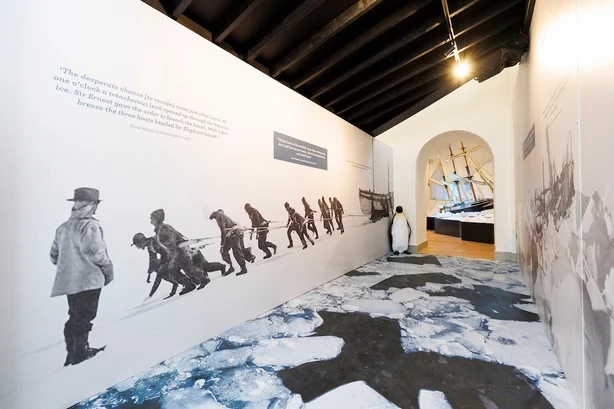
Following a recent **€7.5 million redevelopment**, the museum now offers a powerful, immersive experience that combines the world’s largest collection of Shackleton artefacts with cutting-edge interactive exhibits. Visitors can:
- **Re-live the Disaster:** Join the crew’s escape from the ice-bound ship via an immersive experience complete with crashing waves and wind effects.
- **Explore Artefacts:** View replica models of the **Endurance**, the sledge and harness used on the earlier **Nimrod Expedition**, and the famous replica of the **James Caird Lifeboat**.
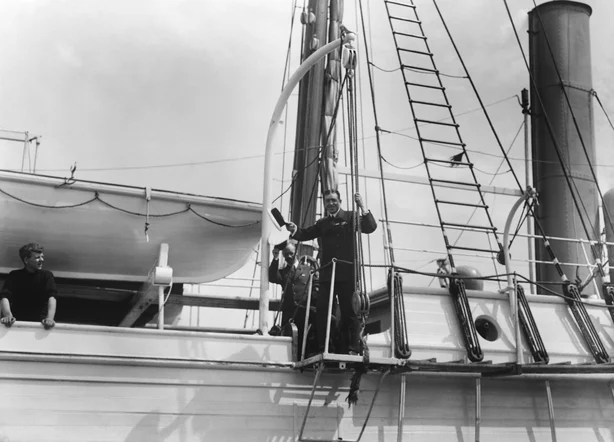
- **Final Voyage:** Visit a replica of **Shackleton’s cabin** aboard the ship ‘Quest,’ where he **How did Ernest Shackleton die** (of a heart attack) during the Shackleton-Rowlett expedition in 1922.
The Experience also features a dedicated research studio, archiving polar materials and hosting scholars, ensuring Shackleton’s principles of leadership and survival are studied and applied in today’s world, including the vital examination of climate change’s impact on **Antarctica**.
🎬 The Enduring Cultural Impact: Movies, Books, and Documentaries
Shackleton’s story transcends polar history, making him a subject of contemporary interest across media:
- **Literature and Leadership:** The original account, published in his **Ernest Shackleton book**, *South*, is a classic, but modern leadership books constantly cite his methods.
- **Film and TV:** The epic survival story has inspired the award-winning **Ernest Shackleton documentary** narrated by Kenneth Branagh, and there are numerous adaptations and depictions, cementing the story’s status as cinematic gold, ensuring the next **Ernest Shackleton movie** is always anticipated.
His determination, loyalty, and refusal to accept defeat despite overwhelming odds—abandoning the goal of conquest for the goal of safety—resonate deeply with modern resilience and crisis management philosophy. This is the **What was Ernest Shackleton famous for**—not reaching the Pole, but bringing his people home.
Frequently Asked Questions about Ernest Shackleton and Antarctica
Why is Shackleton so famous?
Shackleton is famous for his extraordinary leadership during the **Imperial Trans-Antarctic Expedition** (1914-1917). Despite his ship, the **Endurance**, being crushed by ice, he successfully led his entire 28-man crew to safety after nearly two years trapped in the Antarctic wilderness. He is renowned not for conquest, but for the flawless survival of his men, making him a global icon of leadership in crisis.
How did Shackleton’s men avoid scurvy?
Shackleton’s men avoided scurvy (a Vitamin C deficiency disease) by **eating fresh seal and penguin meat** throughout their ordeal on the ice. Unlike earlier expeditions, Shackleton understood that the trace amounts of Vitamin C in the raw organs and muscle of these animals were sufficient to prevent severe illness and death over long periods.
How did Ernest Shackleton survive in Antarctica?
Shackleton survived through a combination of meticulous planning, strong discipline, and extraordinary endurance. Key survival tactics included adapting quickly after the loss of the **Ernest Shackleton ship**, maintaining high morale among the crew, and undertaking the desperate, but successful, 1,300km open-boat voyage in the **James Caird** from Elephant Island to South Georgia to summon rescue.
Who are the 7 owners of Antarctica?
Antarctica has **no official ‘owners’**. Seven nations—Argentina, Australia, Chile, France, New Zealand, Norway, and the United Kingdom—claim territorial sovereignty over portions of the continent, but these claims are currently held in abeyance under the **Antarctic Treaty System (ATS)**. The ATS designates Antarctica as a peaceful, scientific preserve.
Why is Antarctica not fully explored?
Antarctica is not fully explored primarily due to its **extreme conditions**, vast size (it’s larger than Europe), and most of the land being covered by an average of 1.9 km of ice. Exploration requires immense logistical effort, cost, and specialized equipment to study the subglacial environment and remote interior plateaus.
What secrets have been found in Antarctica?
Antarctica holds vital secrets about Earth’s history and climate. Discoveries include **prehistoric forests and fossils** (proving it was once temperate), enormous **subglacial lakes** (like Lake Vostok), and ice cores that trap **atmospheric gases** dating back hundreds of thousands of years, providing critical data on past climate change.
What is Ernest Shackleton’s famous quote?
One of **Ernest Shackleton’s famous quote** is often cited as: **”Optimism is true moral courage.”** Another famous sentiment, reflecting his focus on his crew, is found in his famous advertisement seeking volunteers: “Men wanted for hazardous journey. Small wages, bitter cold, long months of complete darkness, constant danger, safe return doubtful. Honour and recognition in case of success.”
What was the most tragic expedition?
The **most tragic expedition** is widely considered to be **Captain Robert Falcon Scott’s Terra Nova Expedition** (1910–1913), which aimed to be the first to reach the South Pole. Though successful in reaching the Pole, Scott and his entire four-man polar party perished on the return journey, succumbing to starvation, extreme weather, and scurvy. This contrasts sharply with the **Ernest Shackleton Endurance expedition**, where no lives were lost.
About the Author
