

The Horrifying Truth About Zombie Spiders: When Nature Turns Against Itself
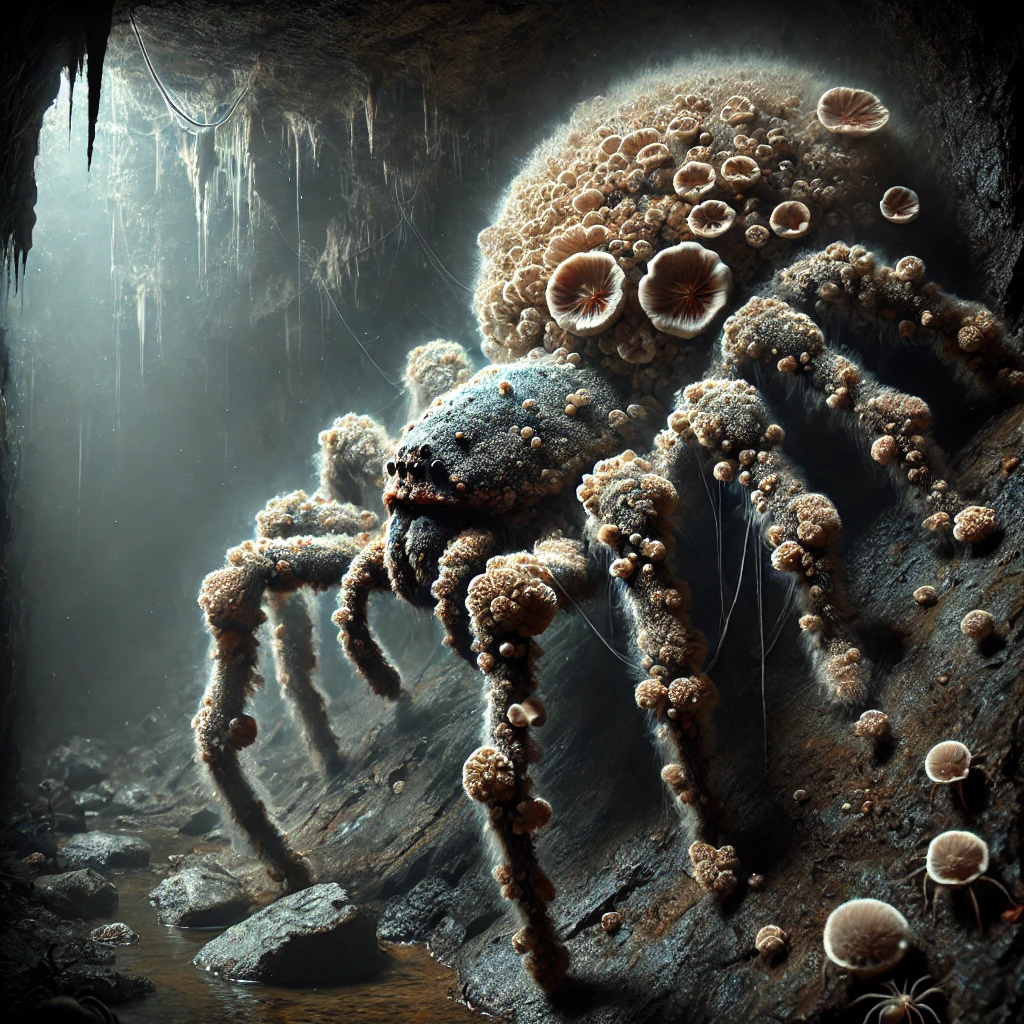
There are things in this world that make you stop, make you rethink what you thought was true. The zombie spider is one of them. This isn’t some Hollywood creation, not some fever dream of a screenwriter looking for the next big horror franchise. This is real, crawling, creeping, and—if you look hard enough—dying in the darkest corners of Ireland’s caves.
A fungus called Gibellula attenboroughii is at the heart of it. It infects unsuspecting spiders, hijacks their nervous systems, and forces them to abandon their shelters, climbing to an exposed location before dying in eerie, unnatural positions. Then, the real nightmare begins—the fungus grows from their bodies, bursting through their exoskeletons like something out of a sci-fi horror film, spreading its spores, waiting for the next victim.
This isn’t just a phenomenon. This is nature at its most ruthless.
What is the Zombie Spider?
The zombie spider is a creature that once had control over its own fate, its own movements, its own instincts—until something else took over.
The fungus Gibellula attenboroughii invades its body, spreading through its system like a parasite from hell. It doesn’t kill immediately. No, it’s far more sinister than that. It rewires the spider’s brain, forcing it to act against its own survival instincts.
The spider, which once skulked in dark, hidden corners, suddenly feels compelled to move upward, to the ceiling of the cave, to the exposed walls. It doesn’t know why it’s doing this. It just does.
And then it dies.
Its body becomes a breeding ground, a launchpad for the next generation of fungal spores. The spider was never the predator in this story. It was just a puppet.
What is the Curse of the Zombie Spider?
A curse isn’t just a story whispered around campfires. A curse is a fate worse than death, something that strips you of who you are before taking your life. That’s what happens to these spiders.
Imagine being trapped inside your own body, forced to do things you don’t understand, unable to fight back. Imagine your instincts screaming at you to run, to hide, to cling to your web—but your body betrays you. You climb instead. You climb to die.
That’s the curse of the zombie spider.
It isn’t the death that’s horrifying. It’s what happens before it.
Why Do Dead Spiders Turn White?
A spider’s body isn’t supposed to look like something dredged up from a nightmare. But when Gibellula attenboroughii gets involved, that’s exactly what happens.
After the spider dies, the fungus grows out of it, bursting through its exoskeleton, spreading like an alien parasite taking over its host.
At first, it’s subtle—a small bloom of spores. But soon, the body is completely overtaken, its natural colors stripped away, leaving behind a ghostly white husk.
The body is no longer just a corpse. It’s an infection site, a beacon calling for the next victim.
Did They Find Zombie Fungus in Scotland?
Not yet. But that doesn’t mean it isn’t coming.
So far, the only confirmed cases of Gibellula attenboroughii have been found in Ireland—in the caves of Down, Fermanagh, Cavan, Leitrim, and Sligo.
But fungal spores don’t care about borders. They travel. They spread. They evolve.
If it’s in Ireland, it’s only a matter of time before it crosses the sea, finds a new home in the damp, dark crevices of Scotland’s caves.
And when it does, the question won’t be “Did they find zombie fungus in Scotland?”. It’ll be “How far has it spread?”
Are Zombie Spiders in the UK?
For now, they’re contained. For now, they’re lurking in Ireland’s caves, tunnels, and abandoned spaces.
But fungi are patient. They don’t need permission to spread.
If the conditions are right—if the darkness is deep enough, if the dampness is just right—it could already be happening in the UK.
Just because you haven’t seen them yet, doesn’t mean they aren’t there.
What is the Death Spider?
The term “death spider” isn’t official, but it might as well be. It’s what people are calling infected spiders, the ones who move like they’re possessed, who climb to their deaths only to become fungal breeding grounds.
It’s the zombie spider, but with a name that makes the horror feel real.
What is the Evilest Spider?
Nature doesn’t deal in morality. It deals in survival.
But if you’re looking for something that plays dirty, something that doesn’t just kill but manipulates, then the zombie spider fungus is at the top of the list.
It doesn’t just consume its victims. It controls them.
That’s real evil.
Can Zombie Fungus Infect Humans?
Not this one. Not yet.
The fungus Gibellula attenboroughii only targets spiders. But that doesn’t mean humans are immune to other fungal horrors.
In the Amazon rainforest, the zombie ant fungus (Ophiocordyceps unilateralis) does the same thing—to ants. And there are fungal infections that do affect humans, though none quite as terrifying as what we see in spiders and insects.
For now, this isn’t our fight.
But nature is always changing. Always evolving. And if you think it’s impossible for a fungus to make the jump from insect to human—you haven’t been paying attention to history.
Is There a Zombie Spider-Man?
If you’re thinking of Marvel’s Spider-Man, he’s safe—for now.
But if you want a version of Spider-Man who doesn’t get to be the hero, who gets controlled instead of controlling, look no further than nature itself.
The real zombie spider exists. And it doesn’t get superpowers. It gets death.
What is the Scariest Spider?
The ones that should be dead—but aren’t.
The ones that move when they shouldn’t be able to.
The ones that climb into the light when every instinct should be telling them to hide.
The zombie spiders infected by Gibellula attenboroughii might not have fangs dripping with venom, but they don’t need them.
They’re scary not because of what they can do—but because of what’s been done to them.
Do Zombie Bugs Exist?
Yes. And they’ve existed for millions of years.
- Zombie ants in the Amazon, controlled by Ophiocordyceps.
- Zombie cicadas infected by Massospora, forcing them to spread spores while their bodies decay.
- Zombie spiders, crawling to their doom in Ireland’s caves.
If there’s one thing nature has proven, it’s that nothing is truly safe.
Final Thoughts: Are Zombie Spiders Dangerous?
To humans? No. To other spiders? Absolutely.
The zombie spider fungus doesn’t just kill—it controls, manipulates, and spreads in ways that feel terrifyingly intelligent.
The only question that remains isn’t “Are zombie spiders dangerous?”.
It’s “How far will they spread?”
And who—or what—will they infect next?
About the Author
