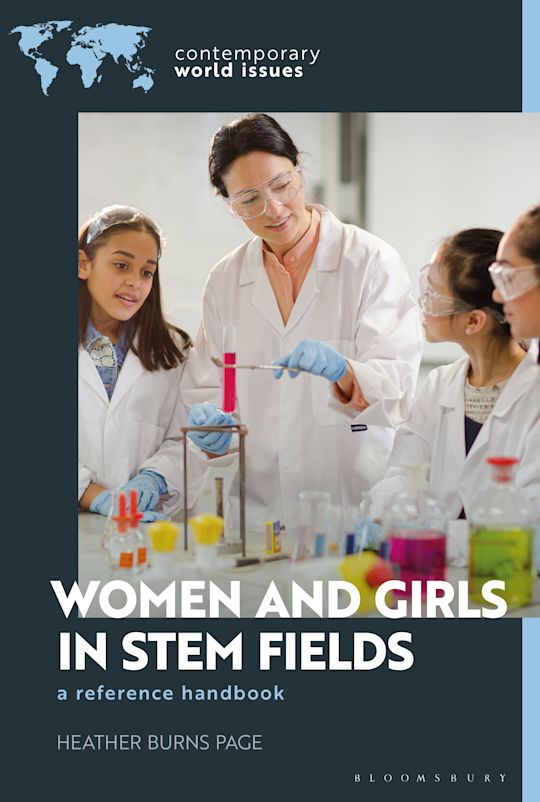
Let’s torch the sanctimonious drivel and get to the raw truth: Women in STEM fields—science, technology, engineering, math—aren’t some trendy hashtag for corporate diversity brochures.
They’re warriors, rebels, and bloody geniuses who’ve been clawing through history’s muck, fighting for a seat at the table men built to keep them out. And Ireland? We’ve birthed some of the fiercest, from fossil hunters to codebreakers, women who didn’t just play the game—they rewrote the rules.
This isn’t a polite nod to “girl power”; it’s a roar for the Irish women in STEM who’ve been ignored, erased, or patronised by a world too cowardly to face their brilliance. Buckle up—this is their story, and it’s a belter.
The Global Fight: Women in STEM Fields
Women in STEM fields have been scrapping against the odds since the Enlightenment decided brains were a lads-only club. Today, they’re 34% of the global STEM workforce—better than the 7% in 1970, but still a disgrace when you clock the talent bleeding out. Engineering? 21% women. Computer science? 19%. The pay’s lush—two-thirds more than other gigs, says Pew Research—but the boys’ club vibe lingers like a bad pint. Stereotypes, bias, and a lack of role models choke the pipeline, and the leaky tap of retention sees 45% of women ditch STEM jobs, fed up with being underpaid and overlooked, per Scientific American. Yet, the trailblazers—Rosalind Franklin with her DNA helix, Katherine Johnson plotting NASA’s moonshot—prove women don’t just belong; they dominate when given half a chance.
Ireland’s STEM Sisters: A Legacy of Grit
Ireland’s no stranger to this fight. Our women in STEM fields have been kicking down doors since the days when “lady scientist” was a punchline. Take Mary Anning—born 1799, with Irish roots through her mother’s Cork lineage. She wasn’t faffing about with tea parties; she was scouring Lyme Regis cliffs, unearthing ichthyosaurs and plesiosaurs, rewriting what we know about prehistoric life. Dangerous work—landslides nearly killed her—but she didn’t flinch. Her fossils sit in museums, yet her name was barely whispered in her time. Typical. A woman’s genius, buried under male egos.
Fast forward to Sheila Tinney, born 1918 in Galway. Mathematical physicist, first Irish-born woman to snag a doctorate in the mathematical sciences—1941, under Max Born, no less. Two years, bam, done. She crunched quantum mechanics while the world told her to knit socks. First female Fellow of the Royal Irish Academy in 1959, she’s proof Irish women don’t just compete—they conquer. Her story’s a quiet fire, a middle finger to anyone who says STEM’s not for the lassies.
Kay McNulty: The Donegal Code Queen
Then there’s Kay McNulty—born 1921 in Creeslough, Donegal, a name that should be carved in stone. Women in STEM fields owe her a pint. Emigrated to the US at three, speaking only Irish, she graduated in maths from Chestnut Hill College and landed in the US Army’s WWII effort. Her gig? Programming the ENIAC, the first all-electronic computer. No manual, no Google—just her and five other women, teaching themselves to wire a beast that calculated missile trajectories faster than any man’s slide rule. Ignored in 1946 when the machine went public, she’s since been hailed as a pioneer. Inducted into the Women in Technology Hall of Fame in 1997, Kay’s Donegal grit turned zeroes and ones into history.
The History: Irish Women vs. The System
Irish women in STEM fields didn’t just face glass ceilings—they faced iron bloody walls. The 19th century had dames like Margaret Lindsay Huggins, born 1848 in Dublin. She teamed with her husband William, sure, but don’t kid yourself—she was no sidekick. They pioneered astrophysics, using dry gelatine plates to snap planetary spectra, decoding the Orion Nebula and Wolf-Rayet stars. Her hands built telescopes, her mind mapped the cosmos. No fancy title, no solo credit—yet her work’s the bedrock of modern stargazing. That’s the Irish woman’s lot: do the mahi, let the lads take the glory.
By the 20th century, the fight got uglier. Kathleen Lonsdale, born 1903 in Newbridge, Kildare, was an X-ray crystallographer who proved benzene rings were flat—1929, a breakthrough for chemistry. She used Fourier methods to crack hexachlorobenzene, got a hexagonal diamond named “lonsdaleite” in her honour. First woman elected to the Royal Society in 1945, she juggled jail time as a pacifist with raising kids and rewriting science. Irish, fierce, unstoppable—yet her name’s a whisper next to the Curries and Franklins.
Modern Mavericks: Ireland’s STEM Women Today
Today’s Irish women in STEM fields are no less feral. Norah Patten, from Ballina, Mayo— aeronautical engineer, STEM advocate, and slated to be Ireland’s first woman in space with Virgin Galactic’s Delta mission, 2026 or 2027. She’s not just floating up there; she’s built “Planet Zebunar,” a non-gendered STEM tool for kids, smashing the idea that science is a boys’ toy. Then there’s Evelyn Nomayo, Nigerian-Irish tech evangelist from Drogheda. Full-stack developer, PhD fellow at Trinity, she’s mentored girls to the Technovation Girls finals with apps like Memory Haven for dementia patients. These women aren’t asking permission—they’re taking the wheel.
The Stories: Bullets, Bias, and Brilliance
The stories of Irish women in STEM fields are war tales. Take Stopford Price, born 1893 in Dublin—an TB expert who founded the Irish Anti-Tuberculosis League. She dodged bullets in 1916’s Easter Rising as a Red Cross medic, then turned her scalpel to childhood TB, saving lives while the patriarchy sneered. Or Ellen Hutchins, born 1785 in Ballylickey, Cork—Ireland’s first female botanist. Sickly, widowed young, she mapped seaweeds and mosses, her drawings so sharp they’re still in textbooks. Dead at 29, her legacy’s a quiet scream against the silence women faced.
Why It Matters: Ireland’s STEM Soul
Why give a toss? Because women in STEM fields—Irish or otherwise—aren’t just filling quotas; they’re the spark that keeps the world turning. McKinsey says diverse teams boost profits by 15%. Villanova’s research in 2020 showed women match men in STEM tasks, no question. Yet Ireland’s STEM workforce? 25% women in 2018, per STEM Women, barely budging since. Engineering’s at 12%, ICT at 21%. Subconscious bias—girls don’t do maths, lads don’t cry—chokes talent before it breathes. Imposter syndrome haunts the rest. But every Sheila, Kay, or Norah who breaks through proves it’s bollocks.
The Extremists and the Erasure
Don’t think it’s all rosy. Extremists—then and now—bully women out of STEM fields. Look at Garron Noone’s digital lynching in 2025—hounded off TikTok for daring to speak on immigration. Same venom hit women like Franklin, whose DNA work was stolen by Watson and Crick, or Lonsdale, jailed for her principles. Ireland’s STEM women faced priests, professors, and prigs who’d rather see them in kitchens than labs. The far-right and far-left don’t just hate free speech—they hate women who wield it with brains. History’s littered with their erasure, but these women didn’t bend.
Final Roar: Irish Women in STEM Fields
So, women in STEM fields? They’re the real deal—Irish ones especially. From Anning’s fossils to McNulty’s code, Tinney’s equations to Patten’s rockets, they’ve defied the odds, the sneers, the systems rigged against them. Ireland’s STEM story isn’t complete without them—Mary, Sheila, Kay, Norah, and the rest. They’re not footnotes; they’re the feckin’ text. The world’s changing—34% isn’t enough, but it’s a start. These women didn’t wait for permission; they took it, and we’re richer for it. Next time you hear STEM’s a man’s game, tell ‘em about the Irish lassies who proved it’s not. Then pour a pint and raise it high—they’ve earned it.
About the Author
