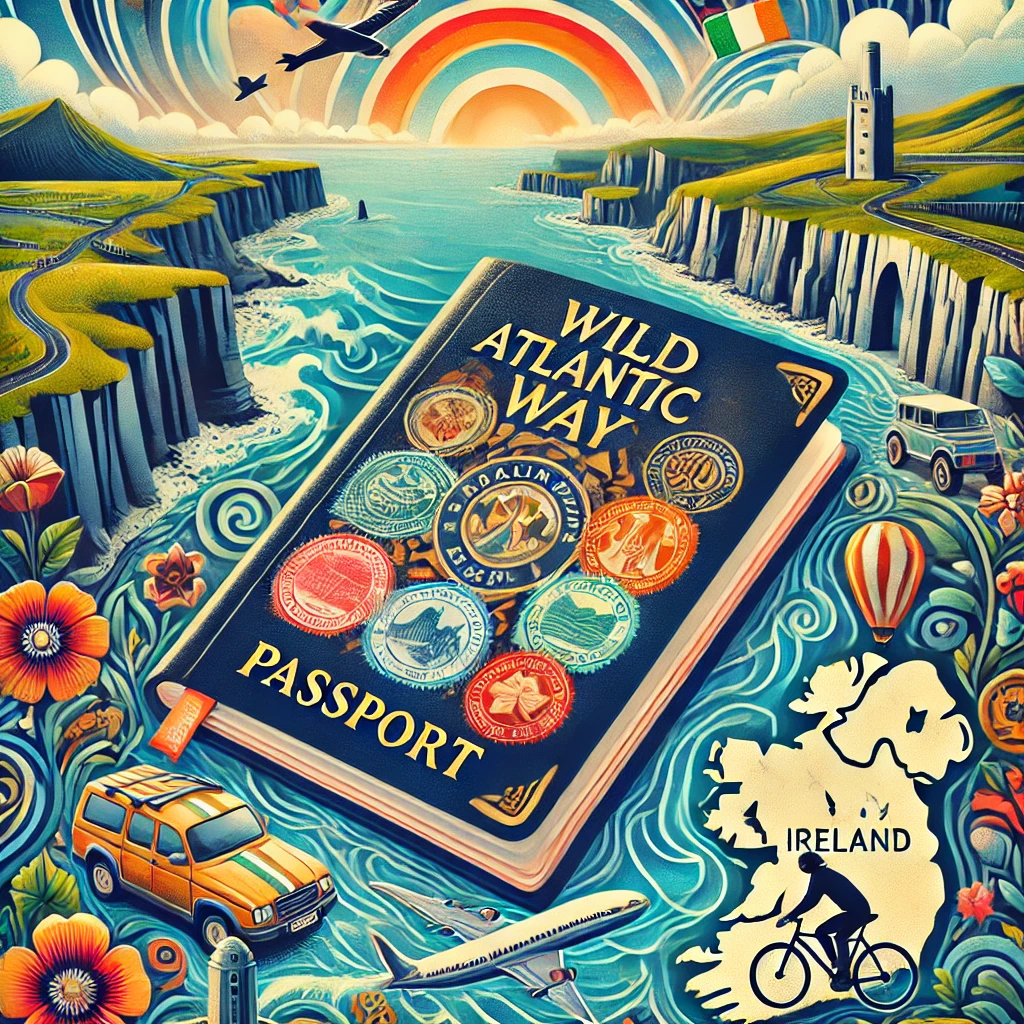
The Wild Atlantic Way Passport is more than just a keepsake—it’s your ultimate companion for exploring one of the world’s most breathtaking coastal routes. As you travel along the Wild Atlantic Way, spanning over 2,500 km of Ireland’s rugged west coast, the passport allows you to document your journey, collect unique stamps at Discovery Points, and create lasting memories of your adventure.
What is the Wild Atlantic Way Passport?
The Wild Atlantic Way Passport is a specially designed booklet that lets travelers record their journey along Ireland’s iconic Wild Atlantic Way. Each official Discovery Point along the route offers a unique stamp, allowing you to track your progress and celebrate the places you’ve explored.
The passport not only serves as a memento of your journey but also encourages you to visit hidden gems, small towns, and stunning landscapes that might otherwise be missed.
How to Get Your Wild Atlantic Way Passport
- Where to Buy: The passport can be purchased at local tourist offices, visitor centers, and select businesses along the route.
- Cost: The passport is affordable, making it a fantastic investment for your Wild Atlantic Way adventure.
- Pro Tip: Pick up your passport early in your trip to ensure you can collect as many stamps as possible.
Using the Wild Atlantic Way Passport
1. Plan Your Route
The Wild Atlantic Way passport map includes all official Discovery Points, making it easy to plan your journey. From Malin Head in Donegal to Mizen Head in Cork, the route is dotted with must-visit locations.
2. Collect Stamps
At each Discovery Point, look for the designated stamping station, often located in a nearby café, shop, or visitor center. Each stamp features a unique design representing the location.
3. Document Your Experience
Use the space in your passport to jot down memories, notes, or sketches. It’s a great way to personalize your keepsake and relive the adventure long after your journey ends.
Why Get a Wild Atlantic Way Passport?
1. Celebrate Your Journey
The passport adds an interactive element to your trip, transforming your Wild Atlantic Way experience into a tangible achievement.
2. Discover Hidden Gems
With its focus on Discovery Points, the passport encourages you to explore off-the-beaten-path locations, from quaint fishing villages to dramatic cliffs.
3. Support Local Communities
By visiting businesses and sites associated with the passport, you’re directly contributing to the local economy.
4. A Perfect Souvenir
Filled with stamps and memories, the passport becomes a cherished memento of your Wild Atlantic Way adventure.
Combining the Passport with Cycling Adventures
If you’re planning a cycling trip, like the Wild Atlantic Mizen Cycle 2024, the passport is the perfect companion. Collect stamps as you pedal along the route, from Malin to Mizen Head, and document your journey with the same sense of achievement you feel on the bike.
Check out Wild Atlantic Mizen Cycle: A Journey Through Ireland’s Coastal Splendor for tips and inspiration on cycling Ireland’s western coast.
FAQs About the Wild Atlantic Way Passport
1. How Many Discovery Points Are on the Wild Atlantic Way?
The route features 188 Discovery Points, each offering a unique stamp for your passport.
2. Can I Complete the Passport in One Trip?
While it’s possible to collect all stamps in a single trip, many travelers choose to explore the Wild Atlantic Way over multiple visits, taking time to fully enjoy each location.
3. Is the Passport Suitable for Cyclists?
Absolutely. Whether you’re cycling the Wild Atlantic Way or tackling a specific route like the Wild Atlantic Mizen Cycle, the passport adds a fun and rewarding element to your adventure.
4. What Happens When I Complete the Passport?
Completing your passport is a badge of honor! While there’s no official reward, many travelers share their completed passports as a testament to their journey.
Key Stops Along the Wild Atlantic Way
The passport encourages you to explore iconic locations and hidden gems, including:
- Malin Head: Ireland’s northernmost point, known for its rugged cliffs.
- Cliffs of Moher: One of Ireland’s most famous natural wonders.
- Dingle Peninsula: A serene stretch of coastline with vibrant local culture.
- Mizen Head: The southernmost point of Ireland, where the adventure concludes.
Resources for Your Adventure
- Plan Your Trip: Discover Ireland – Wild Atlantic Way
- Get Cycling-Ready: Cycling Ireland
- Weather Updates: Met Éireann
Start Your Journey
Whether you’re driving, cycling, or walking, the Wild Atlantic Way Passport transforms your trip into an unforgettable experience. Explore stunning landscapes, connect with local communities, and create a keepsake filled with memories and achievements.
For more travel tips and guides, visit Secret Ireland. And don’t forget to check out Wild Atlantic Mizen Cycle: A Journey Through Ireland’s Coastal Splendor for more inspiration.
The Wild Atlantic Way is calling—are you ready to answer?
About the Author
