There’s a moment in My Left Foot—a moment that, if you blink, you’ll miss it—when Christy Brown (played by the mercurial Daniel Day-Lewis) looks at the world like he’s ready to burn it to the ground.
Not in anger. Not even in defiance. But with a quiet understanding that the game is rigged, and the only way to win is to break every rule and redefine what winning even means. That’s Christy Brown. That’s My Left Foot. That’s the truth.
A story like this is not about inspiration. It’s not about overcoming the odds in some sanitized, Oscar-bait way. It’s about raw survival, about a man who clawed his way through life, painting and writing with the only limb he could control, proving that brilliance doesn’t come in neat, gift-wrapped packages. But what’s the real story? How much of My Left Foot is true? And what happened to Christy Brown after the final credits rolled? Let’s dig in.
Is Christy Brown Still Alive?
No. Christy Brown died on September 7, 1981, at the age of 49. His death was sudden and, to this day, controversial. The official cause was listed as choking, but there were whispers of neglect, even abuse, surrounding his later years. More on that later.
What Was Wrong with Christy in My Left Foot?
Christy Brown had severe cerebral palsy, a neurological disorder that affects movement, muscle tone, and motor skills. Born in 1932 into a working-class Dublin family with 22 siblings, he was misdiagnosed as having severe mental disabilities. The doctors were wrong. Christy was physically trapped inside a body that refused to obey him, but mentally, he was sharp, curious, and brilliant.
What is the Story of My Left Foot?
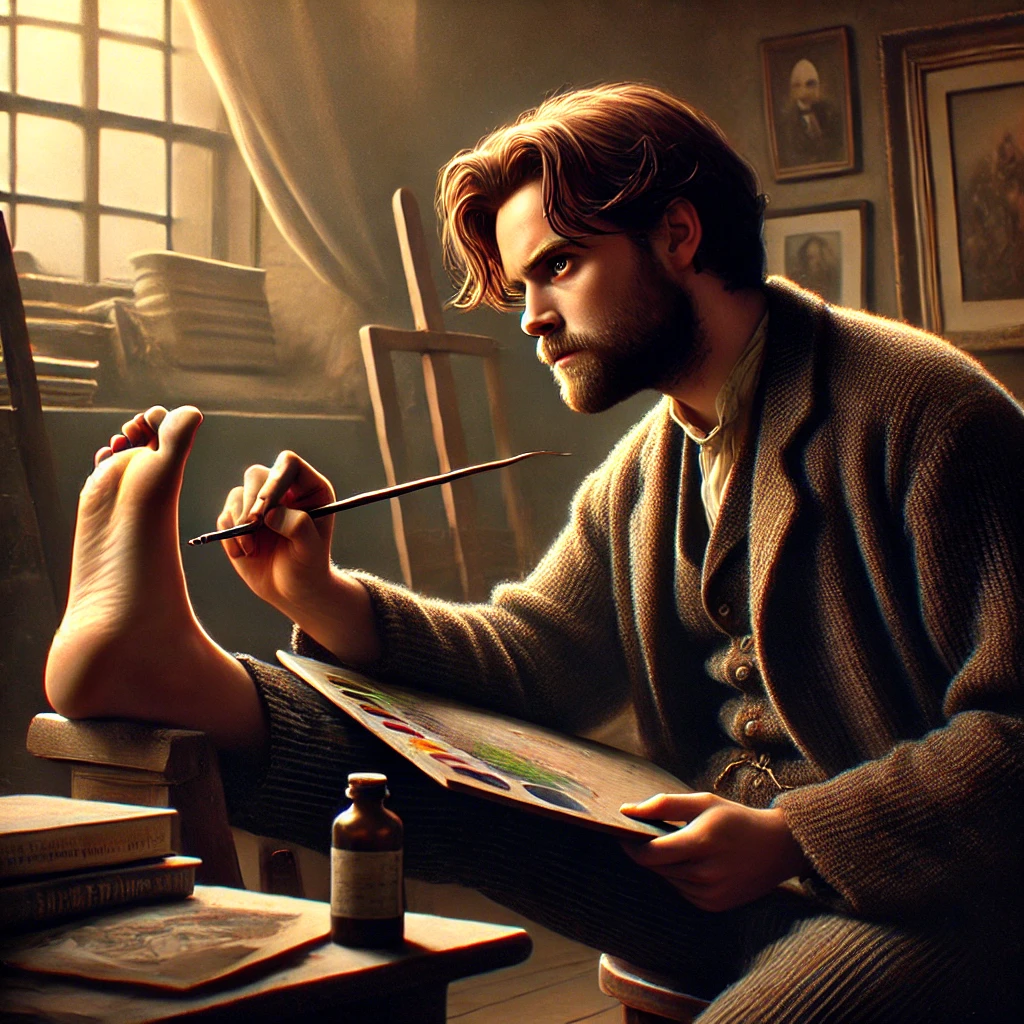
The story of My Left Foot is simple, yet staggering. Christy Brown, born with cerebral palsy, was thought to be incapable of communication. But at five years old, he picked up a piece of chalk with the only limb he could control—his left foot—and wrote the letter ‘A’. That one moment shattered every assumption about him. From there, it was a war. A war against expectations, against society, against his own failing body.
Christy went on to become an acclaimed writer and painter, publishing his autobiography, My Left Foot, in 1954. The book became a best-seller, catching the attention of Hollywood. In 1989, Jim Sheridan turned it into a film starring Daniel Day-Lewis, who threw himself into the role so completely that he refused to break character even off-camera. The result? A performance so immersive it landed him his first Academy Award for Best Actor.
What Happened to Christy Brown?
Christy Brown’s life after the success of My Left Foot was a tragedy wrapped in triumph. He continued to write, releasing novels like Down All the Days (1968), which was championed by literary giants like Samuel Beckett. He found love with Mary Carr, a woman he had met through mutual friends, and the two married in 1972. But instead of the fairy-tale ending, Christy’s life took a darker turn.
Reports suggest that his marriage was toxic, with Mary allegedly neglecting and even abusing Christy. His health deteriorated, and he died under questionable circumstances at their home in Somerset, England. Some family members have since claimed that Christy’s later years were marred by mistreatment, with his cause of death—choking on food—being more of an excuse than a truth.
How Accurate is My Left Foot?
As biopics go, My Left Foot stays remarkably true to Christy Brown’s life, at least in its essence. The key moments—the chalk, the writing, the struggle—are real. But the film softens the edges of his character, sanding down the rougher aspects of his life. Christy was no saint. He was brilliant but volatile, a drinker, a fighter, and someone who carried the weight of the world on his back without ever asking for permission.
Did Christy Brown Get Married?
Yes, Christy Brown married Mary Carr in 1972. But the marriage was fraught with controversy, and many believe it was one of the worst things that happened to him. Mary was accused of being emotionally and physically abusive, isolating Christy from his family and mishandling his care. Some close to Christy claim that his decline was accelerated by the marriage, turning what should have been his happiest years into some of his darkest.
What is the Message of My Left Foot?
At its core, My Left Foot is about defiance. It’s about how talent, genius, and the sheer force of will can overcome the cruelties of biology and society. But it’s also a stark reminder that the world doesn’t always reward resilience with happiness. Christy Brown achieved the impossible, yet his story doesn’t have a neatly tied bow at the end. And maybe that’s the point.
What Kind of Cerebral Palsy Did Christy Brown Have?
Christy Brown had spastic quadriplegic cerebral palsy, the most severe form of the disorder. This meant that all four limbs were affected, making voluntary movement almost impossible—except for his left foot, which became his tool for art, writing, and survival.
What is the My Left Foot Thing?
If you Google My Left Foot thing, you might be looking for its legacy, its cultural impact, or even its place in disability representation in cinema. But here’s the raw answer:
My Left Foot is the anti-inspiration-porn story. It doesn’t paint Christy as a symbol of triumph to make the audience feel warm inside. It presents him as a real, flawed, complex human—one who raged, suffered, loved, and lived with a fire most people wouldn’t dare ignite.
The Final Word on Christy Brown and My Left Foot
In the end, Christy Brown’s legacy is messy, brilliant, and unforgettable. He changed the way we see disability, not with grand speeches, but with words and images forged from a place of pure necessity. He didn’t fight for recognition—he took it. And even though life took its toll, what he left behind is something that will never be erased.
If you want to dive deeper into Christy Brown’s world and the impact of My Left Foot, check out this detailed piece: My Left Foot: A Story of Resilience, Talent, and Triumph.
About the Author
