Ireland’s place names are a window into its rich history, weaving together Gaelic, Viking, and Anglo-Norman influences.
The prefix “Bally” appears in countless Irish towns, sparking curiosity about its meaning and significance.
From what does Bally mean in Irish to related terms like Kil, Dun, and Slieve, this comprehensive guide explores the origins of Irish town names, their cultural context, and their modern relevance.
The Gaelic Roots of Irish Place Names
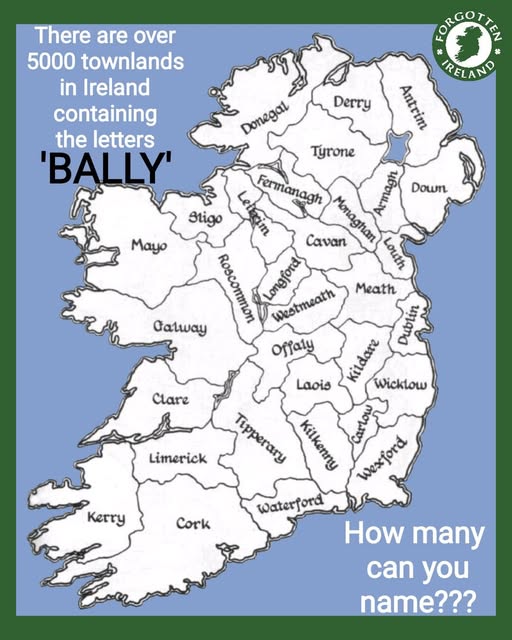
Irish place names are predominantly derived from the Irish Gaelic language (Gaelige), reflecting the landscape, history, and culture of the island. The prefix “Bally” is one of the most common, appearing in over 5,000 place names across Ireland, per Wikipedia’s Place Names in Ireland. Derived from the Gaelic word “baile,” meaning “place,” “town,” or “settlement,” Bally often describes a village or homestead tied to a specific feature, person, or clan. For example, Ballymena (Baile Meánach) translates to “middle place,” while Ballyshannon (Beal Átha Seanaidh) means “mouth of Seanaidh’s ford.” These names, rooted in the landscape, reveal Ireland’s deep connection to its terrain and history.
Other common prefixes like Kil, Dun, and Knock also shape Irish town names, each carrying distinct meanings tied to geography or function. Understanding these terms unlocks the stories embedded in Ireland’s map, from small villages to bustling cities, as explored in sources like Logainm.ie, Ireland’s place names database.
Bally in Context: A Cornerstone of Irish Identity
The prevalence of “Bally” in Irish town names reflects the Gaelic emphasis on community and place. Unlike urban centers, Bally towns are often small, rural settlements, embodying the charm of Ireland’s countryside. Places like Ballycastle in Antrim or Ballyvaughan in Clare evoke a sense of timelessness, with their stone walls, cozy pubs, and historic churches, per The Irish Road Trip. These villages are cultural hubs, hosting markets, festivals, and traditional music sessions that draw visitors seeking authentic Irish experiences.
Bally’s significance extends beyond Ireland. In global contexts, such as the Irish Village Dubai, the term evokes Irish culture, even in commercial settings. This blend of local and global resonance makes “Bally” a powerful symbol of Irish heritage, as noted on Irish Village Dubai website.
Related Gaelic Prefixes: Kil, Dun, Knock, and More
While Bally is iconic, other Gaelic prefixes enrich Ireland’s place names:
– What does Kil mean in Irish? Kil (or Cill) means “church” or “cell,” often tied to monastic settlements, e.g., Kilkenny (Cill Chainnigh, “Church of Canice”), per Logainm.ie.
– What does Dun mean in Irish? Dun (or Dún) means “fort,” referring to ancient strongholds, e.g., Dundalk (Dún Dealgan, “Dealga’s fort”).
– What does Knock mean in Irish? Knock (or Cnoc) means “hill,” as in Knocknagoshel (Cnoc na gCaiseal, “hill of the stone forts”).
– What does Killy mean in Irish? Killy is a variant of Kil, often meaning “church” or sometimes “wood,” e.g., Killybegs (Na Cealla Beaga, “little churches”).
These prefixes, like Bally, tie towns to their physical or historical features, creating a rich tapestry of names across Ireland’s 32 counties.
The Cultural Significance of Irish Town Names
Irish town names are more than labels—they’re stories. Rooted in Gaelic, many reflect natural features (rivers, hills), historical events (battles, settlements), or patron saints. For example, what does Slieve mean in Irish? Slieve (or Sliabh) means “mountain,” as in Sligo (Sligeach, “shelly river”) or Slieve Bloom, a mountain range. These names preserve Ireland’s Celtic heritage, connecting modern communities to their ancient roots, per Irish Central. In 2025, as tourism grows, towns with evocative names like Ballyvourney or Dungarvan remain magnets for visitors seeking Ireland’s cultural depth.
Why Irish Town Names Matter in 2025
In 2025, Irish town names continue to captivate travelers and locals alike. From the Irish Village Dubai hosting St. Patrick’s Day events to rural Bally towns hosting traditional markets, these names carry global appeal. Ireland’s tourism industry, contributing €13.9 billion annually, thrives on the charm of these villages, per The Irish Times. Whether exploring an Irish towns alphabetical list or visiting fairytale villages in Ireland like Adare, the stories behind names like Bally, Kil, and Dun enrich every journey, making them essential to Ireland’s cultural narrative.
FAQs About What Does Bally Mean in Irish
Why do so many Irish towns start with Bally?
The prefix “Bally” appears in over 5,000 Irish place names because it derives from the Gaelic word “baile,” meaning “place,” “town,” or “settlement.” Historically, it described small communities or homesteads tied to a specific feature, person, or clan. For example, Ballymena means “middle place,” while Ballyshannon refers to “Seanaidh’s ford.” During Ireland’s Gaelic era, settlements were often named for their founders, landmarks, or functions, and “baile” was a versatile term for any inhabited place. Even after Anglo-Norman and English influences, Bally endured due to its simplicity and cultural resonance. Today, towns like Ballycastle and Ballyvaughan remain vibrant, preserving this Gaelic legacy, as detailed on Logainm.ie. The prevalence of Bally reflects Ireland’s rural, community-focused history, making it a hallmark of its identity.
What does Bally mean in slang?
In Irish slang, “Bally” has no distinct meaning and is rarely used outside its place-name context. However, in broader English slang, particularly in the UK, “bally” can be a mild expletive or intensifier, often used in phrases like “bally good show,” a dated expression from British upper-class speech, per Urban Dictionary. This usage is unrelated to the Gaelic “baile.” In Ireland, slang tends to focus on other terms, like “grand” or “craic,” and what does Bally mean in Irish slang or what does Bally mean in Irish Urban Dictionary yields no significant results. The term’s primary significance remains tied to place names, not colloquial speech.
What does Shankill mean in Irish?
Shankill, derived from the Gaelic “Seanchill” (Sean + Cill), means “old church.” It appears in places like Shankill, Dublin, and Shankill, Belfast, reflecting early Christian monastic sites. The prefix “sean” (old) combined with “cill” (church) suggests a settlement built around an ancient religious site, often linked to Ireland’s 5th- to 9th-century monastic tradition. For example, Shankill in Dublin is near a historic church site, with archaeological evidence of early Christian activity, per Logainm.ie. The name underscores Ireland’s deep religious history, with similar names like Seanchill in County Kerry reinforcing this pattern.
What does Bogan mean in Irish?
The term “bogan” has no direct Gaelic origin or meaning in Irish place names. In Ireland, it’s not a common prefix like Bally or Kil, and what does Bogan mean in Irish yields no traditional significance. However, “bogan” is slang in Australia and New Zealand, describing a person perceived as unsophisticated or working-class, per Urban Dictionary. In an Irish context, the closest Gaelic term might be “bog,” meaning “soft” or “marshy,” as in Bog of Allen, but this is unrelated to “bogan.” The term’s absence from Irish toponymy suggests it’s a misapplication or confusion with non-Irish slang.
Is Bally an Irish word?
Yes, Bally is an anglicized form of the Irish Gaelic word “baile,” meaning “place,” “town,” or “settlement.” Pronounced as “BALL-y” or “BAW-lee” in Irish, per Teanglann.ie pronunciation guide, it’s a core element of Irish toponymy. Found in names like Ballymoney (Baile Monaidh, “homestead of the shrubbery”) and Ballyfermot (Baile Formaid, “Formad’s town”), Bally reflects Ireland’s Gaelic heritage. Its widespread use in over 5,000 place names, per Wikipedia, confirms its status as a quintessentially Irish word, despite anglicization during English rule.
What is the most Celtic city in Ireland?
Galway is often considered Ireland’s most Celtic city, thanks to its strong Gaelic culture, vibrant Gaeltacht areas, and historical ties to Celtic traditions. Located on Ireland’s west coast, Galway hosts festivals like the Galway International Arts Festival and preserves the Irish language through its Gaeltacht regions, such as Connemara. Its medieval streets, Claddagh heritage, and proximity to ancient sites like the Aran Islands enhance its Celtic identity, per Irish Central. Cities like Dublin and Cork, while culturally rich, are more cosmopolitan, making Galway the epicenter of Celtic vibrancy in 2025.
What is the most Irish town in Ireland?
Dingle in County Kerry is frequently cited as the most Irish town, embodying traditional Gaelic culture. A Gaeltacht town where Irish is widely spoken, Dingle is known for its colorful pubs, traditional music, and coastal charm. Its name, An Daingean (meaning “the fortress”), reflects its Gaelic roots, and its festivals, like the Dingle Tradfest, celebrate Irish heritage, per The Irish Road Trip. Other contenders like Adare or Clifden are picturesque, but Dingle’s linguistic and cultural purity makes it a standout in 2025.
What does Kenny mean in Irish?
Kenny, as a surname or place name element, derives from the Gaelic “Cionaoith” or “Cainnech,” meaning “handsome” or “born of fire.” It appears in place names like Kilkenny (Cill Chainnigh, “Church of Canice”), named after St. Canice, a 6th-century monk, per Logainm.ie. As a surname, Kenny is common in Ireland, particularly in Leinster, and is linked to families with historical ties to religious or clan leadership. Its use in place names underscores the importance of patron saints in Irish toponymy.
Why do Scottish towns start with Inver?
In Scotland, the prefix “Inver” (or Inbhir) comes from the Scottish Gaelic “inbhir,” meaning “mouth of a river” or “confluence.” It describes settlements at river mouths, such as Inverness (Inbhir Nis, “mouth of the River Ness”). Similar to Ireland’s Bally, Inver reflects Scotland’s Celtic heritage, where geography shaped naming conventions. While Ireland uses “Bally” for settlements, Scotland’s “Inver” emphasizes riverine locations, a distinction rooted in their shared Gaelic linguistic origins, per Wikipedia’s Scottish place names. This difference highlights the unique yet related Celtic naming traditions.
What does Slieve mean in Irish?
Slieve (or Sliabh) is an Irish Gaelic word meaning “mountain” or “moor.” It appears in place names like Sligo (Sligeach, “shelly river”) or Slieve Bloom, a mountain range in Laois and Offaly. Often paired with descriptive terms, Slieve reflects Ireland’s rugged landscapes, with names like Slieve League in Donegal (Sliabh Liag, “mountain of flagstones”) showcasing geological features. Its use in toponymy, per Irish Central, underscores the importance of natural landmarks in Irish culture and naming.
What is the most common Irish surname in the world among the Irish?
Murphy is the most common Irish surname globally, particularly among the Irish diaspora in the U.S., UK, and Australia. Derived from the Gaelic “Ó Murchadha” (descendant of Murchadh, meaning “sea warrior”), it’s prevalent in counties like Cork and Wexford. Over 300,000 people worldwide bear the name, per Ancestry.com. Its popularity reflects Ireland’s clan-based history, with surnames often tied to place names like Ballymurphy, combining “Bally” and “Murphy” to mean “Murphy’s settlement.”
How are Irish towns named?
Irish towns are primarily named in Gaelic, reflecting natural features, historical figures, or functions. Prefixes like Bally (“place”), Kil (“church”), Dun (“fort”), Knock (“hill”), and Slieve (“mountain”) are combined with descriptors, e.g., Ballyvourney (Baile Bhuirne, “place of the pebbly land”). Names often honor saints (Kilkenny for St. Canice), clans (Ballymacelligott, “MacElligott’s place”), or geography (Dungarvan, “Garvan’s fort”). Viking and Anglo-Norman influences added layers, but Gaelic remains dominant. Anglicization under British rule altered spellings (e.g., Baile to Bally), but the original meanings persist, per Logainm.ie. In 2025, these names continue to shape Ireland’s cultural identity.
Conclusion: The Legacy of Bally and Irish Place Names
The question what does Bally mean in Irish opens a door to Ireland’s rich toponymic heritage. From the Gaelic “baile” meaning “place” to related terms like Kil, Dun, Knock, and Slieve, Irish town names tell stories of landscapes, saints, and clans. Whether visiting fairytale villages in Ireland like Dingle, exploring an Irish towns alphabetical list, or experiencing the global charm of the Irish Village Dubai, these names connect past and present. In 2025, Ireland’s villages, from Ballycastle to Killybegs, remain vibrant cultural hubs, inviting travelers to discover their timeless allure.
Disclaimer: Information is based on sources available as of July 17, 2025. For the latest details on Irish place names, visit Logainm.ie or local historical records.
About the Author
