Ireland is a land rich in history, where every stone, castle, and ancient ruin tells a tale of the past. From prehistoric sites to medieval castles, this island is a treasure trove for history enthusiasts. Whether you’re looking for historic places near Monaghan, planning to explore OPW heritage sites, or simply searching for historic places near me, this guide covers it all.
Here is a historic places list of the top 10 destinations you must visit to dive deep into Ireland’s fascinating heritage.
1. Newgrange – County Meath
Why Visit?
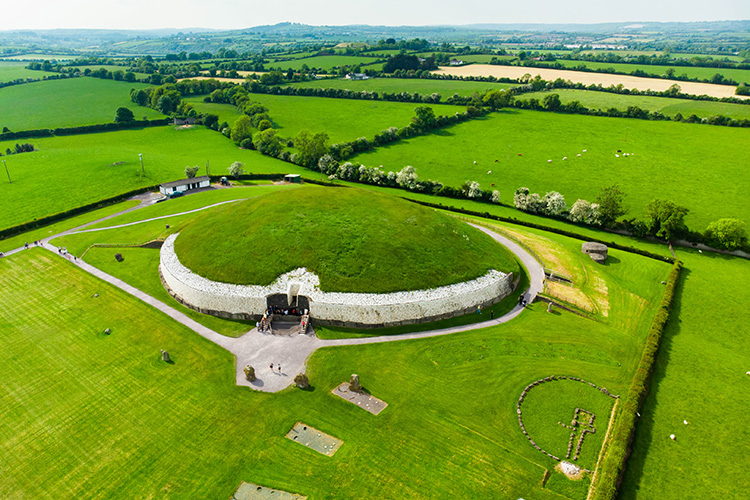
Newgrange is one of the most famous historical places in Ireland and is older than the pyramids of Egypt. This UNESCO World Heritage Site dates back to 3,200 BC and is a Neolithic passage tomb famous for its incredible winter solstice alignment. During this event, sunlight floods the inner chamber, a design that showcases the sophistication of ancient builders.
What to See?
- The intricately carved stonework at the entrance.
- The 19-meter-long passage leading to the central chamber.
- The visitor center showcasing artifacts and reconstructions.
Pro Tip:
Book your winter solstice tour early for a chance to witness this magical event firsthand.
2. Rock of Cashel – County Tipperary
Why Visit?
Perched on a limestone hill, the Rock of Cashel is one of the most iconic historic places to visit in Ireland. It was once the seat of the Kings of Munster and later gifted to the church in the 12th century. The site features a fascinating blend of medieval architecture.
What to See?
- Cormac’s Chapel, featuring stunning Romanesque architecture.
- The round tower, dating back to the 1100s.
- Panoramic views of Tipperary’s lush countryside.
Pro Tip:
Visit early in the morning to avoid crowds and enjoy uninterrupted views.
3. Clonmacnoise – County Offaly
Why Visit?
Clonmacnoise, located along the River Shannon, is one of Ireland’s most revered historical sites. Established in the 6th century by Saint Ciarán, this monastic settlement became a hub of religion, learning, and craftsmanship.
What to See?
- The famous Celtic high crosses, including the Cross of the Scriptures.
- The well-preserved round tower and cathedral ruins.
- Ancient grave slabs inscribed with early Christian symbols.
Pro Tip:
Take a guided tour to learn about the site’s significance in Ireland’s religious and artistic history.
4. Kilmainham Gaol – Dublin
Why Visit?
Kilmainham Gaol is a must-see for anyone interested in Ireland’s fight for independence. This 18th-century prison housed many key figures of the 1916 Easter Rising, including Patrick Pearse and Joseph Plunkett.
What to See?
- The haunting cells where prisoners were held.
- The execution yard, where leaders of the 1916 Rising met their fate.
- The museum detailing Ireland’s turbulent history.
Pro Tip:
Pre-book your tickets online as this site is incredibly popular.
5. Giant’s Causeway – County Antrim
Why Visit?
A natural wonder with a mythical backstory, the Giant’s Causeway is a UNESCO World Heritage Site made up of 40,000 interlocking basalt columns formed by volcanic activity millions of years ago. It’s one of the most photographed historic places to visit in Ireland.
What to See?
- The iconic hexagonal basalt columns.
- Stunning coastal views.
- The Giant’s Boot, a rock resembling a large boot tied to local legends.
Pro Tip:
Combine your visit with a trip to the nearby Carrick-a-Rede rope bridge for added adventure.
6. Hill of Tara – County Meath
Why Visit?
Once the seat of Ireland’s High Kings, the Hill of Tara is one of the most sacred historic places in Irish mythology and history. It was a political and spiritual center for centuries.
What to See?
- The Lia Fáil (Stone of Destiny), said to roar when touched by the rightful king.
- The remains of ancient ring forts and burial mounds.
- Panoramic views of the surrounding landscape.
Pro Tip:
Visit on a clear day to fully appreciate the 360-degree views.
7. Trim Castle – County Meath
Why Visit?
As the largest Anglo-Norman castle in Ireland, Trim Castle is a striking and well-preserved medieval fortress. It was famously featured in the film Braveheart.
What to See?
- The massive 20-sided keep.
- The surrounding moat and curtain walls.
- Guided tours explaining its fascinating history.
Pro Tip:
Visit during one of the castle’s medieval festivals for a lively historical experience.
8. Glendalough – County Wicklow
Why Visit?
Nestled in a picturesque valley, Glendalough is a monastic site founded by St. Kevin in the 6th century. It’s one of the most peaceful historical places in Ireland, perfect for combining history with nature.
What to See?
- The round tower, which is over 1,000 years old.
- The remains of ancient churches and graveyards.
- Scenic walks along the two lakes.
Pro Tip:
Wear comfortable shoes to explore the surrounding trails.
9. Malahide Castle – County Dublin
Why Visit?
Dating back to the 12th century, Malahide Castle is one of Ireland’s best-preserved castles. It remained in the Talbot family for nearly 800 years and offers insights into Irish aristocratic life.
What to See?
- The beautifully restored rooms and antique furnishings.
- The extensive gardens and butterfly house.
- Interactive tours detailing the castle’s history.
Pro Tip:
Visit the Avoca café on-site for a delightful lunch after your tour.
10. Monaghan’s Heritage Sites
Why Visit?
If you’re looking for historic places near Monaghan, the county offers a wealth of lesser-known but equally fascinating sites. Highlights include the Rossmore Forest Park, featuring ruins of a 17th-century estate, and the Monaghan County Museum, showcasing the region’s rich history.
What to See?
- Explore the ancient burial cairns at Errigal Truagh.
- Visit St. Macartan’s Cathedral for its stunning Gothic Revival architecture.
- Discover local OPW sites and delve into the historical sites Ireland map.
Pro Tip:
Monaghan is an ideal destination for history lovers looking for quieter, off-the-beaten-path experiences.
Frequently Asked Questions
What is the most famous historical place?
The most famous historical place in Ireland is Newgrange, a UNESCO World Heritage Site known for its Neolithic passage tomb and winter solstice alignment.
What is the most historic place in Ireland?
The Hill of Tara holds the title as the most historic place in Ireland due to its significance as the seat of the High Kings and its prominence in Irish mythology.
What are some OPW sites near me?
Check the historical sites Ireland map or visit the OPW Heritage Sites website for a comprehensive list of locations, including Trim Castle and Kilmainham Gaol.
Irelands historic places
Ireland’s historic places list is a gateway to understanding its rich cultural and historical tapestry. From the ancient burial mounds at Newgrange to the medieval grandeur of Trim Castle, there’s no shortage of historic places to visit. Explore these destinations and discover the stories that shaped Ireland.
For more information and travel tips, visit SecretIreland.ie, your guide to uncovering Ireland’s hidden gems!
About the Author
