
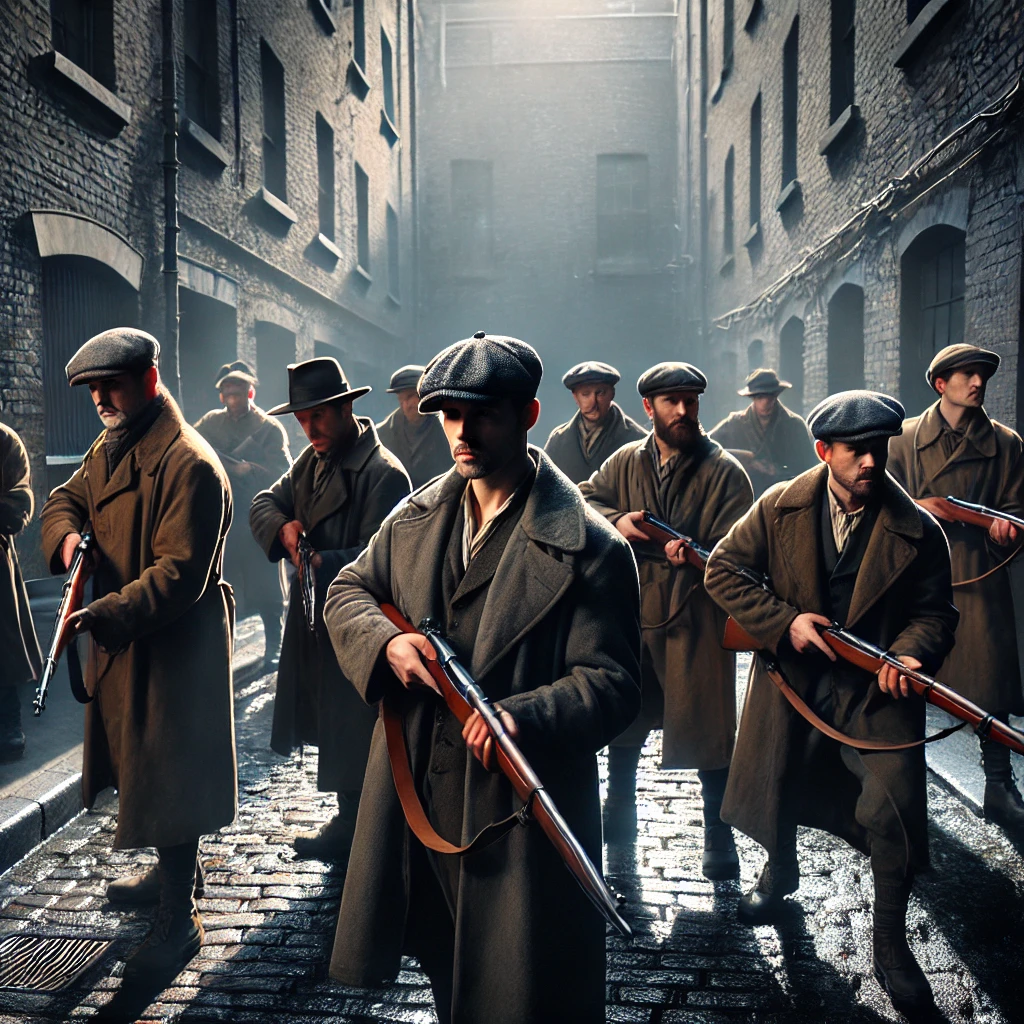
The Irish Republican Army (IRA) Squad, often referred to as “The Twelve Apostles,” was a group of elite operatives whose mission was as daring as it was dangerous. Established during the Irish War of Independence, the Squad specialized in intelligence work, targeted assassinations, and dismantling British counterintelligence efforts. Their clandestine operations and audacious actions made them one of the most feared and effective units in the fight for Irish independence.
This blog delves into the history of the IRA Squad, their tactics, and their lasting impact on Ireland’s struggle for sovereignty. For more on Ireland’s revolutionary heroes, explore the lives of Michael Collins, Dan Breen, and W.B. Yeats.
Who Were the IRA Squad?
The IRA Squad was formed in 1919 by Michael Collins, who served as the Director of Intelligence for the IRA. Known for their precision and effectiveness, the Squad was tasked with eliminating British spies, informants, and key members of the Royal Irish Constabulary (RIC) and the Dublin Metropolitan Police (DMP).
Key Members:
- Tom Kehoe: A fearless leader within the Squad who coordinated many of their operations.
- Vincent Byrne: Known for his skill and discretion during missions.
- Mick McDonnell: A close associate of Collins and a key figure in the Squad’s early operations.
Each member was handpicked by Collins for their loyalty, skill, and ability to operate under extreme pressure.
What Was the IRA Squad Most Known For?
The Squad’s most famous operation occurred on November 21, 1920, a day now remembered as Bloody Sunday. On this day, the Squad assassinated 14 British intelligence agents and informants across Dublin. This action crippled the British intelligence network in Ireland and sent a clear message about the reach and effectiveness of the IRA.
Other Notable Operations:
- Targeting the G Division: The Squad systematically eliminated members of the DMP’s G Division, known for infiltrating the Irish nationalist movement.
- Counterintelligence Work: Beyond assassinations, the Squad disrupted British operations by identifying and neutralizing spies within Irish communities.
The Squad’s success lay in their ability to operate in secrecy, relying on Collins’ vast intelligence network to identify targets and plan operations.
How Did the IRA Squad Operate?
The Squad’s operations were meticulously planned and executed with military precision. They relied on Michael Collins’ intelligence network, which included double agents, informants, and sympathetic civilians. Collins provided the Squad with detailed information about their targets, ensuring their actions were swift and decisive.
Key Tactics:
- Surprise Attacks: The Squad often struck in broad daylight, leveraging the element of surprise.
- Blending In: Members of the Squad dressed as ordinary civilians, making it difficult for British forces to identify them.
- Safe Houses: They used a network of safe houses across Dublin to evade capture and plan missions.
The Squad’s ability to move undetected through Dublin’s streets was a testament to their discipline and Collins’ strategic brilliance.
The Impact of the IRA Squad
The Squad’s actions had a profound effect on the Irish War of Independence. By dismantling British intelligence networks, they leveled the playing field and gave the IRA a significant advantage in the conflict.
Political and Psychological Impact:
- Undermining British Authority: The Squad’s operations demonstrated the vulnerability of British forces, weakening their grip on Ireland.
- Inspiring Resistance: Their daring actions inspired other IRA units across the country to adopt similar tactics.
Controversy Surrounding the Squad
While the Squad’s effectiveness is widely acknowledged, their methods were not without controversy. The targeted assassinations, often carried out in public, drew criticism from some quarters for their brutality.
Moral and Ethical Questions:
- Was the use of targeted assassinations justified in the fight for freedom?
- Did these actions escalate violence and prolong the conflict?
These questions continue to be debated by historians and commentators, reflecting the complexities of revolutionary warfare.
Legacy of the IRA Squad
The legacy of the IRA Squad is one of courage, precision, and an unyielding commitment to Ireland’s independence. Their actions, though controversial, played a pivotal role in bringing about the truce of 1921 and the eventual establishment of the Irish Free State.
Why the IRA Squad Matters Today:
- A Model of Resistance: Their tactics have influenced freedom movements worldwide.
- A Symbol of Sacrifice: The Squad’s members risked everything for the cause of Irish freedom.
- A Reminder of Ireland’s Struggle: Their story is a crucial part of the broader narrative of Ireland’s fight for independence.
Exploring the History of the IRA Squad
For those interested in learning more about the IRA Squad and their role in the Irish War of Independence, Dublin offers several landmarks and resources:
- Dublin Castle: A key British stronghold targeted by the IRA during the war.
- Glasnevin Cemetery: The final resting place of many revolutionary figures.
- Michael Collins Centre: A museum dedicated to the life and work of Collins, including his role in forming the Squad.
The Shadow Warriors of Irish Freedom
The IRA Squad embodied the daring and determination of Ireland’s fight for independence. Their actions, while controversial, were instrumental in weakening British control and paving the way for a free Ireland.
For more on Ireland’s revolutionary past and cultural heritage, visit Secret Ireland and explore the stories of Michael Collins, Dan Breen, and other icons of Irish history.
As Michael Collins himself said:
“The Squad was our answer to the forces of repression. It was a necessary evil in the fight for freedom.”
Their legacy continues to inspire and challenge us, reminding us of the sacrifices made in the pursuit of liberty. Sláinte! (Cheers!) to the shadow warriors who shaped Ireland’s destiny.
The Human Side of the IRA Squad
While the IRA Squad is often remembered for their tactical brilliance and revolutionary zeal, it is important to recognize the human aspect of their work. These men operated under immense pressure, constantly pursued by British forces, and lived with the knowledge that a single mistake could cost them their lives—or the lives of their comrades.
Life in the Shadows
The Squad’s members lived in constant secrecy, moving between safe houses and relying on the loyalty of ordinary Irish citizens who provided shelter and support. Despite the fear and danger, they formed close bonds, united by a shared purpose and trust in one another.
Personal Sacrifices
Many members of the Squad gave up their families, personal ambitions, and any semblance of a normal life for the cause. They understood that their actions came with a heavy moral and psychological toll, yet they persisted, believing in the necessity of their mission.
The Role of Michael Collins in the Squad’s Success
Michael Collins was the mastermind behind the Squad’s creation and operations. Known for his charisma and strategic genius, Collins provided the Squad with not just intelligence but also the moral support needed to carry out their dangerous work.
Collins’ Philosophy of Warfare
Collins believed in striking where the enemy was weakest and using intelligence to outmaneuver a stronger opponent. The Squad exemplified this philosophy, operating as a small, mobile, and highly effective unit that could adapt quickly to changing circumstances.
Collins’ Trust in the Squad
Collins’ leadership style was hands-on, but he also trusted the Squad to execute their missions with minimal interference. This balance of guidance and autonomy allowed the Squad to operate efficiently while maintaining morale.
Women’s Role in Supporting the Squad
Though the Squad was composed of men, their success was impossible without the support of women in the revolutionary movement. Women played crucial roles as couriers, informants, and safe house operators, risking their lives to ensure the Squad could continue their work.
Key Contributions of Women:
- Kathleen Clarke: A leader in the revolutionary movement who helped organize support networks.
- Molly O’Reilly: A courier who carried messages and intelligence to the Squad.
- Catherine Byrne: Provided safe havens for Squad members and helped transport weapons.
The contributions of these women highlight the collective effort behind Ireland’s fight for independence.
The IRA Squad’s Place in History
The Squad’s story is a critical chapter in the broader narrative of the Irish War of Independence. Their actions demonstrated that a small, dedicated group could achieve significant results, even against a vastly superior enemy. However, their methods also raise important questions about the morality and consequences of revolutionary warfare.
Lessons from the Squad’s Legacy:
- The Power of Intelligence: The Squad’s success underscores the importance of intelligence in modern warfare.
- The Human Cost of Revolution: Their sacrifices remind us of the personal toll of fighting for freedom.
- The Complexity of History: The Squad’s story is not one of unmitigated heroism; it is a nuanced tale of courage, controversy, and conviction.
Modern Perspectives on the Squad
As Ireland continues to grapple with its revolutionary past, the IRA Squad remains a subject of debate and reflection. For some, they are heroes who fought valiantly for Irish freedom; for others, their actions represent the harsh realities of a violent struggle.
Commemorating the Squad:
- Historical Documentaries: Films and TV series have explored the Squad’s role in the War of Independence, offering both critical and celebratory perspectives.
- Books and Memoirs: Firsthand accounts, like those of Squad members and their contemporaries, provide valuable insights into their experiences.
- Public Discussions: Debates about the Squad’s tactics and legacy are an ongoing part of Ireland’s reckoning with its history.
Explore the Stories of Ireland’s Revolutionaries
To fully understand the IRA Squad’s significance, it is essential to place their story within the context of Ireland’s broader fight for independence. For a deeper dive into the lives of those who shaped Ireland’s destiny, read about Michael Collins, Dan Breen, and other icons of Irish history.
Conclusion: The Shadow Warriors Who Shaped a Nation
The IRA Squad was more than a group of operatives; they were a symbol of Ireland’s resilience and determination in the face of overwhelming odds. Their actions, though controversial, were instrumental in dismantling British control and paving the way for a free Ireland. The sacrifices they made and the legacy they left continue to resonate, reminding us of the complexities and costs of revolution.
As Michael Collins once said:
“In the struggle for freedom, nothing is too great or too small to undertake.”
The Squad lived by these words, taking on the most dangerous missions to advance Ireland’s fight for independence. Their story is one of courage, strategy, and an unwavering belief in the cause of freedom.
Sláinte! (Cheers!) to the shadow warriors whose bravery helped shape the Ireland we know today.
About the Author
Seamus
Administrator
Seamus O Hanrachtaigh is an Irish historian, explorer, and storyteller passionate about uncovering the hidden gems and forgotten heritage of Ireland. With years of hands-on exploration across every county — from misty folklore-rich glens and ancient trails to secret coastal paths and vibrant traditional music sessions — he brings authentic, experience-backed insights to travelers seeking the real Ireland beyond the tourist trails. A regular contributor to Irish Central and other publications, Seamus specializes in Celtic traditions, genealogy, Irish history, and off-the-beaten-path road trips. Every guide on SecretIreland.ie draws from personal adventures, local conversations, rigorous research, and fresh 2026 discoveries to deliver trustworthy content filled with genuine craic and hidden stories that big guidebooks miss. When not chasing the next undiscovered spot, Seamus enjoys trad music sessions and fireside storytelling with fellow enthusiasts who value Ireland’s living culture.