The 1916 Irish Rebellion, known as the Easter Rising, was a moment of unshakable defiance, an eruption of revolutionary zeal fueled by centuries of oppression and a long-suppressed hunger for self-determination.
It wasn’t just about armed insurrection; it was a poetic declaration of a nation’s right to exist on its own terms. The streets of Dublin became the crucible of a dream, where blood mingled with idealism, and the echoes of gunfire carried the voices of those who refused to kneel.
What unfolded during those six April days in 1916 reshaped Ireland forever, setting the stage for later struggles, victories, betrayals, and, ultimately, a fractured yet undeniable path toward sovereignty.
What Caused the Irish Rebellion in 1916?
The 1916 Rising was the product of centuries of British colonial rule, famine-induced devastation, and the brutal suppression of Irish identity and culture. Home Rule had been promised but repeatedly delayed, and when World War I broke out, Irish nationalists saw an opportunity while Britain was distracted. The militant Irish Republican Brotherhood (IRB) joined forces with the Irish Volunteers and James Connolly’s socialist Irish Citizen Army, believing that bloodshed would ignite the embers of revolution. Years of discontent, radicalization, and the influence of European nationalist movements all coalesced into a singular moment of defiance.
Who Planned the 1916 Rising?
The Rising was meticulously planned by the Military Council of the IRB, which included key figures such as Patrick Pearse, Thomas Clarke, Joseph Plunkett, Sean Mac Diarmada, Thomas MacDonagh, Éamonn Ceannt, and James Connolly. Each of these men brought a unique ideological and strategic contribution to the rebellion—Pearse, the poet and educator, saw it as a sacrificial act of martyrdom; Connolly, the socialist, sought the liberation of Ireland’s working class; and Plunkett, the strategist, worked tirelessly on the military details. Roger Casement, a former British diplomat, sought German support and attempted to smuggle arms into Ireland, but his efforts failed when the shipment was intercepted.
Why Did the Irish Rebellion Start?
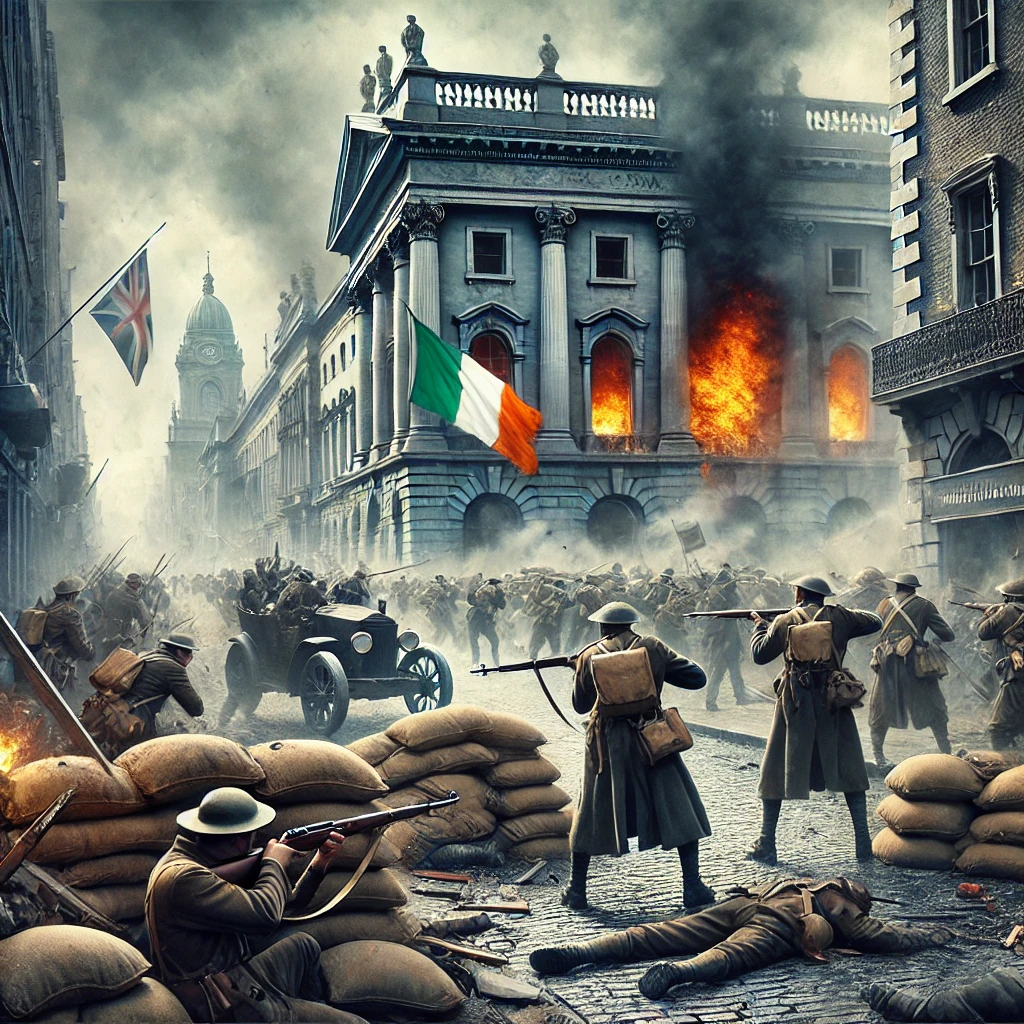
The rebellion began on Easter Monday, April 24, 1916, with Irish forces seizing key locations in Dublin and proclaiming an Irish Republic. The planners saw this as a moment to strike while Britain was preoccupied with World War I. They believed that once the Rising started, the Irish population would rise en masse, but widespread support never materialized. Instead, the rebels found themselves isolated, their forces outnumbered, and the British military’s response swift and brutal.
Who Was Executed in the 1916 Rising?
Following the collapse of the Rising, the British government exacted ruthless retribution. Sixteen leaders of the rebellion, including Patrick Pearse, James Connolly, Thomas Clarke, and Joseph Plunkett, were executed in Kilmainham Gaol. Connolly, gravely wounded, was tied to a chair and shot—a moment that turned him into a legend. However, two leaders, Éamon de Valera and Countess Markievicz, were spared; De Valera due to his American birth and Markievicz because of her gender. The executions backfired, turning public sentiment in favor of the rebels and transforming them from defeated revolutionaries into revered martyrs.
How Many People Died in the 1916 Irish Rebellion?
The Rising resulted in approximately 485 deaths, including civilians, rebels, and British forces. Over 2,600 people were wounded, and large parts of Dublin were reduced to rubble. The heaviest casualties were among civilians, many caught in the crossfire or killed by indiscriminate British artillery and sniper fire. The destruction of key city areas, particularly Sackville Street (now O’Connell Street), highlighted the overwhelming force used to crush the rebellion.
How Many Irish Were Killed by the British?
Of the 485 people killed, around 260 were civilians, 143 were British forces (including police), and 82 were Irish rebels. Many of the civilian casualties were caused by British machine-gun fire and shelling, as well as sniper attacks. The British response was indiscriminate and brutal, a strategy designed to send a clear message: rebellion would not be tolerated.
Who Won the Irish Rebellion of 1916?
Militarily, the British crushed the rebellion, forcing the rebels to surrender after six days of fighting. But in the long run, the Rising was a victory for the nationalist cause. The harsh British response, especially the executions, radicalized public opinion and set Ireland on the path to independence. Within a few years, the movement for full separation from Britain gained momentum, leading to the Irish War of Independence in 1919 and the eventual establishment of the Irish Free State.
What Is the Background of the Easter 1916?
Ireland had been under British rule for centuries, with countless uprisings suppressed, most notably the 1798 Rebellion and the 1848 Young Irelander Rebellion. The Home Rule movement had gained traction by the late 19th century, but its progress was repeatedly blocked by British Unionists and the outbreak of World War I. By 1916, radical nationalists saw rebellion as the only way forward. Inspired by revolutionary movements across Europe and America, they believed that a violent act of defiance would awaken the Irish consciousness and break the chains of colonial rule.
How Did the Irish Conflict Start?
The Irish conflict was a centuries-long struggle between British rule and Irish nationalism. The Rising of 1916 was not an isolated event but a culmination of resistance efforts stretching back to the Norman invasion, the Cromwellian conquest, and the Penal Laws.
The Irish Republican Brotherhood, formed in the mid-19th century, carried the revolutionary flame, while political movements like Sinn Féin worked within the parliamentary system. The Rising was an attempt to force the issue of independence through armed rebellion, a strategy that would define the next decade of Irish history.
What Started the Irish Revolution?
The Irish Revolution, which followed the Rising, was fueled by the backlash to Britain’s heavy-handed response. The executions and mass arrests galvanized support for Sinn Féin, which won a landslide victory in the 1918 general election.
The Irish War of Independence (1919-1921) erupted as the Irish Republican Army (IRA) launched a guerrilla campaign against British forces. The Anglo-Irish Treaty of 1921 led to the partition of Ireland, but the revolutionary spirit of 1916 remained a powerful symbol of resistance.
10 Facts About the 1916 Rising
- The Proclamation of the Irish Republic was read by Patrick Pearse outside the General Post Office (GPO) on Easter Monday.
- The rebels expected widespread public support, but most Dubliners were initially indifferent or hostile.
- James Connolly’s Irish Citizen Army was heavily involved, bringing a socialist dimension to the rebellion.
- The British used the gunboat Helga to shell rebel positions from the River Liffey.
- Many British soldiers were Irish-born, leading to tragic fratricidal battles.
- The Rising was supposed to be nationwide, but plans fell apart due to confusion and British countermeasures.
- The destruction of key parts of Dublin left thousands homeless.
- Roger Casement was arrested in Kerry after a failed attempt to land German weapons.
- The execution of the leaders was a turning point in Irish history, sparking national outrage.
- The Rising laid the foundation for the Irish War of Independence.
Conclusion
The 1916 Rising was not just an armed revolt; it was a declaration of Ireland’s refusal to be erased. The sacrifice of the rebels, the brutality of the British response, and the shifting tides of public opinion all conspired to transform this seemingly doomed rebellion into a seminal moment in Irish history.
The flames of Easter Week never truly died—they fueled a struggle that would echo through the decades, shaping the nation that Ireland would become.
About the Author
