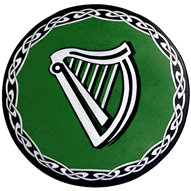

Celtic symbols don’t just decorate. They don’t just sit pretty on jewelry or line the edges of old books. These marks, these spirals, these sacred knots—they hold weight. They whisper the past. They connect the living with the dead, the seen with the unseen.
To the Celts, symbols weren’t just designs. They were maps of the soul, blueprints of the universe, a way to say something that words couldn’t. They were etched into standing stones, woven into fabric, carved into weapons, and painted onto skin.
Some of these symbols date back thousands of years. They were there before Ireland had a name, before Scotland found its voice, before Britain even knew what it was. They survived wars, conquests, conversions, and the slow creep of time. They are still here. Still speaking. Still waiting for us to remember what they mean.
Let’s talk about them.
The Most Powerful Symbols in Celtic Culture
The Triskelion (Triple Spiral)
If there’s one Celtic symbol that captures the raw energy of life itself, it’s the Triskelion. Three spirals, endlessly flowing, moving forward but never ending.
This symbol is as old as the wind, appearing on Neolithic tombs like Newgrange in Ireland, predating even the Celts themselves. It represents movement, progress, and the endless cycle of life, death, and rebirth.
The Celts saw the world in threes—the earth, the sea, and the sky. The past, the present, and the future. The physical, the spiritual, and the mental. The Triskelion is not just a symbol—it’s a philosophy, a law of existence.
You want a Celtic symbol with power? This is it.
The Celtic Knot (Endless Love and Strength)
No beginning. No end. Just an eternal, interwoven path.
The Celtic Knot is found everywhere—on ancient manuscripts, on stone crosses, on modern tattoos that try (and often fail) to do them justice. They represent love, loyalty, and eternity, making them a favorite for wedding rings and family crests.
But don’t mistake them for simple decoration. They are sacred geometry, a visual spell that binds the seen with the unseen. They remind us that everything is connected—that nothing truly ends, and nothing truly begins.
The Claddagh (Love, Friendship, and Loyalty)
A heart, held by two hands, topped with a crown. A symbol born in Galway, carried across the world.
The Claddagh Ring is one of the few Celtic symbols that survived colonization and modernity, still worn with meaning today. It stands for love (the heart), friendship (the hands), and loyalty (the crown).
How you wear it matters:
- On the right hand, crown outward = Looking for love.
- On the right hand, crown inward = In a relationship.
- On the left hand, crown inward = Married.
It’s not just jewelry. It’s a code, a silent message.
The Celtic Tree of Life (Crann Bethadh)
To the Celts, trees weren’t just part of nature. They were nature. They held wisdom, strength, and the connection between the earth below and the heavens above.
The Celtic Tree of Life stands tall, unbreakable, its roots deep in the earth, its branches reaching for the sky. It’s the bridge between the physical and the spiritual, between this world and the next.
It’s a symbol of balance, renewal, and the unshakable force of life itself.
The Awen (Symbol of Inspiration)
Three rays of light, converging in the center. This is the Awen, the Celtic symbol of creativity, wisdom, and divine inspiration.
It was worn by bards, poets, and druids—those who were seen as having a direct line to the spiritual world.
It represents the three elements of existence: land, sea, and sky. It also reflects the balance between male and female energy, between the forces that shape the universe.
Want to tap into ancient creativity? This is your symbol.
Frequently Asked Questions About Celtic Symbols
What is the Most Powerful Celtic Symbol?
That depends on what you need.
- For strength and eternity: The Celtic Knot.
- For inspiration and wisdom: The Awen.
- For progress and change: The Triskelion.
- For connection to nature and the universe: The Tree of Life.
Each one is powerful in its own way. The real power lies in knowing which one speaks to you.
How Do I Know What My Celtic Symbol Is?
You don’t choose it. It chooses you.
Look at them. Read about them. One will feel different. One will make you stop and look again.
That’s your symbol.
What is the Celtic 3 Symbol?
That’s the Triskelion. Three spirals, flowing endlessly. It represents motion, evolution, and the eternal cycle of life, death, and rebirth.
It’s a symbol of power, of resilience, of never standing still.
What is the Celtic Healing Symbol?
The Awen is often seen as a healing symbol, representing balance and harmony. But in ancient times, trees were the real healers.
The Celtic Tree of Life was a place of power, where people sought spiritual and physical healing.
What is the Lucky Celtic Symbol?
The Claddagh is often considered a lucky symbol, especially in love.
But if you’re looking for protection and prosperity, the Triquetra (Threefold Knot) is another powerful symbol for luck and divine guidance.
Is Celtic Irish or Scottish?
Both.
The Celts were an ancient people who lived across Ireland, Scotland, Wales, and parts of Europe. Their culture shaped both Irish and Scottish traditions, and their symbols are shared between them.
But if you’re talking about Celtic symbols in modern culture, Ireland holds onto them more fiercely than most.
What is the Irish Celtic Symbol?
The Celtic Cross is one of the most recognizable Irish symbols.
A combination of the Christian cross and ancient sun worship, it represents faith, heritage, and the blending of old and new beliefs.
You’ll see it everywhere in Ireland—from graveyards to jewelry, from ancient ruins to modern-day tattoos.
What is the Celtic Tree of Life?
The Crann Bethadh is the sacred tree, the pillar of existence. It’s the connection between all things—earth, sky, past, future.
It represents renewal, immortality, and balance.
What is the Celtic Heaven Symbol?
The Spiral of Life is often seen as a symbol of the journey beyond death. It represents the soul’s journey through the physical world, the spiritual realm, and beyond.
To the Celts, heaven wasn’t a distant place—it was always here, woven into the land, the trees, the wind.
Why Celtic Symbols Still Matter
These symbols weren’t created for fashion, for branding, for empty decoration. They were tools, weapons, guides. They were prayers and spells, philosophies carved in stone.
And they still are.
You don’t just wear them. You carry them. You listen to them. And if you let them, they speak back.
The Echo of Celtic Symbols in the Modern World
Celtic symbols were never meant to be static. They weren’t created to sit inside history books or lie lifeless on a piece of jewelry. They were meant to live. To breathe. To evolve. And somehow, in a world that has forgotten so much of its past, these symbols have refused to be erased.
They show up on flags, tattoos, monuments, street art, jewelry, even corporate logos—but the question remains: do people truly understand them? Or have they become just another aesthetic, stripped of their weight, their meaning, their ancient purpose?
If you wear a Claddagh, do you know what it’s saying?
If you carve a Triskelion into your skin, do you understand what it represents?
If you look at a Celtic Cross, do you see just a religious emblem, or do you see the echoes of pre-Christian Ireland, when the sun and the earth were gods in their own right?
These symbols didn’t survive for thousands of years by accident. They survived because they still mean something. Because somewhere, deep in our bones, we know they still speak to something bigger than us.
The Ancient Purpose of Celtic Symbols
The Celts didn’t use symbols lightly. Every mark, every line, every intricate knot had a purpose. Some symbols were carved into weapons for strength. Others were painted on bodies before battle, not just for intimidation but for spiritual protection. Some were even used to curse enemies—because the Celts understood that words, symbols, and intent had power.
The Druids, the ancient priests of the Celtic world, knew that symbols were more than just art. They were portals. They connected this world to the next, the living to the dead, the past to the future.
Today, we may not have Druids standing in stone circles, whispering the secrets of the universe, but we do have their legacy. Their symbols are still here. And if you know how to look, how to listen, you’ll realize that they never really left.
Celtic Symbols in the Modern Fight for Identity
For centuries, the Irish and Scottish were told to forget. Their languages were outlawed, their traditions ridiculed, their stories rewritten by those who sought to erase them.
But some things refuse to die.
These symbols became more than just ancient carvings—they became acts of defiance. Wearing a Celtic symbol was a way of holding onto something that couldn’t be stolen. It was a way of saying: We are still here. Our stories still matter.
And even now, in a world that moves too fast, in a culture that forgets too easily, these symbols are still fighting to be remembered.
Look around you. They’re still being tattooed onto skin. They’re still being engraved into wedding rings. They’re still standing on grave markers, on flags, on the walls of homes where people refuse to forget where they came from.
And that? That is power.
How to Use Celtic Symbols Today
If you want to carry a Celtic symbol, do it. But do it with understanding.
Don’t just wear it because it looks cool. Learn its story. Understand what it meant to the people who first carved it into stone, who painted it onto shields, who carried it into battle or whispered it into the wind as a prayer.
If you’re drawn to the Triskelion, ask yourself: What am I evolving toward?
If the Celtic Tree of Life speaks to you, ask: Am I grounded? Am I reaching for something higher?
If you wear a Claddagh, remember: Love, loyalty, and friendship are not just words. They are choices.
Symbols are tools. They can remind you of who you are. They can anchor you to something bigger than yourself. They can give you strength when you need it, clarity when you’re lost, protection when you feel vulnerable.
But only if you respect them. Only if you listen.
Because if there’s one thing we should have learned by now, it’s this:
Celtic symbols are not just decoration.
They are alive.
About the Author
