
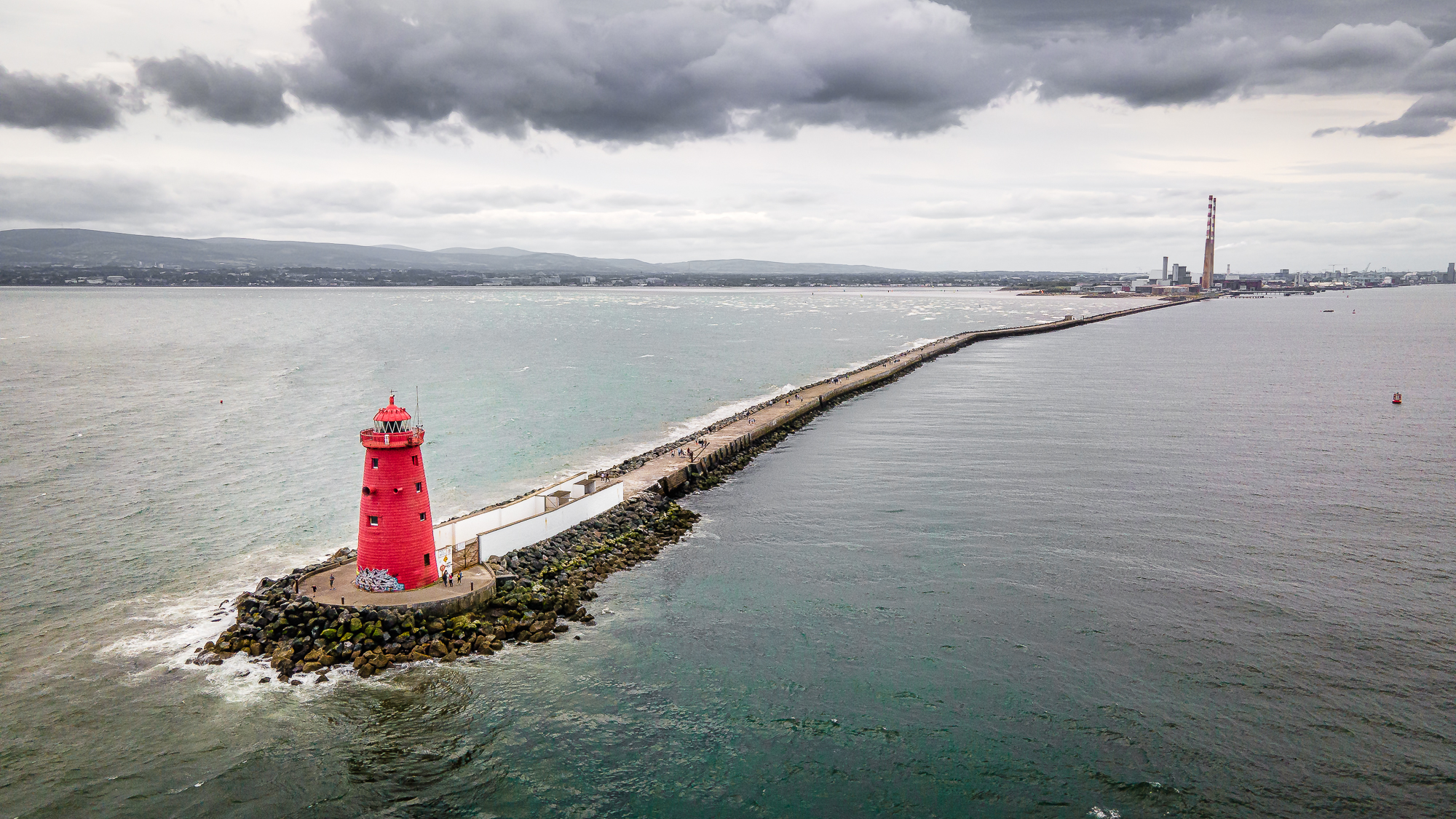
Dublin is a city that never stops moving. But if you know where to look, you can find places where time slows, where the chaos of the streets gives way to the rhythm of the sea, and where the horizon stretches endlessly beyond the edge of the land. Poolbeg Lighthouse is one of those places.
Sitting at the end of the Great South Wall, Poolbeg Lighthouse is more than just a navigational beacon—it’s a symbol of resilience, a piece of Dublin’s maritime history, and one of the city’s most unique walks. The Poolbeg Lighthouse walk is a pilgrimage of sorts, a journey that takes you from the industrial docks to the vast openness of Dublin Bay. With each step, the sounds of the city fade, replaced by the crashing of waves and the distant hum of passing ships.
Whether you’re here for the Poolbeg Lighthouse run, a quiet escape, or a deep dive into Poolbeg Lighthouse history, this place has something special to offer.
Poolbeg Lighthouse Walk: The Journey to the Edge of Dublin
The Poolbeg Lighthouse walk is not just a stroll—it’s an experience. The walk stretches approximately 4 kilometers (2.5 miles) each way, leading visitors along the Great South Wall, one of the longest sea walls in Europe. The path begins near Ringsend and takes you through a changing landscape—first past Dublin Port’s industrial skyline, then onto the exposed wall where the sea surrounds you on both sides.
A Poolbeg Lighthouse walk map will show you the straightforward but visually stunning route:
- Start at the Great South Wall car park near Ringsend.
- Follow the long, straight path along the wall, watching as the Poolbeg Chimneys loom overhead.
- Continue towards the lighthouse, where the sea opens up into Dublin Bay.
- Reach the bright red lighthouse, a striking contrast against the blue water and sky.
Walking out to the lighthouse feels like leaving the city behind, step by step. The closer you get, the more you realize just how far from the world you’ve come.
Poolbeg Lighthouse History: Dublin’s Maritime Guardian
Built in 1768, Poolbeg Lighthouse has stood for over 250 years, guiding ships safely into Dublin Port. The original lighthouse was oil-fueled before being replaced with a more modern structure in the 1820s.
The Great South Wall, on which the lighthouse stands, was once the longest sea wall in the world. It was constructed in the 18th century to prevent silting in Dublin Bay, allowing larger ships to navigate safely into the port. The wall itself was built using massive granite blocks, many of which were cut from Dalkey Quarry, adding another layer of Dublin history to this stretch of land.
Despite the changes in shipping technology, Poolbeg Lighthouse remains an active beacon, still casting its guiding light across Dublin Bay. Its bright red exterior makes it one of the most recognizable lighthouses in Ireland.
How to Get to Poolbeg Lighthouse by Bus and Car
Getting to Poolbeg Lighthouse takes a bit of effort, but that’s part of what makes it special.
- By Bus: While there is no direct bus to the lighthouse itself, you can take Dublin Bus routes 1, 15A, or 15B to Ringsend and start the walk from there.
- By Car: Drive to the Great South Wall car park, located near Pigeon House Road. From there, it’s a 4-kilometer walk to the lighthouse.
- By Bike: Many cyclists park their bikes at the beginning of the Great South Wall and continue the rest of the way on foot.
There are no Poolbeg Lighthouse tickets required—this is one of Dublin’s best free experiences, making it accessible to everyone.
Poolbeg Lighthouse Run: A Route Like No Other
For runners looking for a dramatic coastal route, the Poolbeg Lighthouse run is one of the most scenic in Dublin.
- The flat, straight path of the Great South Wall makes it an excellent route for tempo runs and endurance training.
- The sea air and open sky provide a refreshing alternative to city runs.
- It’s a total of 8 kilometers (5 miles) out and back, making it a great mid-distance workout.
However, runners should be aware that wind conditions can be strong, especially in winter. The wall is fully exposed to the elements, meaning it can be both exhilarating and challenging.
Poolbeg Lighthouse Parking & Facilities
- Parking: Free parking is available near Pigeon House Road, but spaces are limited. Many visitors park in Ringsend and walk from there.
- Toilets & Facilities: There are no public toilets or shops on the walk, so come prepared.
For the best experience, visit early in the morning or at sunset, when the light turns the sea and sky into a painter’s dream.
FAQs About Poolbeg Lighthouse & Dublin’s Maritime Legacy
How long is the Poolbeg Lighthouse walk?
The Poolbeg Lighthouse walk is approximately 8 kilometers (5 miles) round trip, taking about 1.5 to 2 hours at a moderate pace.
Are the Poolbeg chimneys in use?
No, the Poolbeg chimneys, once part of the Poolbeg Power Station, are no longer in operation. However, they remain iconic Dublin landmarks, visible from almost anywhere in the city.
What is the most beautiful lighthouse in Ireland?
Many consider Fastnet Lighthouse off the coast of Cork to be Ireland’s most dramatic lighthouse. However, Poolbeg Lighthouse is arguably the most famous lighthouse in Dublin, with its striking red exterior and historic setting.
Where is Poolbeg?
Poolbeg is located in Dublin Bay, east of Ringsend and Sandymount, at the end of the Great South Wall.
Where do I start the lighthouse walk?
Start at the Great South Wall car park near Pigeon House Road, or for a longer route, start from Ringsend and follow the Liffey’s south bank.
What is the longest walk in Ireland?
The Beara Way and Wicklow Way are among the longest walking trails in Ireland, both extending over 100 kilometers.
What is the abandoned power plant in Dublin?
The Pigeon House Power Station, located near the start of the Poolbeg Lighthouse walk, is an abandoned electricity generating station that closed in the 1970s.
Why are there two chimneys?
The Poolbeg Chimneys were part of the power station’s expansion and were used for venting emissions. Today, they are preserved as part of Dublin’s industrial heritage.
What’s in Ringsend?
Ringsend is a historic Dublin neighborhood, home to traditional pubs, Dublin Port, and the start of the Poolbeg Lighthouse walk.
Final Thoughts: Why Poolbeg Lighthouse Should Be on Your Dublin Bucket List
Dublin is a city defined by its relationship with the sea. The ships that brought commerce, the tides that shaped its history, the docks that built its industries—this is a city that breathes salt air. Poolbeg Lighthouse stands as a silent guardian at the edge of that story, watching over the waves that carry Dublin’s past and future alike.
Whether you’re a runner chasing the horizon, a history lover exploring Dublin’s maritime past, or just someone looking for a place to escape, the Poolbeg Lighthouse walk is one of the city’s great hidden treasures.
For more great Dublin escapes, check out:
- Porterstown Park: Dublin’s Hidden Green Sanctuary
- Glencar Waterfall: Ireland’s Enchanting Cascade
- The Mountains of the Beara Peninsula
Go. Walk the wall. Stand at the edge of Dublin. And let the sea remind you that the city is only part of the story.
About the Author
