(c) @ ireland and pegs cottage
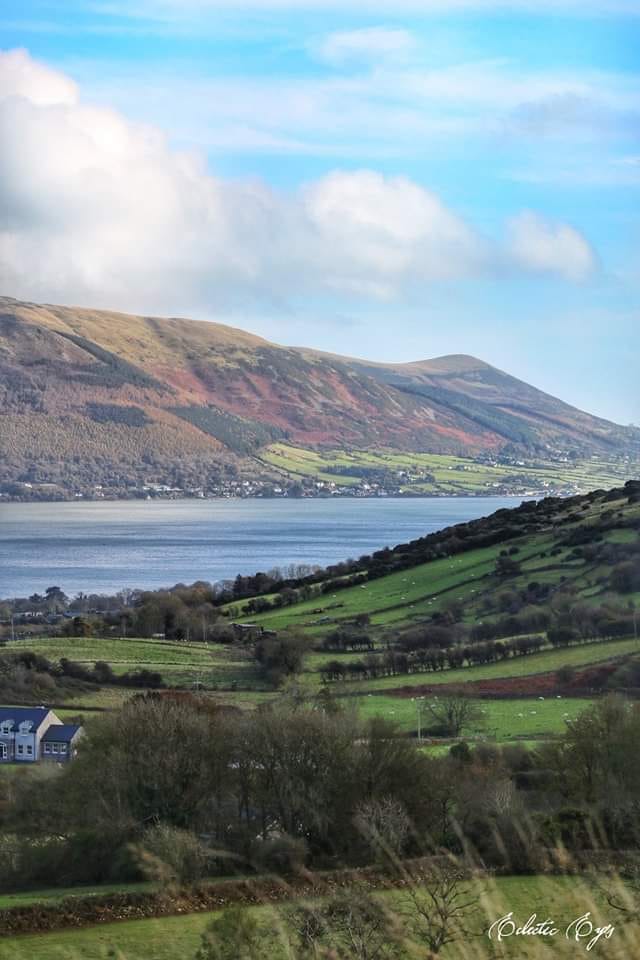
The picturesque village of Omeath in County Louth is surprisingly rich in history and legend, even for Ireland! It nestles at the foot of the Cooley Mountains, looking out over Carlingford Lough to the Mourne Mountains, and is divided into ten townlands.
There’s Ardaghy where you’ll find the homestead of famous blind poet Seamus MacCuarta, also a turf bog road where you’ll see a Mass Rock, a legacy of penal times when priests were forbidden to say Mass but did so daily under penalty of death from this rock.
Omeath secrets
In summer months jarveys (drivers of jaunting cars) transport pilgrims to The Calvary to pray at the Shrine of St Jude, the patron saint of hopeless cases. Also at The Calvary is the historic Way of the Cross, the beautiful Lourdes Grotto, the image of the Divine Mercy and the Fr. Gentili Crypt and Gardens. At the fields of Bavan you’ll see where the first recorded Gaelic football match was hosted in 1750, and at Cornamucklagh you’ll find Flagstaff View, a fabulous vantage point over Carlingford Lough, the Mountains of Mourne and the Newry Canal as it meanders into Newry.
History of Omeath
Corrakit is where you’ll find the Grave of the Long Woman. Knocknagoran is at the heart of Omeath and here you’ll find coast guard cottages and a hotel built in 1840 to accommodate tourists and smugglers from Belfast to socialise and trade at the crossroads each Sunday.
Lislea holds the secrets of the last Gaelic speakers of the area. Their homesteads can still be visited here and stories heard of the flight of the Fadgies (Fruit and Fish Peddlers) from Omeath to Belfast, taking with them the Gaelic tongue that can still be heard in Belfast today.
Tullagh is a memory to the hard times of yesteryear with its Famine Bridge and Clermont Pass, a road cut out of the side of the mountain with voluntary labour during the Second World War, or ‘The Emergency’ as WWII was known in Ireland. Also in Tullagh there’s a field where shamrock never grows.
About the Author
