By Secret Ireland Team | February 18, 2026
The Ancient Origins: Bronze Age Beginnings of Irish Jewellery
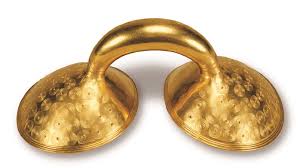
The history of Irish jewellery dates back over 4,500 years to the Bronze Age (circa 2500–500 BC), when early artisans began crafting ornate pieces from gold, bronze, and amber. Ireland’s abundant natural resources, particularly gold from the Wicklow Mountains, fueled this early industry.
Archaeological finds, such as lunulae—crescent-shaped gold collars—reveal the sophistication of these ancient craftspeople. These pieces were not merely decorative; they held status and spiritual significance, often buried with the elite in passage tombs like Newgrange.
During this era, jewellery Ireland featured simple yet elegant designs, including beads, pins, and armlets. The influence of trade with continental Europe introduced new techniques, like sheet metal working, leading to more elaborate forms.
By the Late Bronze Age, torcs—twisted gold neck rings—emerged as symbols of power and divinity. These ancient Irish gold torcs, with their intricate twists and terminals, foreshadowed the Celtic artistry that would define later periods. Today, replicas of these bronze age Irish jewellery pieces are popular among collectors seeking a connection to Ireland’s prehistoric roots.
@woman.in.wool Thank you @fadajewellery for the beautiful necklace! . #jewellery #ireland #irish #history #vintage
As we explore the history of Irish jewellery, it’s clear that these early creations laid the foundation for the symbolic depth seen in Celtic jewellery Ireland. The use of gold, a metal associated with the sun and immortality, underscores the spiritual role of jewellery in ancient societies. Modern interpretations often incorporate these elements, blending history with contemporary style in pieces like gold Celtic torc necklaces.
The Celtic Era: Knots, Spirals, and Mythical Symbols
The arrival of the Celts around 500 BC marked a golden age in the history of Irish jewellery. Celtic artisans excelled in metalwork, introducing the La Tène style characterized by flowing curves, spirals, and interlacing patterns. These designs, found in artefacts like the Ardagh Chalice and the Tara Brooch, symbolized the interconnectedness of life, nature, and the cosmos. The Trinity knot jewellery, or triquetra, represented the threefold nature of existence—past, present, future—or the Christian Holy Trinity after St. Patrick’s arrival.
Celtic knots, with their endless loops, embody eternity and infinity, making them staples in Celtic jewellery Ireland. Pieces like brooches and pendants often featured animal motifs, such as birds and serpents, drawing from pagan mythology. The Iron Age (600 BCE–400 AD) saw elaborate torcs and fibulae (safety-pin brooches) adorned with enamel and glass inlays. Famous examples include the Broighter Hoard, a collection of gold ornaments discovered in Northern Ireland, showcasing the pinnacle of Celtic craftsmanship.
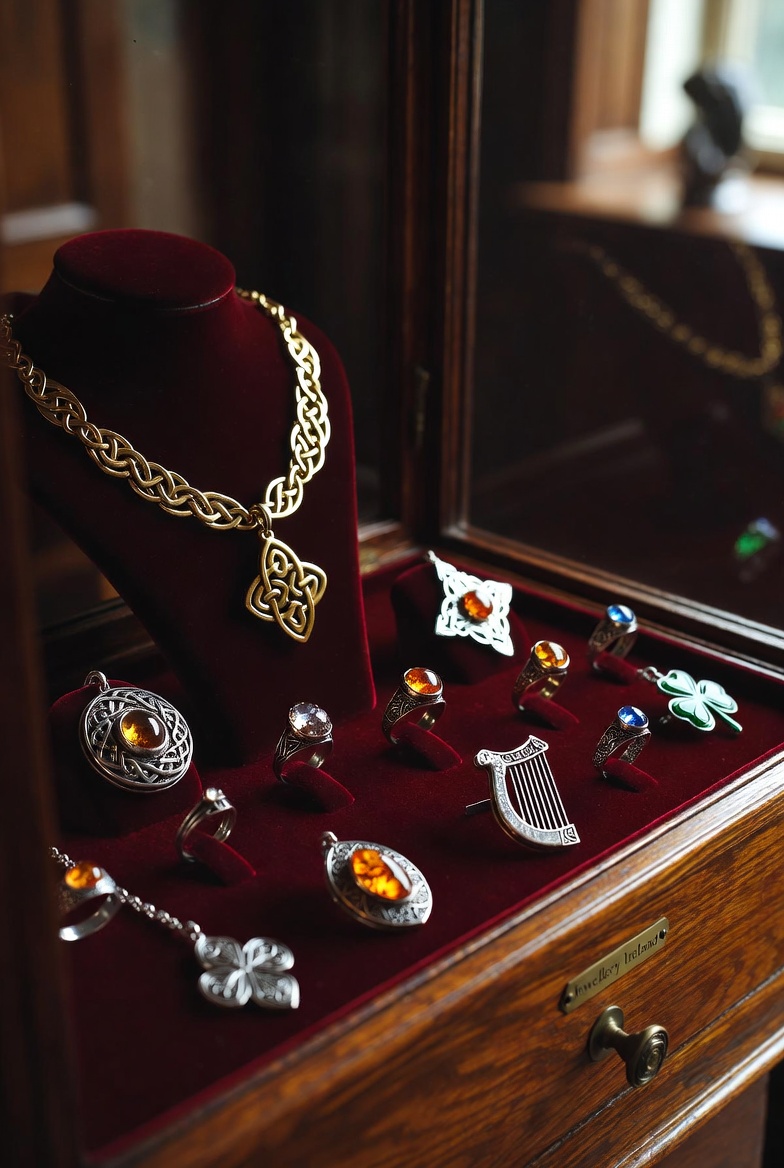
In jewellery Ireland, the Celtic cross merged pagan sun wheels with Christian symbolism, becoming a beloved motif in pendants and rings. Ogham jewellery, inscribed with Ireland’s ancient script, added a personalized touch, often encoding names or blessings. These symbols continue to inspire traditional Irish jewellery, where artisans recreate Celtic spirals in silver and gold, appealing to those seeking authentic Celtic jewellery Ireland.
The Celtic period’s influence extends beyond aesthetics; it reflects a society where jewellery denoted rank, alliances, and spiritual beliefs. Warriors wore torcs as talismans, while druids used symbolic pieces in rituals. This era’s legacy is evident in modern Irish Celtic rings and necklaces, which blend historical accuracy with contemporary appeal.
Medieval and Viking Influences: Fusion of Cultures in Irish Jewellery
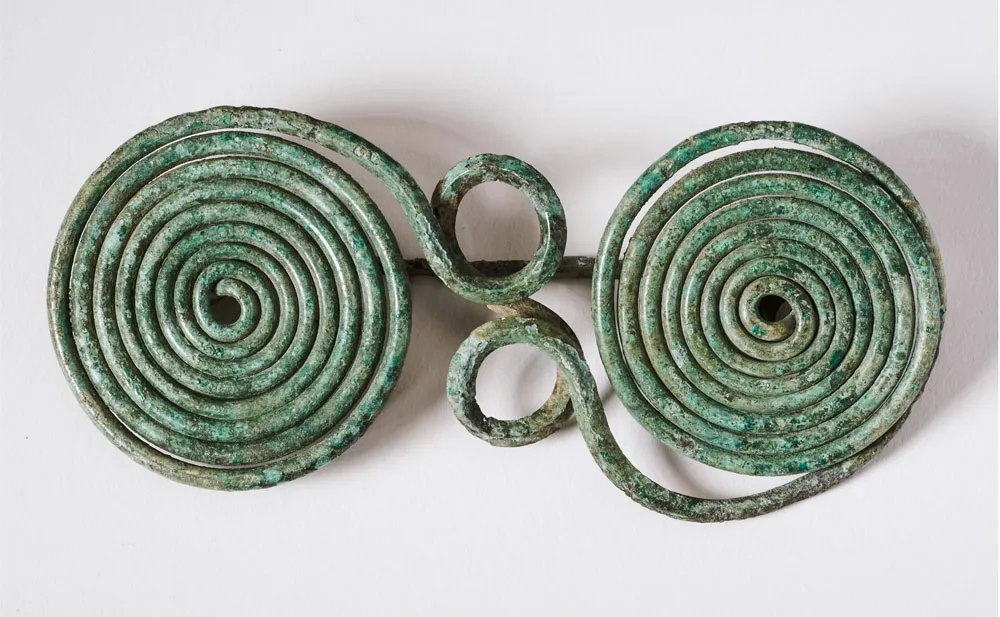
The Viking invasions from the 8th to 11th centuries introduced new elements to the history of Irish jewellery. Norse settlers brought silver arm-rings and Thor’s hammer pendants, leading to a fusion of styles. Irish craftsmen adapted these, creating hybrid pieces like penannular brooches with Viking filigree. The famous Hunterston Brooch exemplifies this blend, featuring intricate silverwork with amber studs.
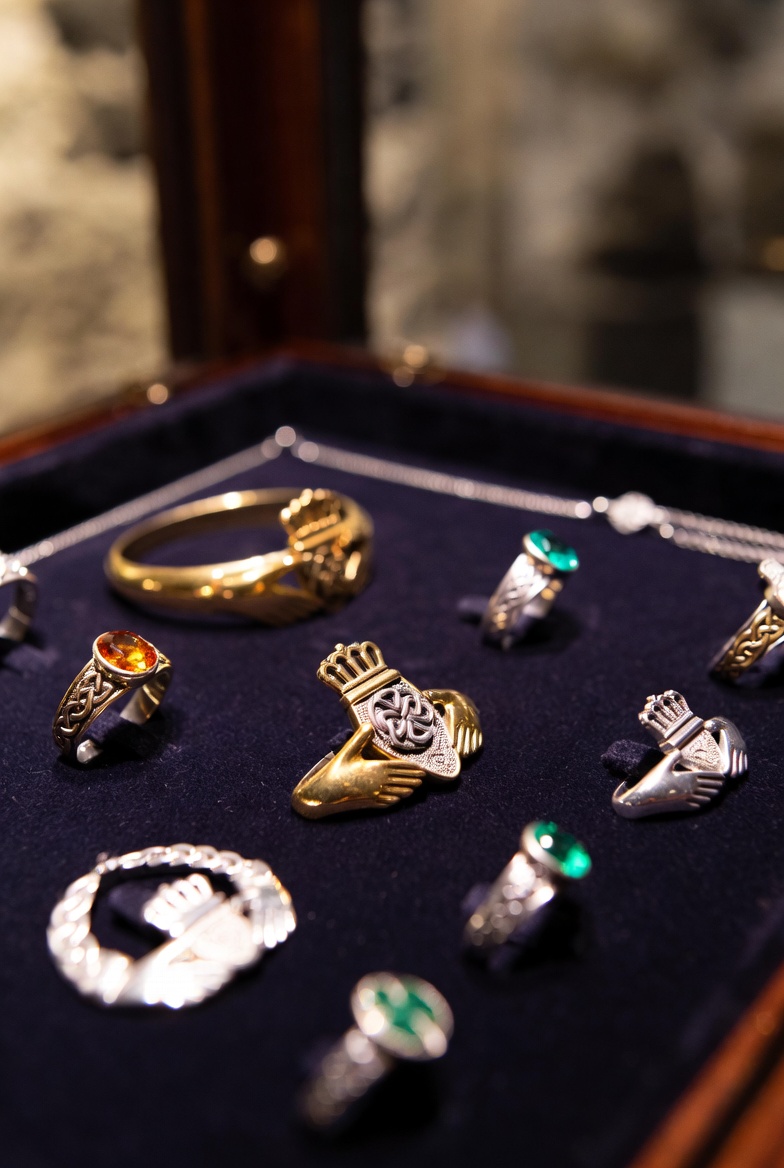
During the medieval period (12th–16th centuries), Norman influences added enameling and gem-setting techniques. Religious jewellery flourished under monastic patronage, with reliquaries and crosiers showcasing Celtic interlace alongside Christian icons. The Claddagh ring history begins here, originating in the 17th century fishing village of Claddagh, Galway. Its design—two hands clasping a crowned heart—symbolizes love (heart), friendship (hands), and loyalty (crown), making it one of the most enduring symbols in jewellery Ireland.
The shamrock, associated with St. Patrick, emerged as a potent symbol, often crafted into Irish shamrock pendants from Connemara marble. This green stone, unique to Ireland, adds an authentic touch to traditional Irish jewellery. Medieval rings and brooches also featured heraldic symbols, reflecting the feudal society’s emphasis on lineage and allegiance.
As trade expanded, exotic materials like pearls and gems entered Irish workshops, enriching designs. The Book of Kells’ illuminations inspired jewellers, translating manuscript motifs into wearable art. This period solidified Ireland’s reputation for exquisite craftsmanship, setting the stage for the Celtic Revival.
The Celtic Revival: Rediscovering Traditional Irish Jewellery
The 19th-century Celtic Revival reignited interest in the history of Irish jewellery amid growing nationalism. Artisans like Waterhouse & Co. in Dublin reproduced ancient designs, popularizing Celtic knots and Claddagh rings globally. Queen Victoria’s patronage of Irish brooches boosted demand, making jewellery Ireland a symbol of cultural pride.
This era saw the standardization of symbols like the harp, Ireland’s national emblem, in pendants and pins. Trinity knot jewellery gained prominence, often in sterling silver with gem accents. The revival extended to Ogham jewellery, where ancient runes were engraved on rings and bracelets, offering personalized heirlooms.
Irish shamrock pendant, a timeless symbol of luck and heritage.
Connemara marble jewellery, mined from Galway’s hills, became synonymous with authentic Irish pieces. Its variegated green hues evoke Ireland’s landscapes, perfect for shamrock motifs. The revival also preserved techniques like filigree and repoussé, ensuring traditional Irish jewellery’s continuity into the modern age.
Literary figures like W.B. Yeats championed Celtic motifs, linking them to Ireland’s mythical past. This cultural renaissance transformed jewellery Ireland from utilitarian items to emblems of identity, influencing global fashion trends.
Modern Irish Designer Jewellery: Innovation Meets Tradition
In 2026, modern Irish designer jewellery seamlessly blends heritage with innovation. Designers like Eileen Moylan and Chupi incorporate Celtic symbols into contemporary pieces, using sustainable materials like recycled gold and ethical gems. Celtic jewellery Ireland now features minimalist Claddagh earrings and abstract Trinity knot bracelets, appealing to younger audiences.
The rise of e-commerce has globalized jewellery Ireland, with brands offering customizable Ogham jewellery online. Ancient Irish gold torcs inspire bold neckpieces, while shamrock pendants evolve with lab-grown diamonds. Irish jewelry symbols remain central, but with twists—like 3D-printed Celtic knots or enamel-infused harps.
Modern Irish designer jewellery, fusing tradition with contemporary style.
Sustainability is key; many artisans use fair-trade silver and support local mining. Festivals like the Dublin Jewellery Fair showcase emerging talents, highlighting how the history of Irish jewellery informs future designs. From high-end boutiques to artisan markets, jewellery Ireland continues to enchant, proving its timeless appeal.
Famous Irish Jewellery Pieces and Their Stories
No exploration of the history of Irish jewellery is complete without famous pieces. The Tara Brooch (7th century) exemplifies Celtic artistry with its intricate filigree and amber settings. The Ardagh Chalice, a masterpiece of Insular art, features gold filigree and enamels, symbolizing Ireland’s medieval opulence.
The Derrynaflan Chalice and the Cross of Cong highlight religious craftsmanship. In secular realms, the Claddagh ring’s legend—crafted by a enslaved goldsmith—adds romantic allure. Ancient torcs from the Snettisham Hoard (though British, influential on Irish styles) and Irish lunulae showcase prehistoric grandeur.
Symbols like the Celtic cross, combining sun worship with Christianity, adorn countless pendants. The harp, emblematic of Irish sovereignty, appears in elegant brooches. These pieces not only beautify but narrate Ireland’s resilient spirit.
Why Irish Jewellery Endures in 2026
In 2026, jewellery Ireland thrives due to its blend of history and relevance. Celtic jewellery Ireland appeals to those seeking meaningful accessories, with symbols like Trinity knots offering spiritual depth. Traditional Irish jewellery, from Claddagh rings to shamrock pendants, serves as cultural ambassadors worldwide.
The market for modern Irish designer jewellery grows, driven by eco-conscious consumers. Whether antique replicas or innovative fusions, the history of Irish jewellery ensures its place in global fashion. As symbols of identity, love, and heritage, these pieces connect wearers to Ireland’s soul.
Explore more at Secret Ireland for hidden gems in Irish culture.
About the Author
