
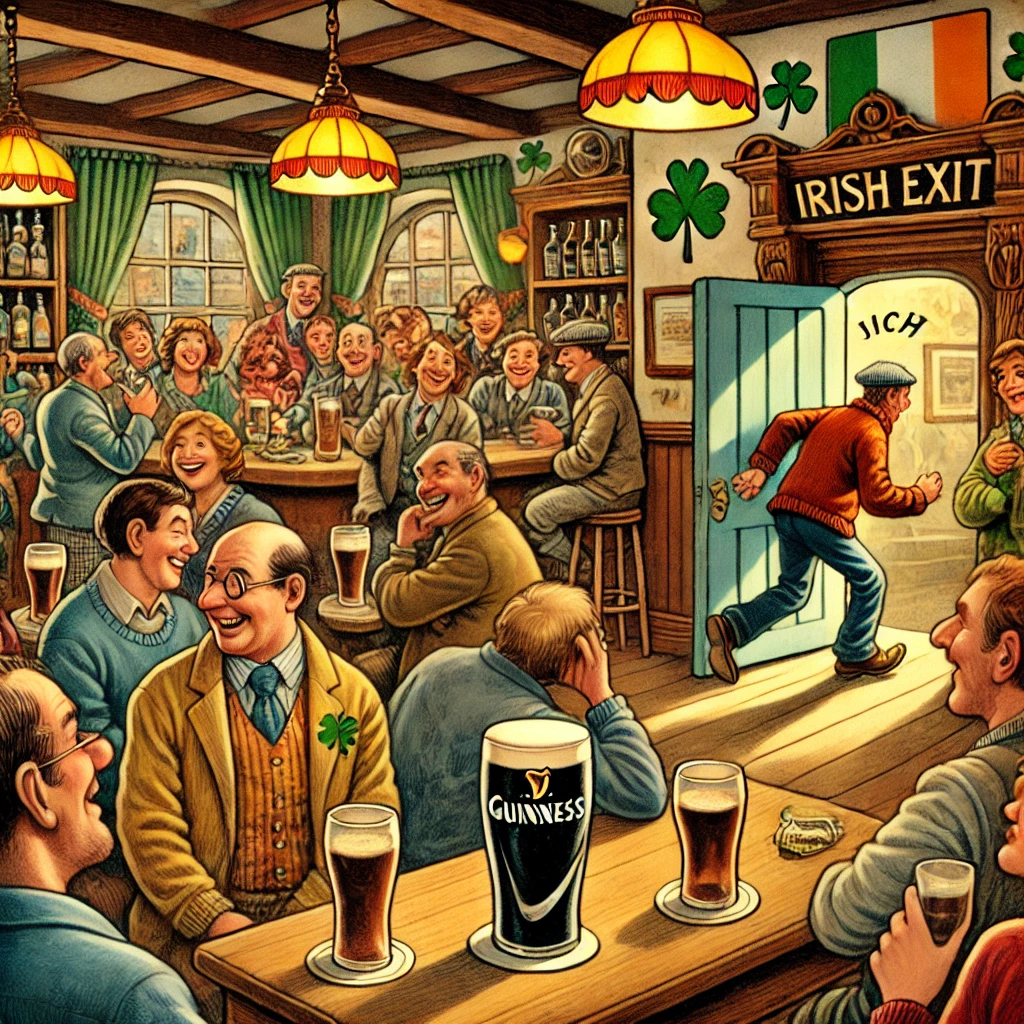
The “Irish Exit” has become a popular term in modern social culture, describing the act of leaving a gathering or event without announcing your departure. While it might seem like a modern phenomenon, the Irish Exit is steeped in cultural nuance and practicality, offering insights into the Irish character and the way we navigate social interactions.
Whether it’s viewed as a graceful way to avoid drawn-out farewells or as a quirky social faux pas, the Irish Exit is undeniably fascinating. Let’s explore its origins, its place in Irish culture, and the reasons why it’s become so iconic.
What Is the Irish Exit?
An Irish Exit refers to quietly leaving a social event without formally saying goodbye to everyone. It’s a smooth, low-key departure, often chosen to avoid interrupting conversations, sparking drawn-out farewells, or creating unnecessary drama. While some might see it as impolite, others view it as practical and considerate.
In Ireland, where hospitality and long-winded goodbyes are deeply ingrained in the culture, the Irish Exit might seem like an unusual choice. However, its very practicality and subtlety have made it a hallmark of Irish social life.
Origins of the Irish Exit
The exact origins of the term are unclear, but it’s believed to stem from the Irish diaspora, particularly in the United States. Irish immigrants, known for their charm and wit, may have cultivated the art of leaving without causing a fuss during gatherings. The practice likely became associated with the Irish due to their reputation for balancing sociability with practicality.
In Irish pubs and social circles, goodbyes can be long, emotional, and accompanied by heartfelt wishes. The Irish Exit, in contrast, offers an understated alternative—a way to leave quietly without disrupting the flow of the evening.
The Pros and Cons of the Irish Exit
Pros:
- Avoid Awkwardness: For introverts or those who dislike attention, the Irish Exit provides a way to slip away without a fuss.
- Maintain the Mood: Leaving quietly avoids breaking up conversations or interrupting the atmosphere.
- Save Time: It eliminates the drawn-out process of saying goodbye to everyone individually.
Cons:
- Perceived as Rude: Some may view the Irish Exit as dismissive or impolite, especially in cultures that value formal farewells.
- Missed Connections: Departing without goodbye might mean missing out on final conversations or important moments.
- Uncertainty for Hosts: Hosts may worry if you left happily or due to an issue.
The Irish Approach to Goodbyes
In contrast to the Irish Exit, the traditional Irish goodbye is often the opposite: long, heartfelt, and filled with genuine emotion. It’s not uncommon for farewells at a family gathering or party to take up to an hour, with multiple rounds of “goodbye” and “take care.” The Irish Exit, then, offers a cheeky alternative for those who want to skip the long process.
Modern Popularity of the Irish Exit
The Irish Exit has gained traction in popular culture, particularly among younger generations who value efficiency and minimal fuss. It’s often praised as a socially savvy way to leave a party without unnecessary awkwardness, aligning with modern trends toward low-maintenance socializing.
How to Execute the Perfect Irish Exit
If you’re considering an Irish Exit, here are some tips to do it gracefully:
- Read the Room: Ensure your departure won’t upset anyone or be taken personally.
- Thank the Host Privately: If possible, express your gratitude to the host beforehand or via text after leaving.
- Keep It Subtle: Slip away quietly, without calling attention to yourself.
- Follow Up Later: Send a message to friends or the host to let them know you had a great time.
The Irish Exit in Folklore and Humor
The concept of the Irish Exit aligns with Irish wit and storytelling. The ability to leave a gathering quietly but leave a lasting impression through earlier interactions is an art in itself. It reflects the Irish knack for balancing sociability with pragmatism.
When Is an Irish Exit Appropriate?
The Irish Exit isn’t suitable for every occasion. It works best for informal gatherings, large parties, or situations where your absence won’t be immediately noticed. For more formal events or intimate settings, a traditional goodbye is often more appropriate.
Embrace the Spirit of the Irish Exit
The Irish Exit isn’t about avoiding people—it’s about leaving on your own terms. Whether you see it as a time-saver, a stress-reliever, or a uniquely Irish tradition, it offers a fascinating glimpse into the art of social navigation.
For more insights into Irish culture, history, and traditions, visit Secret Ireland. From the legendary hospitality of Irish gatherings to the quirks of everyday life, Ireland’s cultural tapestry is endlessly rich and intriguing.
So, next time you find yourself at a lively Irish gathering, consider the Irish Exit—sometimes, the quietest departure leaves the loudest impression. Slán go fóill! (Goodbye for now!)
About the Author
