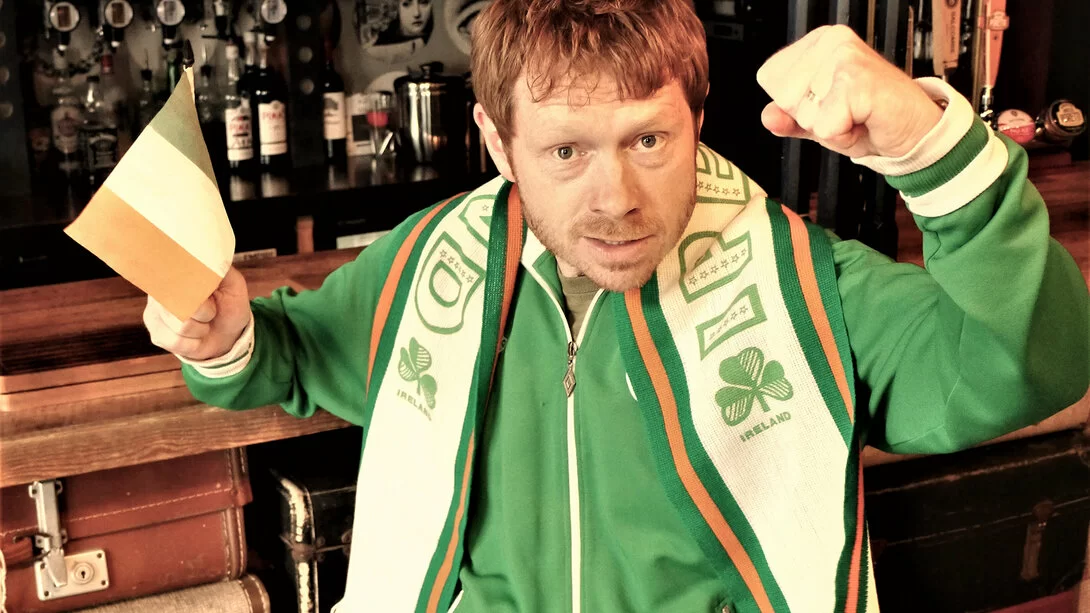
The term “Irish body” might make you think of wind-bitten cheeks, hearty laughs, strong backs molded by generations of farming, or maybe even the mysterious sway of a céilí dancer spinning on toes that whisper stories through centuries. But the Irish body isn’t just a physical form—it’s a genetic roadmap, a cultural symbol, and often, a humorous topic at the local pub.
In this post, we’re diving deep—head, shoulders, knees, and Celtic toes—into what defines the Irish body. From DNA quirks to facial features, from standardized bodies to standardization bodies, and from skin tones to finger signals, we’ll explore how the Irish body is shaped by myth, science, and a healthy dose of humour.
What is the Irish Body Type?
Let’s kick it off with the million-Euro question: What is the Irish body type?
Well, like most things in Ireland, the answer depends on the county you’re in and who’s asking. But generally speaking, the traditional “Irish body type” is stockier and more muscular than lithe or lean. Think strong legs, broad shoulders, and solid hands capable of carrying a sheep one moment and raising a pint the next.
This body type evolved out of practicality. Ireland’s agricultural history meant most people lived physical lives—tilling fields, cutting turf, or carrying hurley sticks. The weather didn’t lend itself to sunbathing or running marathons. So instead of long and lean, the Irish body is robust and weather-ready.
Of course, modern Ireland is filled with every shape and size—just check out the range of physiques at a GAA match versus a tech startup lunchroom.
What Are the Physical Signs of Irish Ancestry?
You might be Irish if:
-
You sunburn under a 40-watt bulb.
-
Freckles appear on your skin like constellations with every mild ray of light.
-
You’ve inherited the family curse of “Irish dancing calves”—muscular and built for bouncing.
More seriously, the physical signs of Irish ancestry often include:
-
Pale skin (with a tendency to burn more than tan)
-
Freckles, especially on the face and arms
-
Blue, green, or hazel eyes
-
Red or dark brown hair
-
A square-shaped face or strong jawline
These features are the result of centuries of isolated island genetics with only occasional Viking, Norman, or British gene pool parties.
What Are Irish Ancestry Facial Features?
Irish facial features tend to fall into a few recognisable patterns:
-
Broad foreheads
-
High cheekbones
-
Deep-set eyes
-
Straight or slightly upturned noses
-
“Friendly but slightly suspicious” expressions (kidding… or are we?)
Some Irish faces have a soft, rounded quality, while others are more angular and sharp. This diversity can be attributed to ancient Celtic, Norse, and even Iberian genetic traces.
The Irish face is built for storytelling—eyebrows that raise in surprise, lips that curve into long-winded tales, and eyes that can flash with humour or melt into sorrow, all in one pub session.
What Is the Irish Language Body?
Here’s where things get linguistic. The Irish language body refers not to six-packs described in Gaelic (although “ab crack” in Irish would be “crack na bolg”), but rather to the terminology used in the Irish language (Gaeilge) to describe body parts.
Let’s have a peek:
-
Head – Ceann
-
Eye – Súil
-
Hand – Lámh
-
Foot – Cos
-
Finger – Méar
-
Thumb – Ordóg
-
Toe – Bonn na coise (or “ceann na coise” in some dialects)
Want more about quirky Irish anatomy terms? Pop over to The Irish Little Toe and marvel at how even the tiniest part of the Irish body comes with myth, mystery, and meaning.
What Is a Physical Characteristic of Ireland?
Beyond its people, Ireland itself has some standout physical characteristics:
-
Rolling green hills (thanks, constant rain!)
-
Craggy coastlines that look like a Game of Thrones backdrop—because many of them are
-
Stone walls that zigzag like puzzle pieces over fields
-
Peat bogs, lakes, and misty moors that whisper ancient tales
These natural features have shaped the Irish body. Farmers adapted to the tough terrain. Fishermen grew hardy from Atlantic winds. Even poets were shaped by long walks through misty hills.
What Is Irish Skin Like?
Ah yes—Irish skin, the stuff SPF dreams are made of.
Irish skin is typically:
-
Fair to very fair
-
Prone to freckling
-
Susceptible to sunburn (like, instantly)
-
Often dry due to cold and wind
The high frequency of red hair in Irish genetics goes hand-in-hand with MC1R gene variants that affect pigmentation, meaning Irish skin lacks melanin—and therefore, UV protection.
So yes, if you’re Irish, sunscreen is your best friend. And if you’re looking for shade, you won’t find it in Irish humour—but you will find it in an Irish hat.
Are Irish People Warm or Cool Toned?
Now we’re getting into colour theory.
Generally:
-
Cool-toned Irish skin is the most common: pink undertones, blue veins, and silver jewellery looking fab.
-
Some Irish people, especially those with darker features or Mediterranean ancestry, may have warmer or neutral tones.
But here’s a good rule: if your skin turns red faster than a boiled lobster on a Lanzarote beach, you’re probably cool-toned.
What Is the Irish Standardisation Body?
Let’s switch gears.
The Irish Standardisation Body is NSAI—the National Standards Authority of Ireland. It’s not about body types or freckles, but rather about setting standards across Irish industries—from construction to IT to environmental protection.
So while NSAI won’t tell you how many freckles are required to qualify as “Officially Irish,” they will help ensure that your plug fits your socket, and your pint glass doesn’t explode.
What Genetics Do Irish Have?
Genetically, the Irish are fascinating. Studies show:
-
Strong Celtic lineage, with ancient DNA dating back to Neolithic farmers and Bronze Age migrants.
-
Some Norse/Viking influence (especially along the coasts).
-
Shared genes with Scottish and Welsh populations.
-
A high frequency of red hair and the MC1R gene.
In other words, the Irish genome is a walking, dancing, freckled history book.
What Is an Irish Pattern?
This could mean a few things, so let’s break it down:
-
Clothing patterns: Think of Aran knitwear with intricate cable stitches—each pattern representing a different clan or prayer for safety at sea.
-
Genetic patterns: As above, recurring traits in Irish DNA, from red hair to blue eyes.
-
Cultural patterns: The way Irish people move through life—often with humour, storytelling, a strong sense of community, and an uncanny ability to avoid saying goodbye in under 15 minutes.
There’s also the curious social pattern known as the Irish Finger, a subtle, barely-there gesture of acknowledgement on rural roads—proof that even the tiniest movement of the Irish body carries cultural weight.
Final Thoughts: The Soul Inside the Irish Body
To understand the Irish body is to understand more than bones, skin, or DNA. It’s to understand how generations of hardship, humour, and heritage have shaped a people into what they are today.
The Irish body:
-
Carries music in its feet.
-
Wears history in its freckles.
-
Speaks stories through its hands.
-
And smiles with a spirit that’s impossible to standardize.
So next time you spot someone with freckled cheeks, wind-tousled hair, and a glint in their eye that says, “I’ve seen things on the west coast you wouldn’t believe,”—you just might be looking at the living embodiment of the Irish body.
And if they lift just one finger in acknowledgment as you pass by on a rural road, you’ll know you’re home.
Further Reading & Backlinks
Dive deeper into the uniquely Irish anatomy:
-
👉 The Irish Little Toe – Exploring the Myths, Meanings, and Anatomy of the Celtic Toe
-
👉 The Irish Finger – A One-Finger Salute with a Whole Lotta Heart
Because in Ireland, even your toes and fingers come with their own legend.
About the Author
