
There are songs that entertain, and then there are songs that haunt.
I Wish I Was Back Home in Derry belongs to the latter, a spectral hymn that refuses to be buried under the weight of time, a tune that doesn’t just echo through the hills of Donegal or the streets of Derry but through the marrow of every Irish soul who has ever known the cruel hand of exile.
To listen to Back Home in Derry is to hear the ghosts whisper. It is a dirge, a lament, and a rebel’s roar wrapped up in a melody that feels both sorrowful and defiant. It is Ireland itself, in all its battered, beautiful, and bloodied resilience.
The Origins of a Ballad Born from Injustice
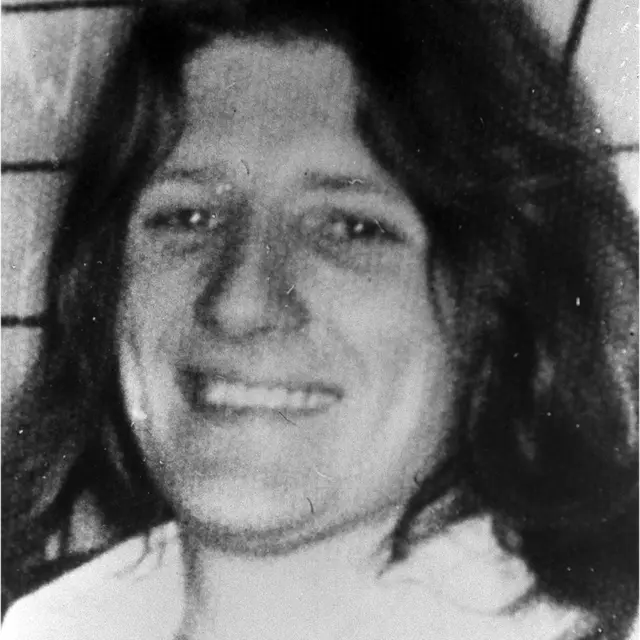
The story begins not with a song, but with a poem. The Back Home in Derry poem was penned by none other than Bobby Sands, the Republican hunger striker who became the ultimate embodiment of resistance against British rule. While his body withered in the darkness of a prison cell, his mind and spirit remained defiant, giving birth to words that would outlive both his captors and the bars that tried to silence him.
Sands took inspiration from a historical event—the transportation of Irish rebels to the penal colonies of Australia in 1803. His poem is not just a recollection of exile; it is a wail of longing, a protest against tyranny, and a tribute to those who had their freedom wrenched away.
From Poem to Song: Gordon Lightfoot’s Ghostly Echo
Enter the great Canadian folk singer, Gordon Lightfoot. It is no accident that the melody of I Wish I Was Back Home in Derry bears a striking resemblance to The Wreck of the Edmund Fitzgerald, Lightfoot’s mournful ballad about a doomed ship swallowed by Lake Superior. The tragedy of a vessel lost at sea and the tragedy of exiled Irish prisoners—two very different stories, yet linked by an eerie, slow-moving melody that feels like it was written in the language of ghosts.
It was Christy Moore who took Sands’ poem and merged it with the haunting cadence of Lightfoot’s music, birthing a song that would go on to resonate in the hearts of Irish people across generations.
The Meaning Behind the Lament
The I Wish I Was Back Home in Derry meaning is layered, much like Ireland’s own history—rich in sorrow, steeped in rebellion. The song tells the story of Irish political prisoners who were shackled, herded onto ships like cattle, and cast across the ocean to Van Diemen’s Land (modern-day Tasmania), never to return. These were men who dared to stand against British rule, men whose only crime was the pursuit of freedom.
The lyrics paint the stark imagery of the voyage—“On the stormy waters, we were driven far”—a reminder that exile was not just punishment, but often a death sentence. The song carries within it a deep yearning, an unfulfilled dream of returning to a homeland that has been ripped away. It is about more than just those long-forgotten prisoners; it is about every Irish person who has ever been forced to leave, whether by chains, poverty, or the cold machinery of emigration.
The Song’s Timeless Resonance
To sing I Wish I Was Back Home in Derry is to join the voices of the exiled, the oppressed, and the hopeful. It is why, even today, Irish musicians from Christy Moore to Damien Dempsey to The Wolfe Tones keep the song alive. The lyrics are not just a historical recounting; they are an open wound, a reminder that the battle for Irish sovereignty and dignity has never truly ended.
The song has also taken on a broader meaning. For those in the Irish diaspora, scattered from New York to Sydney, Back Home in Derry lyrics can sting with nostalgia, making the cold glass of a pub in Boston feel like a thousand miles from the green fields of home.
The Technical Side: Chords and Legacy
For musicians who wish to breathe life into this ballad, I Wish I Was Back Home in Derry chords are a simple yet powerful structure, following a folk progression that allows the raw emotion of the lyrics to take center stage. Like many Irish folk songs, it thrives in its simplicity—it is meant to be sung, meant to be shared, meant to be felt.
It is more than a song; it is a living, breathing piece of Ireland’s history, carried forward by those who refuse to let the past be forgotten.
FAQ
Who wrote the song “I Wish I Was Back Home in Derry”?
The lyrics were written by Bobby Sands while he was imprisoned in the H-Blocks of Long Kesh during the late 1970s. Christy Moore later set it to the melody of Gordon Lightfoot’s The Wreck of the Edmund Fitzgerald, making it the song we know today.
Anyone know the backstory behind “Back Home in Derry”?
The song is based on Sands’ poem about the 1803 transportation of Irish rebels to Van Diemen’s Land. It speaks of exile, oppression, and the unbreakable longing for home—sentiments that have resonated throughout Irish history.
When was “Back Home in Derry” written?
Bobby Sands wrote the poem in the late 1970s while incarcerated, and it was later turned into a song by Christy Moore in the early 1980s.
Is “I Wish I Was Back Home in Derry” based on another song?
Yes, its melody is based on Gordon Lightfoot’s The Wreck of the Edmund Fitzgerald, which adds to its haunting and mournful quality.
For more about Ireland’s deep connection to music and poetry, check out Secret Ireland’s arts section and explore the rich cultural heritage of the Emerald Isle at Secret Ireland.
About the Author
