There are names that countries inherit and names that countries earn. Ireland, with its rebel heart and poetic soul, has been called many things throughout history—Hibernia, Éire, Inis Fáil—but one name, in particular, has endured in the world’s imagination: The Emerald Isle.
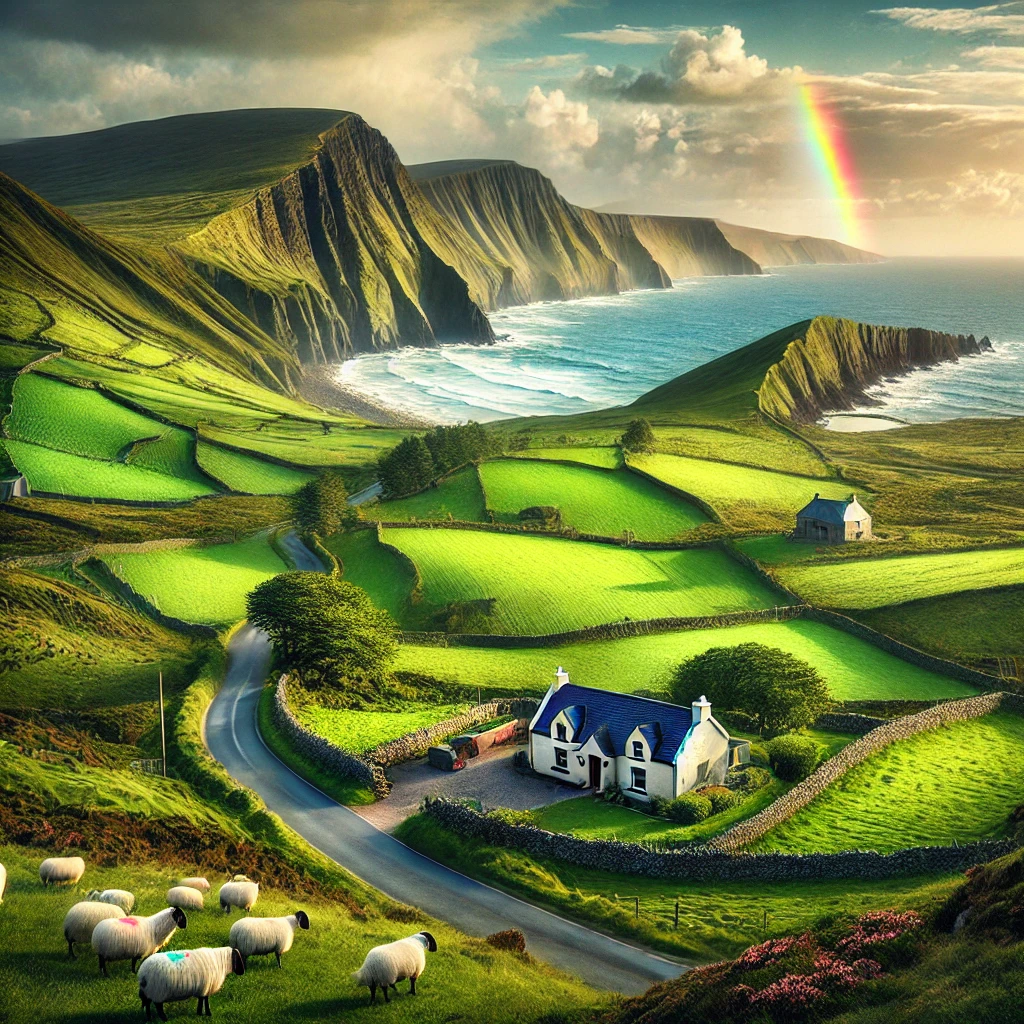
It conjures images of rolling green fields kissed by Atlantic mist, of moss-covered ruins and winding roads that disappear into misty mountains. But where did this name come from? And why has it become the defining title for a land steeped in far more than just the color green?
Let’s step back into history and unravel the mystery of the Emerald Isle.
How Did Ireland Get the Name The Emerald Isle?
The phrase “Emerald Isle” was first made famous by the Irish poet William Drennan in the late 18th century. Drennan, a physician, poet, and political thinker, wrote a poem titled Erin, in which he lovingly described Ireland’s lush, green landscapes:
“When Erin first rose from the dark swelling flood,
God blessed the green island and saw it was good;
The Emerald of Europe, it sparkled and shone,
In the ring of this world, the most precious stone.”
The emerald, a gem known for its deep, radiant green, became the perfect metaphor for Ireland—a land of vivid landscapes, undulating hills, and an unbreakable spirit.
The name stuck.
Since then, The Emerald Isle has been used across literature, tourism, and culture to describe Ireland’s breathtaking greenery—a direct result of its mild climate, heavy rainfall, and fertile soil.
Why Is Ireland Called The Emerald Isle?
Ireland earns the name not just because of a poetic phrase but because of its very landscape. The country’s climate, shaped by the warm Gulf Stream, ensures that rain is as much a part of daily life as Guinness and storytelling. This constant rainfall nourishes the fields, keeping them green year-round, even in the dead of winter.
When travelers step off the plane, they often remark that the green of Ireland is unlike anything they’ve ever seen—a shade so rich, so deep, it feels almost otherworldly.
Even from space, Ireland appears as a brilliant green jewel, surrounded by the wild blues of the Atlantic. It’s no wonder the Emerald Isle remains the most fitting description of this land.
Why Do You Think Ireland Is Referred to as the Emerald Isle?
Beyond the literal greenness of the land, the name Emerald Isle has taken on a deeper, almost mystical significance.
- It symbolizes Ireland’s beauty, its untamed hills and cliffs, and the serenity of its rolling landscapes.
- It reflects Ireland’s resilience, much like an emerald that withstands pressure and time.
- It represents Irish identity, evoking a homeland that millions of emigrants have longed for across centuries.
For many, hearing “The Emerald Isle” is like hearing an old song—it immediately evokes nostalgia, pride, and a connection to something ancient and enduring.
What Was Ireland’s Original Name?
Before it was called the Emerald Isle, before English ever touched the land, Ireland had many names:
- Éire – The modern Irish word for Ireland, derived from the ancient goddess Ériu.
- Hibernia – A name given by the Romans, meaning “Land of Winter.”
- Inis Fáil – Meaning “Island of Destiny,” a name used by the mythological Tuatha Dé Danann.
- Scotia – An old name for Ireland before it was transferred to Scotland.
Each of these names carries history, mythology, and the weight of generations. But it is Éire that still holds strong, etched into the very fabric of the Irish identity.
Why Is Emerald Associated with Ireland?
The connection between emeralds and Ireland is rooted in more than just color—it’s about symbolism.
Emeralds are:
- Precious and rare, much like Ireland’s unique beauty.
- Deeply connected to folklore, where green is associated with the fairies, the earth, and magic.
- Symbols of rebirth and vitality, perfectly reflecting Ireland’s wild landscapes and enduring spirit.
In fact, Emerald Isle Seaweed—a product harvested from Ireland’s rich, nutrient-packed Atlantic waters—carries the name as a nod to the country’s natural richness and heritage.
Is Northern Ireland the Emerald Isle?
Yes, Northern Ireland is part of the Emerald Isle. The term Emerald Isle refers to the entire island of Ireland, including both Northern Ireland (UK) and the Republic of Ireland.
Despite the political division, the land remains the same—lush, green, and breathtaking. The Giant’s Causeway, the Mourne Mountains, and the Antrim Coast are as much a part of the Emerald Isle as the Cliffs of Moher or the Ring of Kerry.
The Emerald Isle and Ireland’s Wild Atlantic Way
Speaking of Ireland’s beauty, it is home to one of the most spectacular driving routes in the world:
🌊 Ireland’s Wild Atlantic Way is the longest coastal driving route in the world.
Stretching over 2,500 km along Ireland’s western seaboard, this rugged, awe-inspiring route takes travelers past towering cliffs, windswept beaches, and hidden coves—proving why Ireland truly deserves the name Emerald Isle.
From Donegal’s Slieve League Cliffs to Cork’s Mizen Head, the Wild Atlantic Way is Ireland at its most untamed and breathtaking.
Nicknames for Ireland
While The Emerald Isle is the most famous, Ireland has had many nicknames throughout history, including:
- The Land of Saints and Scholars – Due to its role in preserving learning during the Dark Ages.
- Hibernia – A Latin term meaning “Winter Land,” used by the Romans.
- The Celtic Tiger – A more recent economic nickname during the late 1990s boom.
Each nickname reflects a different chapter of Ireland’s ever-evolving story.
The Emerald Isle in Popular Culture
If you’ve ever come across “The Emerald Isle” in a crossword puzzle, it’s often a 4-letter answer: Éire.
You’ll also see references to The Emerald Isle in:**
- Literature – From James Joyce to W.B. Yeats, poets and writers often describe Ireland in lush, green imagery.
- Music – Countless Irish ballads reference the “Green Hills” of home.
- Tourism – The nickname The Emerald Isle is used to market Ireland’s landscapes and history to visitors worldwide.
Final Thoughts: The Unbreakable Green of Ireland
Ireland’s nickname, like the land itself, is no accident. It’s not just about the color green, but about what that green represents—the land’s ancient roots, its deep connection to nature, and the unbreakable Irish spirit.
It is a land of stories, legends, and a beauty that no empire could erase. And as long as the rain falls and the grass grows, Ireland will always be the Emerald Isle. ☘️
Want to Learn More About Ireland?
Dive deeper into Ireland’s history and culture:
👉 What Do the Names of Ireland’s Counties Mean?
👉 What Is the Irish for Happy Saint Patrick’s Day?
For more about Ireland’s history, myths, and landscapes, visit Secret Ireland. Slán go fóill! 🍀
About the Author
