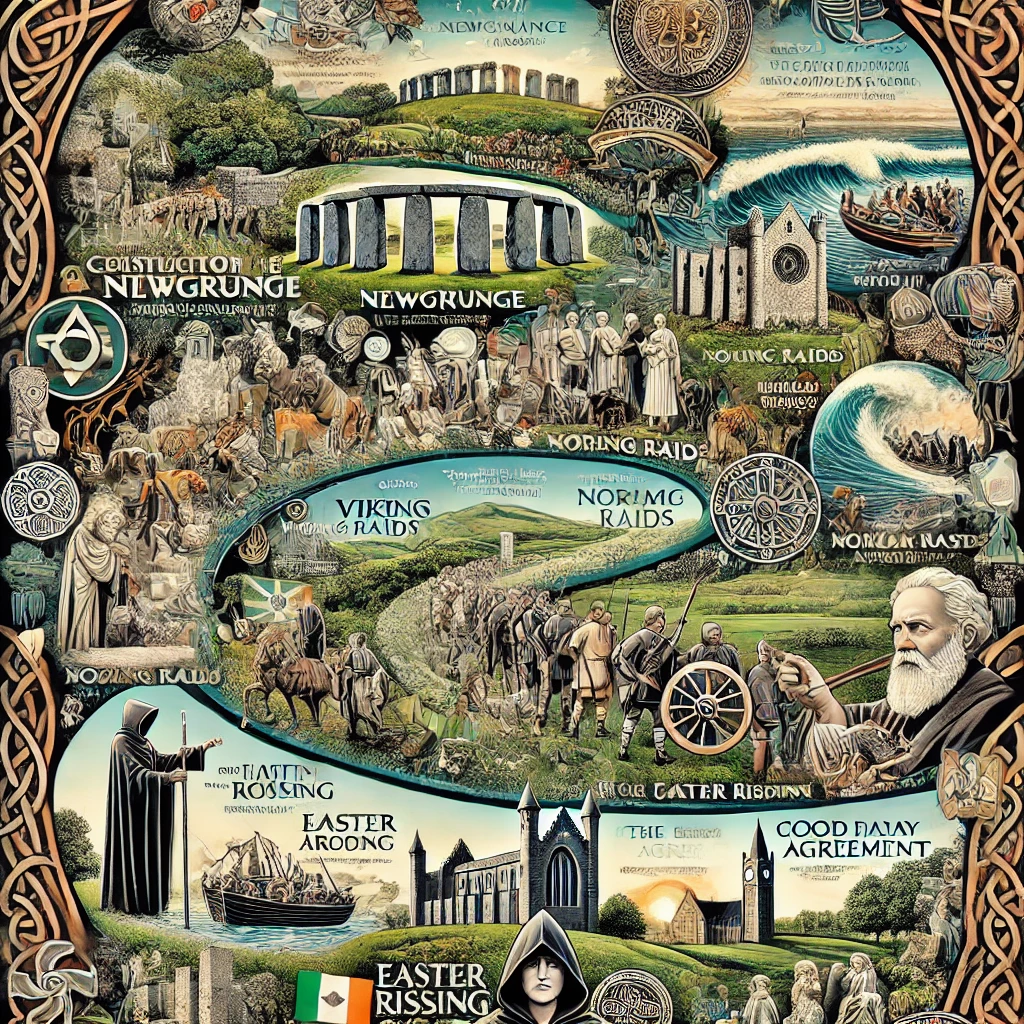
Ireland, the Emerald Isle, is a land steeped in history, its story carved into its rugged cliffs, rolling fields, and ancient stone monuments. From the arrival of the Celts to the tumult of independence, Ireland’s history is a rich tapestry of triumphs and tragedies, resilience and rebellion. Here’s a timeline of Ireland’s history, a journey through the moments that shaped this iconic nation.
Ancient Ireland
8000–4000 BC: Mesolithic Ireland
The first settlers arrived in Ireland, establishing small hunter-gatherer communities along the rivers and coasts.
4000–2500 BC: Neolithic Era
The era of monumental construction began. The Neolithic farmers built megalithic tombs like Newgrange, a marvel older than the Pyramids of Giza.
2500–500 BC: Bronze Age
Advances in metalwork led to intricate gold ornaments, and stone forts like the Staigue Stone Fort became prominent.
500 BC: Arrival of the Celts
The Celts brought their language, art, and traditions, laying the foundation for Irish culture.
Early Christian Ireland
432 AD: St. Patrick’s Arrival
St. Patrick arrived in Ireland, introducing Christianity and driving the legendary snakes from the land. Monastic settlements flourished, producing exquisite manuscripts like the Book of Kells.
800–1169: Viking Invasions
The Vikings raided coastal settlements, founding cities like Dublin, Waterford, and Limerick. Their influence blended with Irish culture, leaving a lasting legacy.
Medieval Ireland
1169: Norman Invasion
The Normans arrived, marking the beginning of English influence in Ireland. Norman lords built castles and towns, some of which remain key parts of Ireland’s heritage today.
1366: Statutes of Kilkenny
Laws were enacted to prevent the mixing of Norman and Gaelic cultures, but the two continued to intertwine.
Early Modern Ireland
1541: Henry VIII Declares Himself King of Ireland
The Tudor conquest began, leading to centuries of unrest as English rulers attempted to control the island.
1607: Flight of the Earls
The Gaelic chieftains fled Ireland after defeat, marking the end of traditional Gaelic society.
1641–1653: Irish Confederate Wars
A period of rebellion and civil war saw devastation across Ireland, culminating in Cromwell’s brutal campaign.
18th and 19th Century Ireland
1798: United Irishmen Rebellion
Inspired by the French and American revolutions, Irish patriots fought for independence but were brutally suppressed.
1845–1852: The Great Famine
The potato blight caused mass starvation and emigration, forever altering Ireland’s population and economy.
1884: Foundation of the Gaelic Athletic Association (GAA)
The GAA was established to revive traditional Irish sports and foster national pride.
The Fight for Independence
1916: Easter Rising
Irish rebels seized Dublin’s General Post Office in a bold but doomed attempt to end British rule.
1921: Anglo-Irish Treaty
The treaty established the Irish Free State, granting limited independence but dividing the island.
1922–1923: Irish Civil War
A bitter conflict between pro-treaty and anti-treaty forces marked the new state’s early years.
Modern Ireland
1949: Declaration of the Republic
Ireland officially became the Republic of Ireland, cutting its last ties with the British monarchy.
1970s–1998: The Troubles
Decades of violence between Unionists and Nationalists in Northern Ireland were brought to a close by the Good Friday Agreement.
2008: Economic Boom and Bust
Ireland experienced rapid economic growth during the “Celtic Tiger” years, followed by a sharp recession in 2008.
2015: Marriage Equality Referendum
Ireland became the first country to legalize same-sex marriage by popular vote, a testament to its evolving social attitudes.
Frequently Asked Questions
Who Are the Most Famous Figures in Irish History?
Icons like St. Patrick, Brian Boru, Daniel O’Connell, and Michael Collins have left indelible marks on Ireland’s story.
Why Is Irish History So Important?
Irish history is a story of resilience, creativity, and the fight for identity. It continues to shape the nation’s culture and its people’s pride.
How Can I Learn More About Irish History?
Visiting landmarks like Newgrange, the Rock of Cashel, and Kilmainham Gaol is a great way to explore Ireland’s past firsthand.
Exploring Ireland’s Past
From the haunting beauty of Rossbeigh Beach to the echoes of rebellion at Staigue Stone Fort, Ireland’s history is etched into its landscapes. To explore more about Ireland’s culture, check out our blog on Blarney Castle out Derrynane Beach: A Slice of Paradise on the Wild Atlantic Way and Kenmare: Ireland’s Hidden Gem of Charm and Culture.
For a closer look at the storied locations that shaped Ireland, visit Secret Ireland and let the past come alive.
About the Author
