
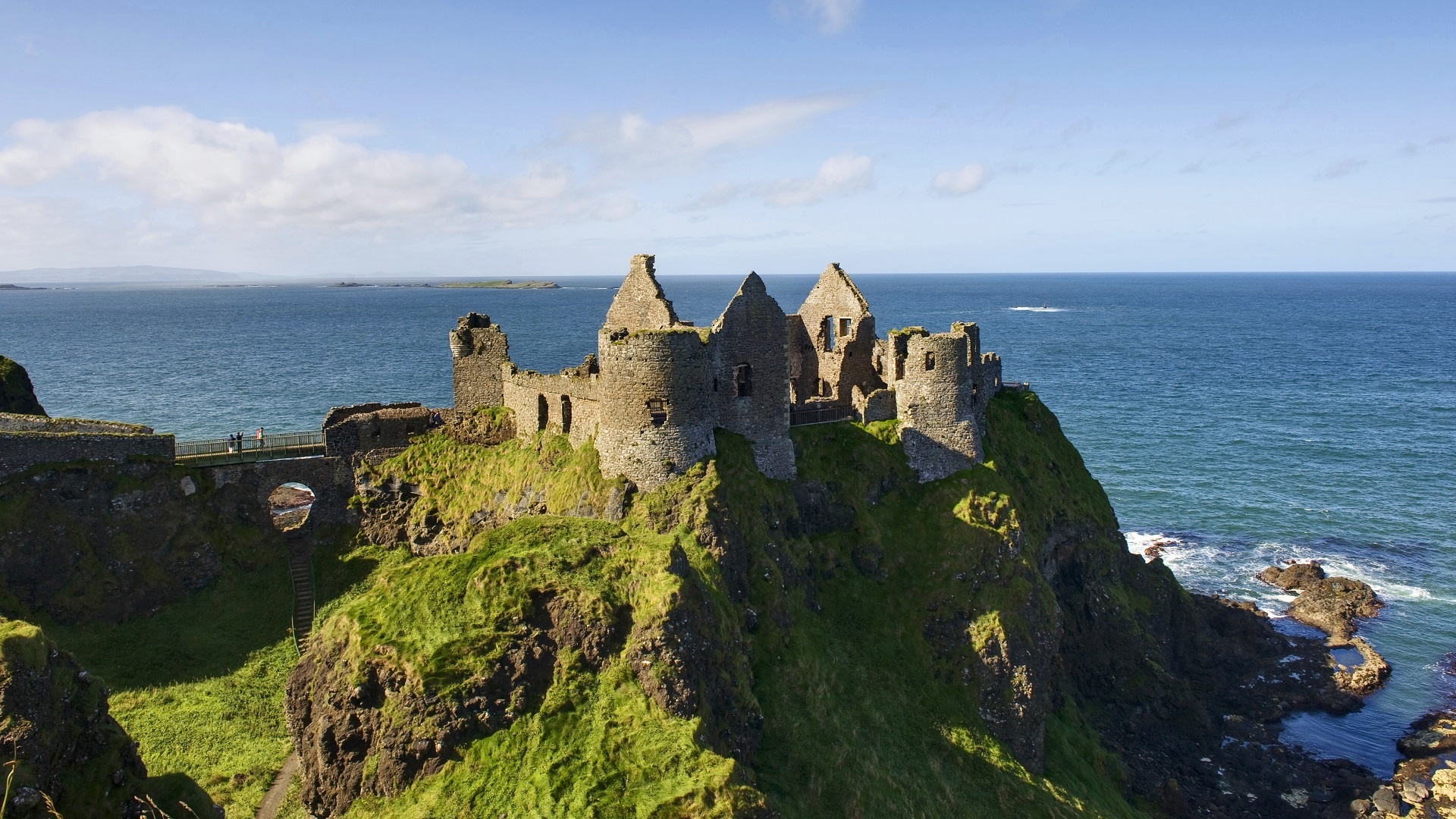
Ireland is home to more than 30,000 castles, and many rise along wild Atlantic shores. Stone towers face the sea while waves crash below, and history sits in every wall. Meanwhile, modern cities such as Dublin move at a fast pace, with traffic, offices, and glowing screens. The contrast raises a simple question about where life feels better.
Stone Walls Have Stood Since the 12th Century
Trim Castle in County Meath and Carrickfergus Castle in County Antrim date from the late 12th century. They were built after the Normans arrived from England, and they are still standing today. Trim gained worldwide fame when it was featured in Mel Gibson’s Braveheart, while Carrickfergus served as an air raid shelter during the Second World War.
Walls in some Irish castles reach up to 3 metres thick, which explains their long survival. These structures once protected wealth and power because kings and lords needed security. Many sit along the coast because control of the shoreline meant control of trade and defence.
Sea Views and Stories That Draw Millions
Nearly 2.5 million tourists visit one or more castles or historic houses in Ireland each year, according to Irish government figures. This number illustrates how strong the appeal remains. Dunluce Castle on the Antrim coast offers one of the finest settings in the country. Even on a cloudy evening, the cliffside ruin looks dramatic.
Many castles remain in ruins, while others have undergone partial restoration. Carrickfergus falls into the group that saw rebuilding over centuries. Trim remains largely unrestored, which adds to its character. Visitors often speak highly of guides who bring stories to life. When the guides at Trim share vivid details about medieval daily life, the crowds listen closely.
Digital Life Within Ancient Stone
Coastal castles feel rooted in history, but modern life continues inside their walls. Many restored castles offer strong broadband because remote work remains common across Ireland. Residents and guests stream films and series in the evenings, while laptops sit beside thick stone walls. Video calls connect easily, even when Atlantic winds roar outside.
Online gambling also fits easily into castle living since it is convenient to access platforms online from any location. Visitors can explore sites featuring the best online slots, and these platforms load well across steady connections. Extensive libraries on these platforms often feature hundreds of leading titles, including Irish-themed slot games with reels, bonus features, and free spins. Players follow payouts and activate special features from these remote locations, just as they would in Dublin. Coastal castles, therefore, blend digital play with medieval surroundings.
Galway and Dublin Show a Different Pulse
Modern cities create a distinct rhythm. Dublin often feels fast and focused, with people moving quickly through busy streets. Meanwhile, Galway on the west coast carries a different energy. Galway is often described as the City of Tribes, full of music and street performers.
Writers have noted that life in Galway moves at a slower pace, and crowds tend to gather in the Latin Quarter. Cobblestones echo with footsteps, while buskers play into the night. The city feels like a festival that runs at all hours. Dublin, in contrast, can seem more like it is driven by work schedules and traffic lights.
Nevertheless, both cities remain lively in their own ways. Cafes hum with conversation, and theatres host regular performances. Modern services operate around the clock, while digital networks link every corner.
Coastal Living Brings Challenges and Rewards
Living by the sea offers fresh air and striking views, yet upkeep demands attention. The salt in sea air speeds up corrosion, so stainless steel fittings and marine-grade paints are common choices. Humidity levels run higher near the coast, which calls for strong insulation and ventilation.
Ireland’s west coast faces Atlantic storms, and reinforced windows help protect properties. Insurance premiums often rise in coastal areas because of exposure to wind and rain. Surveys before purchase give buyers insight into structural strength and weatherproofing.
Towns such as Dingle, Kinsale, Howth, and Lahinch draw steady interest. Kinsale and Howth remain in high demand due to their scenic settings and access to Dublin. Well-maintained coastal properties tend to hold their value, and community events bring people together in these towns.
Where Life Feels Most Present
Modern cities shine with lights, screens, and steady movement, and that energy feels constant. Coastal castles hold centuries of stories within thick stone walls, and waves crash against nearby cliffs. Digital tools work inside these old towers, which means daily tasks and online leisure can continue without interruption.
Nearly 2.5 million visitors step into these spaces each year, which signals a deep pull toward history. Trim and Carrickfergus still stand from the 12th century, while Dunluce clings to its cliff above the sea. Cities provide pace and access, but castles offer depth and memory.
The question we asked at the outset might not have a single answer, but Ireland’s coastal castles make a persuasive case as life inside their walls moves slowly, sits close to history, and still finds room for the present.
About the Author
