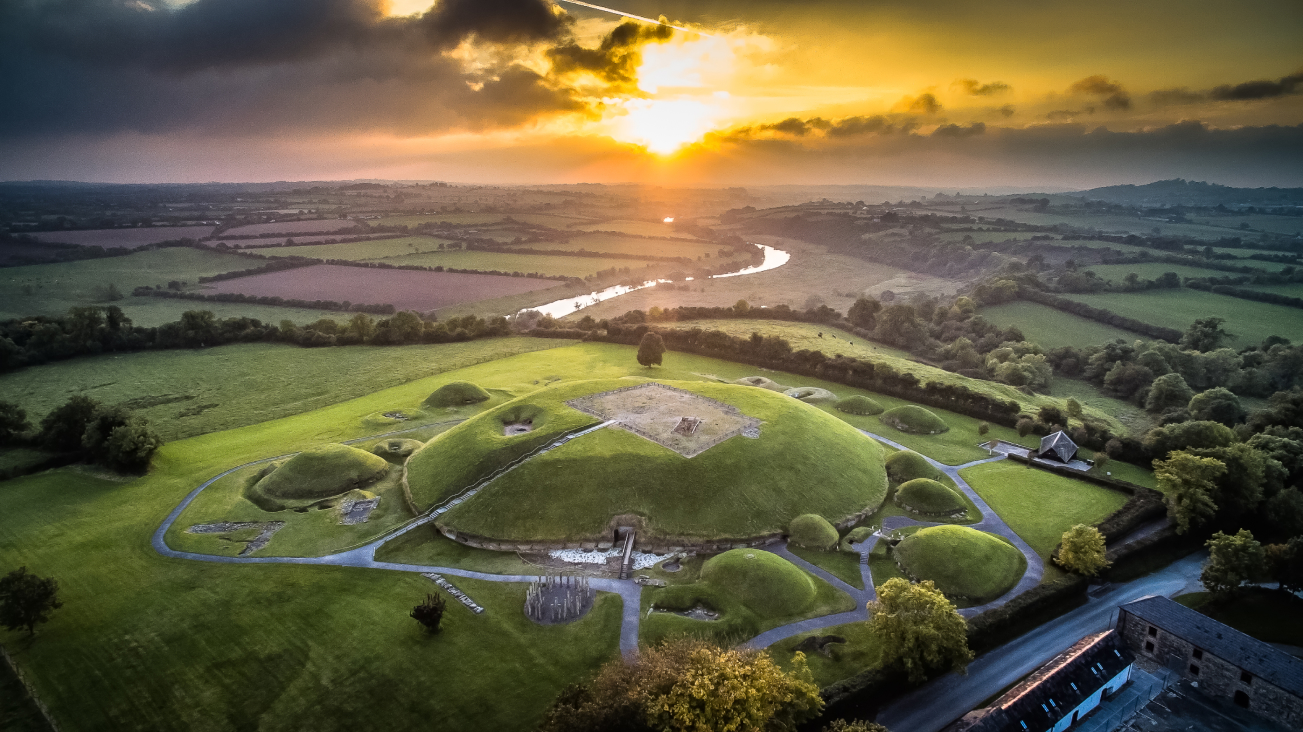
Brú na Bóinne, nestled in the lush Boyne Valley of County Meath, is one of Ireland’s most captivating archaeological wonders. Steeped in mythology, history, and architectural brilliance, it stands as a monument to the creative and spiritual genius of our ancient ancestors. The name itself evokes intrigue—Brú na Bóinne meaning “The Mansion of the Boyne,” tying it to the life-giving river that nourished and inspired the region’s early inhabitants.
For those curious about its age, its monuments date back over 5,000 years, making it older than both Stonehenge and the Great Pyramids of Giza. This UNESCO World Heritage Site is not just a relic of the past but a testament to humanity’s enduring quest to connect with the cosmos and the divine.
What Is Brú na Bóinne?
In Brú na Bóinne English, the name translates to the “Palace of the Boyne,” referencing the fertile Boyne River valley where this ancient marvel resides. The site is an ensemble of prehistoric passage tombs, most famously Newgrange, Knowth, and Dowth. These tombs are not merely burial chambers; they are complex astronomical observatories, ritual centers, and art galleries, adorned with some of the finest examples of Neolithic art in Europe.
Their construction, aligned with celestial events such as the winter solstice, suggests an extraordinary understanding of astronomy by their builders. Brú na Bóinne age, exceeding five millennia, reveals a thriving and sophisticated society whose cultural and spiritual practices remain awe-inspiring today.
Newgrange: The Jewel of Brú na Bóinne
The most iconic monument within Brú na Bóinne is undoubtedly Newgrange. A megalithic passage tomb, its construction is a marvel of engineering and artistry. Every year during the winter solstice, the rising sun illuminates the inner chamber of Newgrange, a phenomenon that draws thousands of visitors hoping to witness this magical moment.
To experience this for yourself, planning is key. Newgrange tickets can be purchased online or at the Brú na Bóinne Visitor Centre, which serves as the gateway to exploring this site. The Newgrange tickets price varies, but it typically includes access to both the visitor center and a guided tour of the tomb. For those unfamiliar with the term, “Newgrange” can be a tongue-twister—Bru na boinne pronunciation is “Brew-na-Boy-nuh.”
Why Visit Brú na Bóinne?
A visit to Brú na Bóinne is like stepping into a time machine, transporting you to an era of intricate rituals, celestial wonder, and profound creativity. For travelers based in the capital, a Brú na Bóinne tour from Dublin offers a convenient and enriching escape. Guided tours often include transportation, an expert guide, and access to key sites such as Newgrange and Knowth.
The surrounding landscape of Brú na Bóinne is equally enchanting. Rolling green fields, the gentle flow of the Boyne River, and the region’s mythological significance—highlighted by nearby treasures like The Hill of Tara and The Seat of Ireland’s High Kings—create an immersive experience.
A Living Legacy
Brú na Bóinne is much more than an ancient tomb complex; it is a pulsating reminder of Ireland’s timeless heritage. Its inclusion on Brú na Bóinne Wikipedia reflects its global significance, drawing attention to its rich tapestry of history, mythology, and archaeological splendor. This site is not just a cornerstone of Irish identity but a beacon of human ingenuity and spirituality.
If you’re planning a journey to Ireland, visiting Brú na Bóinne is a must. Beyond its archaeological wonders, the Boyne Valley offers access to a wealth of historical and cultural landmarks. Be sure to explore the wider region, including the Leinster region, for a deeper connection to Ireland’s storied past.
Practical Information for Your Visit
- Newgrange Tickets: Purchase online or at the Brú na Bóinne Visitor Centre.
- Newgrange Tickets Price: Prices vary depending on group size and season but typically range from €5 to €15 per adult.
- Brú na Bóinne Tour from Dublin: A variety of tour operators offer full-day trips, often including transportation, a guide, and entry fees.
Whether you’re drawn by its historical significance, its celestial alignments, or its sheer beauty, Brú na Bóinne promises an unforgettable journey through Ireland’s ancient heart.
The Mythological Depths of Brú na Bóinne
Brú na Bóinne is not just a marvel of human achievement but a place where mythology and history collide. According to Irish folklore, this was a site of great spiritual importance. The Boyne River itself is said to be named after Boann, a goddess who defied the gods by uncovering the mysteries of the Well of Segais, a sacred source of knowledge. Her defiance led to the creation of the river, a lifeline that runs through the heart of Ireland’s mythological landscape.
The tombs of Brú na Bóinne are also associated with the Tuatha Dé Danann, a mystical race often described as Ireland’s ancient gods. Newgrange, in particular, is believed to have been the dwelling place of Dagda, the father of the gods, and his son, Oengus, the god of love and youth. The lore surrounding these figures imbues the site with a mystical aura, making it a place where history, spirituality, and legend intertwine.
Knowth and Dowth: The Unsung Heroes
While Newgrange often steals the spotlight, the lesser-known monuments of Knowth and Dowth are equally fascinating. Knowth is home to the largest collection of megalithic art in Europe, with over 300 carved stones featuring spirals, chevrons, and other intricate patterns. This art is thought to have symbolic meaning, possibly representing the cycles of life, the cosmos, or spiritual journeys.
Dowth, the “Darkness Mound,” has a more enigmatic presence. Unlike Newgrange, it lacks the same level of restoration, but its unpolished state offers a raw glimpse into the ancient past. According to legend, Dowth was cursed by the sun and never completed, adding a layer of mystery to its historical significance.
A Celestial Connection
One of the most awe-inspiring aspects of Brú na Bóinne is its precise alignment with celestial events. The winter solstice at Newgrange is the most famous example, where the rising sun floods the inner chamber with light, symbolizing renewal and hope. This phenomenon occurs only once a year, drawing lottery-selected visitors to witness it in person. For those who can’t make it, the Brú na Bóinne Visitor Centre offers a simulated experience that captures the magic of this ancient alignment.
Knowth and Dowth also show evidence of astronomical knowledge, with their passages aligned to the equinoxes and other significant solar and lunar events. These alignments suggest that the builders of Brú na Bóinne had a sophisticated understanding of the cosmos, possibly using the sites as ceremonial calendars or tools for spiritual practices.
Sustainability and Preservation
As one of Ireland’s most visited heritage sites, Brú na Bóinne faces the challenge of balancing tourism with preservation. The Brú na Bóinne Visitor Centre plays a crucial role in protecting the monuments while educating the public about their significance. Visitors are shuttled to the tombs to minimize the environmental impact, ensuring the site remains pristine for future generations.
Beyond Brú na Bóinne: Exploring the Boyne Valley
A trip to Brú na Bóinne is an opportunity to dive into the rich tapestry of the Boyne Valley. Just a short drive away is the Hill of Tara, another iconic site that complements the narrative of Brú na Bóinne. The Hill of Tara served as the ancient seat of Ireland’s High Kings, making it a political and spiritual epicenter of early Irish society. Exploring both sites in tandem provides a holistic view of Ireland’s ancient history and mythology.
The Boyne Valley is also home to Trim Castle, Monasterboice, and the Battle of the Boyne site, each offering a unique lens into Ireland’s storied past. The region’s landscape, dotted with ancient ruins and lush greenery, invites travelers to linger and reflect on the deep connections between people, land, and history.
Making the Most of Your Visit
To fully appreciate Brú na Bóinne, consider these tips:
- Book in Advance: Tickets can sell out, especially during peak seasons and around the winter solstice.
- Take a Guided Tour: Expert guides provide invaluable insights into the history, mythology, and architecture of the sites.
- Explore the Visitor Centre: Interactive exhibits and a replica of Newgrange’s interior offer a deeper understanding of the site.
- Combine Sites: Pair your visit to Brú na Bóinne with a trip to Leinster’s other attractions for a well-rounded historical experience.
The Legacy of Brú na Bóinne
Brú na Bóinne is more than an archaeological treasure; it is a living monument to Ireland’s enduring spirit. Its age, artistry, and astronomical precision remind us of our ancestors’ ingenuity and their profound connection to the natural world. For modern visitors, it offers a chance to step back in time and reconnect with a shared human heritage that transcends borders and eras.
As you walk among the ancient stones, imagine the hands that carved them, the voices that sang their myths, and the lives that found meaning in their shadow. Brú na Bóinne is not just a destination—it’s a journey into the soul of Ireland.
About the Author
